Today I have a guest post from Sharon Lynn Fisher, author of Ghost Planet, a science fiction romance which had a premise I loved, which is that everyone that lands on Ardagh 1 eventually has the ghost of someone they once knew attach themselves to them. She’s also the author of the recently released The Ophelia Prophecy that takes place on Earth in the aftermath of genetic research gone awry. The Manta, products of human and insect DNA experiments, are now the dominant culture, and this story is about a Manta and a human getting thrown together and the resulting clash and fallout — another great premise. I was quite excited to hear from Tor about hosting a stop on her blog tour, and actually very pleased she picked the question I’d asked about world building. Enjoy.
(Tor has also offered 3 copies of The Ophelia Prophecy to give away to 3 readers of this site, so check that out at the bottom of this post).
I’m going to start off this post with the terrific question provided by Janicu:
I imagine that writers, like a lot of creative people, are like magpies that save little bits of something from the world, internalize it, and remake it, rearrange it, add a whole lot of their own magic, and voila. What would you say are little pieces of inspiration that went into the making of this new story? (If you wanted to mention ECHO 8, I wouldn’t mind hearing about that too)!
World building is a topic that is near and dear to my heart. I’ve mentioned in a few interviews how I used to hate it. I found world building really intimidating, and thought of it as the stuff that happened between bits of “real” story (action, dialogue, romance).
I have since become disabused of that oversimplified understanding. World building is so much more than descriptions of setting (though that part is pretty important too). It fuels just about every other aspect of the story. It helps develop character and motivation. Drives creation of the plot.
But moving on to this magpie thing, because Janicu really hit on something there.
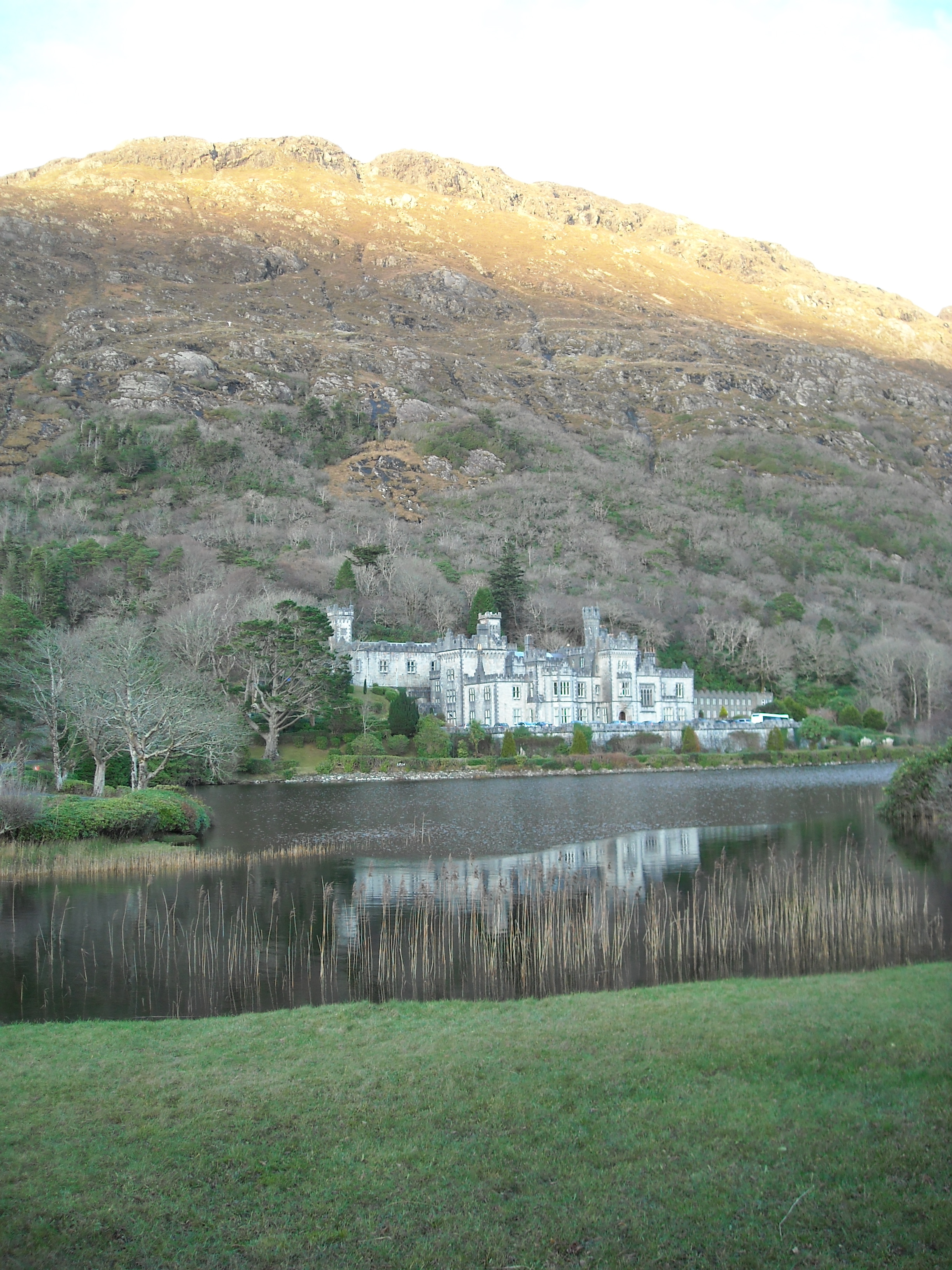
Connemara Abbey (image courtesy of Sharon Lynn Fisher)
In my current release, THE OPHELIA PROPHECY, I built settings based on real-world locations. Places I had visited and wanted to return to. Sanctuary, the last human city, is located in the otherworldly landscape of Arches National Park in Moab, Utah. After Asha, the heroine, is abducted from Sanctuary by the hero, Pax, their next stop is Connemara, in County Galway, Ireland. Connemara is one of my favorite places on Earth (based on what I’ve seen of it so far). Dramatic and often bleak landscapes, and a living sky, constantly shifting from sun to rain to wind. You can feel its history. You can almost hear the voices of the people who’ve lived and died there. No wonder Ireland produces such amazing writers.
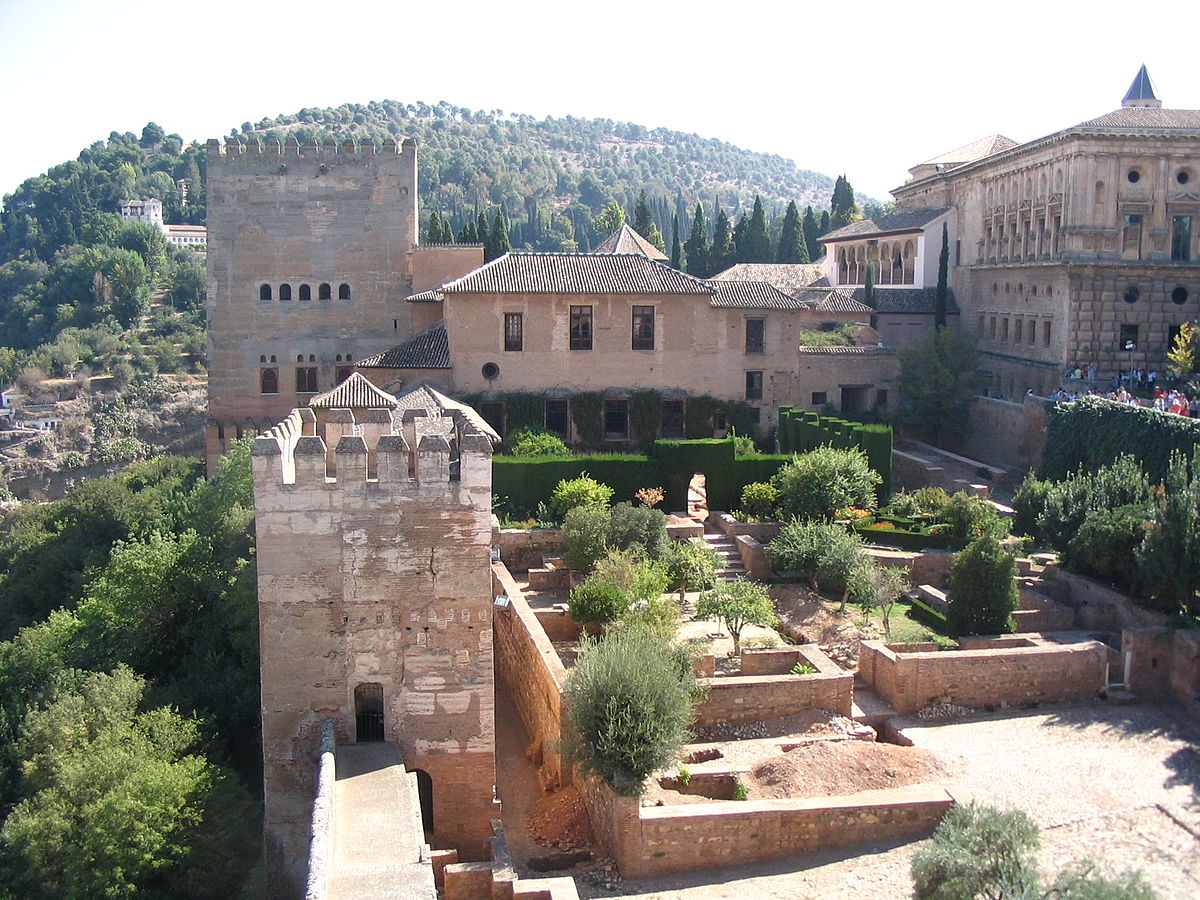
Granada Alhambra (photo by Javier Carro, distributed under a CC BY-SA 3.0 license)
But the real showcase setting of OPHELIA is the Manti capital in Granada, Spain. The Manti are the human/praying mantis transgenic organisms that all but destroyed humanity with a targeted plague. I needed a location suited to them — exotic and sensual, with a complicated history. This Moorish city is charming just as it is, but I depicted the fictional version as enhanced by the Manti to included living, organic architecture inspired by Gaudi structures I’d seen in Barcelona (and then finished it off by layering on some political and religious conflict). One key location, a tavern called Debajo, was inspired by an image I came across on the Internet. A stone, squat, clearly medieval building situated among the more graceful architecture of the Albayzin. This tavern peddles a drug inspired by a flower I saw and learned about on a trip to Costa Rica.

Colman School (image courtesy of Sharon Lynn Fisher)
As my hostess mentioned ECHO 8 — my third book from Tor, due out early next year — I’ll say a word or two about that. That book is set in current-day Seattle, and also on an alternate Earth that has been devastated by an asteroid strike. The primary location is an old school building visible from I-90 on the way out of Seattle. I used to drive past the circa 1900 building with its boarded-up windows and thought what a shame it was that someone was going to tear it down eventually. But they didn’t. It was renovated and converted to an African American history museum, with affordable housing on the upper floors. For ECHO 8 it became the Seattle Psi Training Institute. Another key location is the creepy decommissioned ferryboat, Kalakala, which has a very colorful past. I once lived in a tiny house on a dock on Lake Union, near downtown Seattle, and this massive derelict was parked there for a time. I always wondered about it, and when I started writing ECHO 8 I did a bunch of research, and it became a setting (and almost a character) in my book.

Kalakala (photo by Barnaby Dorfman, distributed under a CC BY 2.0 license)
But the book of mine that best illustrates the magpie idea, I’m working on now. I don’t want to say too much about it yet, as it’s still in the earlyish stages, but it’s set in Portland and features an artist heroine and a physicist/warrior poet hero. The heroine, Neve, IS a magpie. She collects bits of garbage she passes on the street, and she turns them into art books. She sees meaning and beauty in discarded objects as ordinary as a dry ballpoint pen or a popped balloon.

Magpie (photo by Adrian Pingstone)
Writers are just like that. It can be things or people or places or even garbage. They are captured and cataloged every day of our lives. And they decorate our mental landscape. I remember one day I was walking down a busy street in downtown Seattle, near the Pike Place Market. I saw a woman walking toward me carrying a box. As she came closer, I saw she was wearing a fairy costume, and she looked annoyed. As she passed, I noticed her wings were in the box. There she was, a whole story walking down the street in broad daylight. And nobody seemed to see her but me.
 ABOUT THE AUTHOR: A Romance Writers of America RITA Award finalist and a three-time RWA Golden Heart Award finalist, SHARON LYNN FISHER lives in the Pacific Northwest. She writes books for the geeky at heart—sci-fi flavored stories full of adventure and romance—and battles writerly angst with baked goods, Irish tea, and champagne. Her works include Ghost Planet (2012), The Ophelia Prophecy (2014), and Echo 8 (2014). You can visit her online at SharonLynnFisher.com.
GIVEAWAY:
This giveaway is closed!
Rules:
- This giveaway is for U.S./Canada only
- Contest ends: Wednesday, April 30th.
- One entry per person please!

 1. I thought I’d start with the oldest. How many of you have ever read anything by Rumer Godden?
 2. The Sky is Everywhere by Jandy Nelson is a true contemporary published only a year or so ago. This one is a good example of a single blogger recommendation leading to an out-of-the-usual purchase for me. Ana at The Book Smugglers raved about this book, so even though it’s a YA contemporary, I picked it up. It is a very intense book and you should have a box of kleenix handy when you read it – but you should read it. And then go back through and read all the scraps of poetry:
 3. I really don’t read many romances, so this next one, a contemporary romance series set in Paris, represents an even greater departure from my normal reading range. In fact, this is another example of a series I tried solely because of a blogger’s review. But, whether romance is your first love or not, you just have to try Laura Florand’s Chocolate mysteries.
 4. I do like mysteries and read a fair number of them, but one mystery series that has completely faded from view is the “Dolly” series by Dorothy Dunnett. You’ll also find them referred to as the “Johnson Johnson” mysteries. I think a lot more people have read Dunnett’s fat historicals – which I like a lot – than have even heard of her mysteries. Dunnett wrote these in the seventies, but they’ve all been recently republished under different titles.
 5. RA MacAvoy wrote a good handful of fantasy novels in the eighties, of which one of my favorites is Tea With the Black Dragon. This is a wonderful little gem of a novel, with just the most subtle fantasy elements laid into what seems on the surface a straight contemporary. I mean, is Mayland Long really a dragon or isn’t he? (Personally, I’m positive he is.)


 8. Speaking of military SF, Tanya Huff’s Valor series is amazing. If military SF doesn’t normally appeal to you, well, pick up Valor’s Choice and see if that doesn’t change your mind at least for this one series. Staff Sergeant Torin Kerr is a wonderful protagonist, smoothly handling her superior officers so that she can do her best by her mission and her people. I don’t know what inspired Huff to make the protagonist a sergeant rather than the commander, but it was an excellent choice. Every book stands pretty well on its own, but there’s also plenty of room in this five-book series for another installment, and I sure hope Huff has one in the works.
 9. Nick O’Donohoe wrote a handful of widely disparate books in the eighties and nineties, of which the best, if you ever thought you might like to be a veterinarian, is the Crossroads trilogy. The first book, and probably the best, is The Magic and the Healing. If you’d like to know how to repair the horn of a unicorn or diagnose gout in a griffin, this is the series for you. The veterinary medicine is well done (says my vet, who borrowed these books from me), and the actual story is top notch as well. I have a soft spot for The Magic and the Healing, which demonstrated to me the difference between an author declaring a character is smart when she is actually stupid as a post; and the author actually writing a smart character. Obviously, this is book offers an example of the latter. BJ Vaughn is one of the most perceptive characters I can think of, in her quiet way.
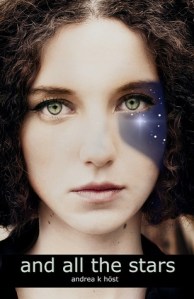 10. I don’t usually read self-published books, but enthusiastic reviews from The Book Smugglers and from Heidi at Bunbury in the Stacks made me pick up And All the Stars by Andrea Höst. That one was good enough that I went on to pick up Höst’s Touchstone trilogy. And that was so good it was my top read of 2013 and led me to pick up the rest of Höst’s backlist.



 specficromantic


