Helping Nashville Schools – please pass this information along

Rebecca Brothers of Reader with a Capital R announced at the Book Blogger Convention that she wanted to help Nashville schools after the flooding there. There is an organization called Pencil Foundation, which links “community resources of both volunteers and materials with Metro Nashville Public Schools.”

The Pencil Foundation:
The Pencil Foundation has a school supply program. Rebecca describes it thus:

“Community businesses donate their unneeded office supplies, old letterhead, gently used office machines, surplus products, and brand new school supplies to the foundation’s “store”. Teachers from Nashville Metro Public Schools are allowed to make an appointment to “shop” there twice per school year (all items are free to teachers).”

Sadly this store suffered water damage during the recent Nashville flooding and over 2000 books were destroyed.

How people can help:
The Pencil Foundation is asking for donations so that they can hold a book fair in October, where they let schoolteachers take 30 books for their kids. Last year they gave away 6000 books in a day. You can donate books, your time, or plastic storage bins and shelving. If you are interested in donating our time or storage, Rebecca explains it further on her blog here. Since I know most people will probably find it easiest to send books, this is what they’re looking for (This is also taken from Rebecca’s blog):

Children’s books: board books, pre-school books, flap books, activity (coloring, sticker) books, picture books, young readers, beginning readers, children’s and young adult chapter books, and high school materials. Their most pressing needs are for books struggling readers at the elementary and middle school level can enjoy. High interest non-fiction books are as welcome as fiction. Many students are reading below grade level or are English Language Learners. Books in Spanish would also be greatly welcome. New or used books are great. As Ulli said, “A book can have many lives and last many years.”

This is the mailing address to send these books:
LP PENCIL Box at McCann ALC
1300 56th Ave North
Nashville, TN 37209

I’ve also made some buttons for this so you can put them on you sidebar or website. They link to Rebecca’s blog post 🙂


The Book Blogger Convention, Part 2

I had the second part of this written and it was a lengthy article of wonder. All ready to go for a cut and paste into the blog. What happened? Well I had it saved as a draft in gmail (which is where I write my posts so I can work in it on any one of my computers), but as I selected it all to copy, I hit control+v instead of control+c. And then gmail autosaved right then. And control+z? DID NOTHING!!! I had a mini breakdown. It started with numbness then pain, then anger and depression. 😛 Anyway, (sigh, the acceptance phase), here we go again.

This is part 2 of 2 parts


The Marketing panel from very far away…
4) Marketing [2:00-2:50]
This was a panel consisting of Gayle [Everyday I Write the Book], Yen [The Book Publicity Blog], Ann [Books on the Nightstand], and Thea [The Book Smugglers]. Heather [Age 30+ Books] moderated.

The point of this panel seemed to be that to have a successful blog need to market it. You need to brand yourself, and have a particular niche. It sounds difficult, but really branding should be easy for bloggers – just be yourself and let the passion come through. Have a hook or an identity. The idea can rub people the wrong way, but it’s useful to have something, even if it’s a tagline, to say who you are. Anything can become your brand.

The panelists also said it’s important to spend time community building. For example, when The Book Smugglers first started, they responded to every comment.  All the panelists agreed about commenting. You can create dialogue by commenting on other people’s blogs as well. Another idea is to do guest reviews or have guest reviewers come to your blog. Having an event can also build community. Another Book Smugglers example is their event called Smugglevus which is based on Festivus and is basically a book love fest.  You could also create some kind of online book club.

Know who your readers are and go about finding them and connecting to them. There was some discussion of using social media like twitter and facebook to get readers, but not to spread yourself too thin. You don’t need to sign up for everything, just look at whats out there and choose a couple of things. If you are trying too hard it shows.

As an aside it was noted that if you have a blog, make sure your RSS is easy to find. Have a big ol’ link or icon so readers know how to add a subscription to your blog.

The discussion went to stats for a little bit. Publicists like to get stats so that they can decide whether a blog is popular and would reach a lot of readers. Many of the panelists felt like stats are an imperfect measurement (I don’t recall the exact wording here). A blog may have small numbers but hold a lot of sway over it’s readers in what it recommends. On the other hand, Thea from the Book Smugglers disagreed and said that they pay a lot of attention to their stats and are open with having a counter and with telling publicists their stats. [ How do I feel about this? I think it’s one of those hot button topics where people have strong opinions. Remember last year, the discussion after Katiebabs posted commentary on the Book Blogger Panel at BEA, 2009? Anyway, I personally have mixed feelings. I do want stats to go up so that I know people are reading my blog and I can have discussions with MORE people about books (yay!), but I also admit I don’t look at them all the time, and with three mirrored blogs, with different difficulty in getting stats from them (wordpress is good, vox is awful, LJ has stats for paid members and I wasn’t always paid), I usually find it confusing to figure out].

The final comment was that one of the panelists put up a survey to find out who their readers were and they were surprised by the results. They found out that they had a lot of readers who weren’t book bloggers or book publishing people. The recommendation was to know your readers. Survey them to find out who they are for example.

Blogging with Social Responsibility (sorry for blurriness. My camera’s zoom is awful)

5) Blogging with Social Responsibility [3:00-3:50]
Another panel with Zetta [Fledgling], Terry [The Reading Tub], Wendy [Caribousmom], and Stephen Bottum [Band of Thebes]. The moderator was Marie from The Boston Bibliophile.

In this panel, the two blogs Fledgling and Band of Thebes seemed to have a strong focus on their causes (race and LGBT in books respectively), while The Reading Tub and Caribousmom were book blogs which also tried to bring attention to causes important to them (Children’s literacy and pediatric cancer) but it wasn’t the main focus of their blogs.

I didn’t take notes for this panel so what I have here comes from memory. The main point of this session seemed to be that bloggers can affect change. The panelists brought up the recent outrage in the blogging community over the whitewashing in covers, and how bloggers got Bloomsbury to change its covers twice. There was a comment from the audience that sometimes bloggers don’t notice, such as the case when the cover for The Mariposa Club – where Latino characters were depicted as paler than the story described, and a fourth transgendered character isn’t shown at all. Zetta said she was disappointed in herself and in her community for not knowing about this, and said that bloggers need to use their connections and email other blogs to pass along this type of message. She also said it’s important to make alliances with other communities so that if there is overlap (like in this case where the LGBT and minorities are affected), they can work together in expressing their disapproval.

Another point I remember was that someone asked if anyone encountered any negative commenting on their posts because of their causes. Stephen Bottum said he didn’t have any angry commenters, and Zetta agreed that in her personal blog other commenters were good about redirecting the conversation back to the topic on hand, but when she posted on The Huffington Post she had more nasty comments and doesn’t post there anymore.

I liked this panel. I think that many people have a cause that they feel strongly about and that blogging is a good away to put it out there, even in a small way. Actually, at the BBC there was a blogger who mentioned wanting to do something for the schools in Nashville, who lost a lot of books due to the flooding, and here’s a link on how to help. (I made buttons, will post later)!

6) Impact of the Relationship between Author and Blogger [4:00-4:50]
This was another panel with Amy [My Friend Amy], Bethanne [The Book Studio], Kristi [The Story Siren], Beth Kephart [Beth Kephart Books], and Caridad Pineiro [Caridad Pineiro’s Blog]. It was moderated by Nicole [Linus’s Blanket]

I didn’t take notes on this panel either. So this is from my memory again and is basically a vaguely remembered summary. I think the first part of this was about how as people use social media and spend time online, they begin to develop relationships and sometimes this can put you in an awkward place when talking about a book written by someone you have a relationship with. The two authors said that they don’t review books. They may pimp their friend’s books, and say why they liked the book, but won’t say anything negative. Beth Kephart said that if she didn’t like a book she won’t say that, but she doesn’t lie either – she would just discuss why she likes her friend and describe the book they have coming out. The authors on the panel also said that authors should not engage with a reader who has written a negative review. Kephart says she tries not to read reviews, but occasionally reads reviews friends have sent her that were positive and she appreciates the time reviewers take to write reviews. There was an audience member who said they wrote reviews but wanted to become an author, and asked for tips regarding doing that. It seemed like there was no real answer for how to be an author and a reviewer at the same time, but the authors thought it was possible.

The book bloggers said that if they had a relationship with an author they would disclose this in a review (I think this was the Story Siren), but also said if they tweeted to the author once that they were reading their book, this didn’t count as a relationship (also – don’t tweet your review to an author if it’s a negative one!). Amy from My Friend Amy said that if she likes an author and has a relationship with them online, but then does not like a book, she may end up not reviewing it. It seems to be up to the blogger how they want to handle that situation. Some people still review the book, others find it too awkward and don’t.

——-
So there you have it. As you can see there were a lot of panels, but I was happy to be sitting down after walking around with 20 pounds of books for two days. For improvements, I think that I’d like to have had a longer break around 3 when I  started to flag, rather than having the small 10 minute breaks between sessions. Also I’ll bring a jacket next time – it was freezing in the conference room. Another thought is I’d like to see more genre fiction bloggers (romance for instance). Although it looked like the organizers tried to have diversity in book bloggers, there were more general fiction and children’s/young adult book bloggers than anything else (but then, there are more of those kinds of books at BEA).

Overall I was impressed with the organization and look forward to see it grow next year (which I think it will).

The Book Blogger Convention, Part 1

Aha, I bet you thought I was done talking about BEA and the Book Blogger Convention didn’t you? Well I took a bunch of notes on the panels for the Book Blogger Convention and laziness prevented me posting about it sooner. I do want to use these notes though because it used a lot of my phone battery to take them and it almost didn’t last the night (making me concerned that I’d have to call my ride from the train station via payphone). So in honor of that phone battery that could, here we go.

By now there have been a couple of good wrap-ups of the BBC in my google reader, so I will point you to them as well:

  • Fantasy Cafe – did a very good overview which summarized the BBC panels and highlighted interesting points the panels made.
  • The Book Smugglers – A detailed breakdown of the panels at BBC plus commentary on each.

This is part 1 of 2 parts (I wrote up a post that was ridiculously long).

Overview
So what is the Book Blogger Convention? It’s pretty much what the name suggests – a convention for book bloggers. A few bloggers got together and decided to have a small convention close to the same time as BEA (probably knowing a lot of bloggers would be at BEA anyway). At first the convention had an upper limit to number of participants, but after the BEA organizers learned about it they offered space at the Javits Center (along with tickets to BEA for the bloggers). Now it’s affiliated with BEA. The website says that it’s goal is “to provide support, instruction, and social time for people who blog about books”.

I was pretty impressed by the Book Blogger Convention. For a convention in it’s first year, there was a big turn out. Lots of publishers and PR and authors knew about it and showed up the day before for a meet-and-greet. And the organization that probably went into the food, the goodie bags, bringing in the speakers, and the websites (both the main one and an online auction site) was staggering. It’s amazing what a handful of bloggers managed to do.

The Book Blogger Convention was a one day event (Friday, May 28th) which was simply laid out as a series of panels related to book blogging:

1) Keynote speaker (9:00-10:30)
Maureen Johnson started it all off as the keynote speaker. She was hilarious. I had heard her name before as I think she’s a pretty well-known young adult author and I’ve been meaning to read Suite Scarlett. After a speech which had me laughing so hard I could have cried at one point (and that’s not easy), I was really glad that Suite Scarlett audiobooks were part of our BBC goodie bags. She talked about becoming a writer, New York City, social media (likes twitter, hates facebook – I concur), book bloggers and more. It was 90 minutes long, but I was entertained the whole time.

2) Professionalism and Ethics in Blogging (10:45-11:45)
Ron Hogan of Beatrice.com was the speaker for this session. His presentation is available online here.

He said that bloggers should not let journalistic ethics be imposed upon them. The situations are different, and what may apply to journalism may not apply to blogging. He discussed how ethics are more about questions you’re asking rather than set of principles, and that you have to establishing rules of thumb by talking to people and seeing the situation. From his site he summarizes it thus: “just as I argued that bloggers shouldn’t be judged by somebody else’s standard of professionalism, they shouldn’t be compelled to accept somebody else’s code of ethics in order to be deemed trustworthy. I’m not a big fan of declaring adherence to a code of ethics as a shortcut to credibility”.

The example he presented for that was last years brouhaha about the FCC guidelines. Newspapers don’t have to say where they got their books from, and now the FCC doesn’t say bloggers need to say where they’re from. Some people still reveal where they got a book. Some don’t. In Hogan’s opinion, if you don’t say where a book is from, it doesn’t mean you’re secretive. It’s just not an important part of the conversation to you. It is not a hard and fast rule.

There was a brief question/answer session. Books on the Nightstand commented that people should get away from the words “free books” in terms of review copies that are sent to bloggers. They are not free when bloggers spend so much time and effort reading and reviewing the books. This was a good point. Another interesting point was a publisher who said that they were happy when bloggers couldn’t review something and gave them away to someone who would read it. I think the thought is that it’s going into the hands of someone who would appreciate it, not to say that they were OK if a blogger *never* reviewed a book they received.

I thought it was an interesting session. I’m not sure I agree completely that there are never hard and fast rules, but it gave me something to think about. To be honest, this was one of the sessions where the title itself made me think, “This could go badly.” I mean, book bloggers write reviews. Reviewers are opinionated. Telling people who have opinions about doing things professionally and ethically may not go over well. I also think that things can get misinterpreted online. I wasn’t surprised to see people criticizing some of his points, but I think putting video and audio online cut down on secondhand misunderstanding at least.

[Lunch]

3) Writing and Building Content (1:00-1:50)
This was a panel with Amanda [The Zen Leaf], Kim [Sophisticated Dorkiness], Betsy [A Fuse #8 Production], and Christina [Stacked], moderated by Rebecca [The Book Lady’s Blog].

This was a panel regarding coming up with interesting ideas for blog posts. I think I enjoyed this one just because it was like peeping into a window and seeing how other people work on their blogs.  They suggested a lot of different things to kick start your creativity but they all agreed that a blogger’s voice is unique and although it’s the usual first date cliche, people should “Be themselves”. Each person brings own expertise from their lives,  jobs, and experience. They also commented that your voice changes as you evolve. Just don’t try to be something you aren’t because if you force it, it will show in the writing.

They suggested that for new bloggers, memes are a good way to get your name out there and meet new people, but once people get to your blog, they need a reason to stay. One suggestion is to have series (one example was a series on bees, another was a series of 5 books that fit a particular topic), which is a way to keep readers interested in a topic, and pull them into your blog. One blogger in the panel says she has a series where she compares Harry Potter in hardcover to paperback and the UK versions and lists each minute difference.

No idea what to write? They suggested having a go-to type of post for these situations (examples were posting about chatting with their husband at bedtime, and a saved file with future releases to post about). A couple of the panelists said they had posts scheduled weeks out or were usually 3 weeks ahead in reviews (Uh… making me feel inferior), so they work on the timing when they’re not able to blog. Another suggestion is if you’re reading a long book, to break it down into many posts instead of just one.

All of these bloggers wrote long posts and most agreed they wrote down their thoughts on a book in a notebook as they read to help them with reviews later (I tried this last year by the way… I stopped because it takes too long. I’m more of a write what I remember reviewer).

Eyes Like Stars by Lisa Mantchev

Is this not a lovely cover? It made me want to read it. Who is this blue-haired girl, standing at a stage entrance, with fairies circling around her? I wanted to know her story. I’ve been eying this book for a while, saw a couple of good reviews, and I finally bought a copy a few months ago.

The Premise:
Beatrice (Bertie) Shakespeare Smith is a young woman who grew up in a the Théâtre Illuminata. It is an enchanted theater: within it’s walls live every character from from every play ever written, and magically they are bound there, putting on their plays. Bertie sleeps on stage in a makeshift bed, her best friends are fairies (Peaseblossom, Mustardseed, Cobweb and Moth), and her family are the players and Managers of different departments. The problem is that Bertie is getting older, and she gets into a lot of trouble. After the latest debacle (involving a cannon), the irate Theater Manager decides that Bertie must Leave At Once. Bertie is desperate to stay and manages to convince the Manager that if she can prove herself useful, she won’t be thrown out into the street. Bertie’s friends the fairies and pirate Nate are helping, but elemental spirit Ariel wants her to escape and take him with her. In the meantime, the mystery of Bertie’s origins color the pot.

Read an excerpt of Eyes Like Stars here

My Thoughts: You know what this book reminds me of? One of those Disney cartoon movies. Bertie is a plucky orphan heroine, her fairies are the cute sidekicks (and comic relief), and Ariel and Nate are the handsome love interests.  To tell you who the villains are would give too much away, but they are worthy of Ursula and Frollo. This is not necessarily a bad thing. It means the book is entertaining and colorful, and there’s a lot of creativity, but it’s lighthearted fare made for a certain audience and not everyone may be in the mood for that. I have to be in a certain frame of mind for this kind of story I think, and so it took me a little while to read it all. It’s a fast read, but I read it in two spurts – the first half a month ago, and the second half this weekend.

One large facet of the humor in this book is knowledge of theater and of Shakespeare’s plays. I’m no theater geek but I know enough to pick up on some of the humor, although I suspect I may be missing some. When I get it, it’s amusing, so I think that a Theater/English buff will probably have fun with this book. One example that I loved is this (to set it up, Bertie’s fairy friends have smeared raspberry jelly all over the theater’s refreshment table):

“…pointed at MacBeth, who was holding up a cruller and muttering, “Is this a doughnut I see before me?”
Then he noticed the raspberry jam on everything and started to shriek. With a glare at the fairies, the Stage Manager bundled him off into the wings. ”

The love triangle in this book is one between Bertie,  Nate, a pirate who always looks out for her best interests (the good guy), and Ariel, a dark elemental spirit (the bad boy). Bertie is aware of both men physically, and she has a past with both of them (Ariel is more of a childhood favorite than a current one, while Nate is one of her best friends), but it seemed like Bertie treated the relationships with them as afterthoughts. It felt like she liked them for what they represented rather than for their own personal merits, but maybe this is because because the characters are sketched quickly and then didn’t grow past the first impression I had of them. There was more relationship development between Bertie and female supporting characters – Peaseblossom, Ophelia, and the Wardrobe Mistress, than there was between Bertie and her suitors.

The two things that dovetail to create the majority of the story in Eyes Like Stars are the Bertie’s adventures in trying to stay at the Théâtre, and the mystery of how she got there in the first place. The missteps that Bertie makes in trying to stay never seem to end, and much of the story is Bertie trying to keep on top of the latest disaster. At the same time that Bertie’s past comes to the surface. It’s mixed up in how the magic of the Théâtre works, which Bertie’s leaving brings up. The questions of Bertie’s past along with the magic of the Théâtre are world building elements that set up the start of a series. We don’t really get all the answers we want which leaves plenty of room for the next book, Perchance to Dream.

Overall: It’s a cute story, and good if you just want something entertaining (I think a theater and English background would help to enjoy the humor in the story), and not really dark (there are some low moments, but I felt detached from them). I found this above average for it’s original setting and premise, but the story itself didn’t truly grip me. You also may need some patience at the beginning when you’re thrown into life in the magical Théâtre Illuminata without knowing its rules.

Buy: Amazon | Powells | The Book Depository

Other reviews:
Dreams and Speculation – 9 out of 10
Angieville – mixed review (I share her sentiments – again)
Karissa’s Reading Review – 4 out of 5 stars
The Hiding Spot – 10 out of 10
Fantasy Book Critic – one of their top books for 2009
On the Nightstand – loved it
Fantastic Book Review – 5 out of 5
The Book Smugglers – 8 out of 10
Presenting Lenore – “it’s not enough to propel me into a standing ovation, but it does earn a round of appreciative applause nonetheless”
Steph Su Reads – 4.5 out of 5
Giraffe Days – “With a playful tone, it’s fun to read, but I did sometimes get confused about what was happening”
Calico_reaction – Must have (positive review)

The trailer for Perchance to Dream:

The Hundred Thousand Kingdoms by N. K. Jemisin

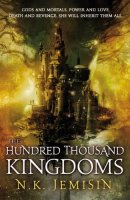
I’ve been seeing lots of good reviews for this book but the cover wasn’t particularly pulling me in. It was reading an excerpt that sold me (and why I bought the book), but now that I’ve read it I have changed my mind about the cover – it’s not just a random fantasy castle. The column it sits upon means something, as does the dark figure with hair whipping around it’s face. I think I like the cover more after reading the book!

The Premise: Yeine Darr’s mother has recently died, and soon after the death Yeine was called to the palace in Sky, seat of the powerful Arameri family. Yeine expects to be killed off is surprised when her grandfather, who disowned her mother years ago, formally announces that she is now one of his heirs. The problem is that he already has two heirs – Yeine’s cousins Relad and Scimina. To be Arameri is to be utterly ruthless, and Yeine does not fit into this world although as a Darr she’s a leader in her own right. Yeine is being thrown into the mix without much knowledge of the family and the palace of Sky, including it’s four resident gods, who have been chained in human form by Itempas, the Skyfather.

Read chapter 1, chapter 2, and chapter 3 of The Hundred Thousand Kingdoms

My Thoughts: This book started off very strong for me. I loved the world building and the beautiful palace of Sky which towers over the city of Sky on top of a giant, impossible column – a palace created by gods. When Yeine meets her relatives they don’t think much of her and her “barbaric” upbringing as a Darr. It doesn’t help that she is really half Darr and half-Amn, since her mother abdicated when she met Yeine’s father. (A minus for Yeine’s family, a big plus for me – I love a heroine of mixed race). It seems like a big clash of cultures where Yeine’s world is equivalent to a matriarchal, Amazonian, tribal society who are used to plain speaking, while the Arameri are a metropolitan, Euro-centric society who value treachery and maneuvering. The power is definitely in the hands of the Arameri, who have magic, religion, and four captive gods to rule the world, and who are ahead of the game of succession against Yeine.

The basic story of the universe begins with one god, Nahadoth, who represents chaos, darkness, and change. He is joined by his brother Itempas, who is his opposite – the god of order and light, and their sister Enefa was the gray in between, and bringer of Life to the universe. They also have children. If you have ever read Greek or Roman mythology you should have and idea regarding the things that gods do which seem dysfunctional and childish to mere mortals. This is the case here – their morality is different from Yeine’s and our own and sometimes their relationships are surprising.

The gods were fascinating characters. Yeine’s first encounter with them starts off with a bang when her cousin Scimina sics the most powerful of the gods, Nahadoth, on her like a horrifying hunting dog. The desperate race through the castle is riveting. Anyway, Yeine meets the gods and throughout the book she learns the real events that led to their slavery, rather than the story she was brought up to believe. The gods want to be free from the chains put upon them by Itempas and they have plans that involve Yeine.

Yeine finds herself manipulated from multiple directions. From the gods, and from her family, who have their own power struggles that she is not completely privy to. In the meantime, Yeine has her own agenda. She didn’t come to Sky because she was summoned. She wants to find out what really happened in her mother’s recent death. Her first suspects are of course her Arameri relatives, and so she asks questions about her mother and learns the family dynamics. Not all the answers are easy. Yeine’s mother, who she remembers as loving and open, was someone else in the palace of Sky. Somehow this is related to the current fight for succession.

I thought the multiple machinations were very clever in sucking me into the story. I wanted to know who was doing what, what had happened in the past and what was going to happen. This story is told from the first person POV, but throughout the book Yeine’s recalling what has happened to her and sometimes her memory is faulty. Once in a while, she backs up and restarts, and she has conversations with herself about what was happening or what will happen next. Not to say that the book was confusing – it was the opposite. The prose is clear and simple – it has a sort of young adult feel because of this. The hints of what would happen next were the most effective in keeping me reading to see if my guess was right.  Usually I was still wrong. There were a couple of plot twists I did not expect.

Like Yeine, I was drawn to the gods and in particular Nahadoth, although Sieh, his son, the god of mischief who usually takes the form of a child, was compelling as well. Sieh seems almost human in his need for comfort, but Nahadoth was temperamental and hard to read, like you’d expect from the god of chaos. The idea that a slip of the tongue from an Arameri in commanding him and he will happily kill them added to his fearful power. Any one of the gods is capable of horror beyond imagining. That’s why when the relationship between Yeine and the gods changes, it began to feel nonsensical.  After the narrative stresses how immense their power is, how time moves differently for them, how alien their minds are compared to a mortals, the idea that Yeine would mean much to them in the short time this book spans was difficult to believe. I allow that the gods shared the feeling of being trapped with Yeine, and she has another quality that draws them to her, but I struggled with anything beyond that. I can’t really go into detail without giving spoilers, but there was one part of the relationship where I thought the scene that I had trouble buying could have been removed completely and the story wouldn’t have really changed, so I don’t understand why it’s there at all.

Overall: This was a keeper. The writing let me slide smoothly into a story of treacherous families (both human and divine) living in a beautiful palace called Sky. Yeine’s impact on these families (and their impact on her), knocked my socks off, but I did have reservations regarding the extent of Yeine’s relationship with the gods, and because I struggled with that, the book was just shy of being on my uber-selective Blew Me Away pile (but it came very close). If I think about the reservation, I feel like saying “Don’t mind me. Read this book”. Basically – I’d recommend The Hundred Thousand Kingdoms because I don’t think everyone will have the reservation I did, and frankly, I loved rest of it.

I’m looking forward to the next book, The Broken Kingdoms (expecially after reading the excerpt at the end of The Hundred Thousand Kingdoms). The cover (which may still be a work in progress, I don’t know for sure), looks excellent.

Buy: Amazon | Powells | The Book Depository

Other reviews:
Review at tor.com by Kate Nepveu – loves it “almost without reservation”
My Favourite Books – positive review
My World…in words and pages – positive review
Fantasy Cafe – 9/10
Fantasy Literature – “a very solid debut”
Fantasy Literature – “Almost perfect debut”
The Book Smugglers – 9 (Damn Near Perfection)
Fantasy Book Critic – “almost-perfect debut”
Starmetal Oak – A+
bookblather – positive review