Chalice by Robin McKinley

Chalice
Robin McKinley

This has been a book I bought which languished on the TBR for a while, but when I wanted a simple fantasy story, this standalone with a modest 263 pages seemed the perfect fit.
 
The Premise: Mirasol has had a simple, uncomplicated life as a beekeeper. She has had nothing to do with the governing of her demesne. That has been something she left to the Master, his Chalice, and the other other members of the Circle. Then one day, both the Chalice and the Master are killed in one fell blow. Suddenly Mirasol finds herself as the new Chalice, with no idea what she’s doing or how she’s going to keep her demesne from falling apart.  The new Master is the old Master’s younger brother, but they called him back home as he was about to become a fourth level Fire Priest, and he barely remembers how to be human. Now these two inexperienced and unlikely stewards somehow have to settle their land. Failure means severe hardship for the demesne, if not utter annihilation, and many don’t think they can do it. They must not fail.
 
Read an excerpt of Chalice here
 
My Thoughts:  This is a fantasy story told in the third person, but with very subjective narration focused on Mirasol’s character. Despite it being a third person POV, there’s a dreamy, stream of consciousness feel to the writing. Some of the writing is almost poetic in the way McKinley plays with the rules to tell the story. The reader is very close to Mirasol’s thoughts, which are often a jumble of wondering how she got where she is now and how she should proceed. There’s a lot of stress but at the same time, Mirasol is has a natural knack for her work and she she throws herself into researching her Chalice duties to expand this knack.
 

”   Every day her mind swam and struggled while her face and body demonstrated serenity and control. She went home exhausted every night, with the Master’s exhaustion haunting her. What a pair, she thought sadly. Poor Willowlands. Furthermore she had even less time to pursue her studies — and she urgently needed to continue her studies. She had grown accustomed to sleeping badly as a result of not being able to turn her thoughts off; now she slept worse on account of the pain in her hand. She lay awake in the dark, thinking about what she could be learning if she sat up and lit a candle, and too bone-weary to fumble for her tinder-box.
But since the Master came, she thought, am I not putting out fewer fires?
Perhaps that is only because I am spending too much time bearing Chalice to a Circle who will not let me bind them together?
Is that my failure or theirs?
She should be asleep now. But you could pick at a dingy bandage in the dark and put off making even the tiny additional decision of lighting a candle.”

 
The world building happens organically as Mirasol tries to adapt herself to her new position. What we learn is that the Chalice is the second most important person in an eleven person Circle which is lead by a twelfth, the Master. She (for the position is always a female one) holds a chalice and mixes the right ingredients into it for every ceremony and occasion, which then all circle members sip. The concoctions the Chalice makes have special significance, and have potent powers (Mirasol can mend the damage of an earthquake and calm agitated animals among other things). She and the Master are most closely connected to the land and their task is to keep their land calm and happy. The land itself is like a living breathing animal, or maybe many living animals, which Mirasol and the Master have a connection to. When the connection is broken, so is the land.
 
Mirasol is unique as a Chalice both because of her abrupt appointment and lack of knowledge (in a strange oversight, the neither the last Chalice nor the last Master had an official Heir), and because her affinity is for honey.  This is a strange affinity, but the talk of Mirasol’s bees and her relationship with them is sweet and wondrous. The writing here makes this part of her life is warm and golden; a summer day. In contrast, her dealings with the Circle have a stressed out, jagged feel.
 
The only person who seems to be on the same page, albeit in a incredibly quiet way, is the new Master, a man who everyone is more than a little afraid of. His skin has been blackened by fire, his eyes are red, and his touch has burnt the Chalice, leaving her with a wound will not heal. He’s a dark and mysterious figure, but when he was fully human he loved the land, and even now he wants to help it. Mirasol and he have a quiet relationship that grows because they keep finding themselves in the same place, and have to face the same threats. But I’m not sure I’d categorize the story as romantic. What romance there is, is so subtle if you were to blink, you’d miss it.
 
Overall: This is not a story that really made my heart race – it was more of a story that centered me: a comfort read, a nice fantasy story to escape in for a few hours, leaving me with a pleasant but ephemeral aftertaste. While I wished that there was a little more, it was a good read.
 
P.S. I ADORE the cover of the Firebird trade paperback I own. So pretty and matches the dreaminess of the inside pages.
 
Buy: Amazon | Powell’s | The Book Depository
 
Other reviews:
Tempting Persephone – mixed
Charlotte’s Library – positive
Em’s Bookshelf – 4 stars (out of 5)
One Librarian’s Book reviews – 4 stars (out of 5)
Books and Other Thoughts – positive (but wanted more)
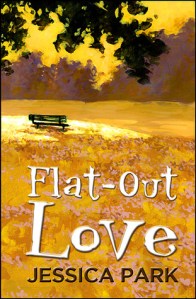
Flat-Out Love by Jessica Park

Flat-Out Love
Jessica Park


If you’ve been following my blog for a while you will see that I tend to avoid self-published books. The exception has been if it was an author I read and loved already. Another exception is that I see a review from a blogger I really trust. Chachic’s review and her description of a slow burn romance (my favorite!) really had me interested, and $3.99 for a novel length e-book is well priced for giving it a shot. I actually ended up liking this one so much that I bought the book again in hard copy form so I could physically flip through it’s pages. That should tell you something right there.
 
The Premise: Upon arriving in Boston and discovering that the apartment she rented through Craigslist is actually a burrito restaurant, stranded college freshman Julie Seagle is saved by her mom’s college roommate. Erin Watkins let’s Julie move into her son’s old room, and soon Julie is immersed in the lives of the eccentric Watkin family. Parents Erin and Roger are very nice when they are around, but more often than not, leave their children alone in pursuit of academia (one’s a professor at Harvard Law, another is a oceanographic researcher). Their three children are all uniquely bright, but somehow something is not quite right. Middle child Matt is working on two majors at MIT: physics and math, and while he’s a sweet guy, he shuts down at odd times. Youngest Celeste is thirteen but dresses as if she was eight, talks with a high vocabulary but without contractions, and has a dependence on a life-sized cardboard cutout of her brother that she calls Flat Finn. And then there’s Finn, the good-looking and gregarious oldest son. Out traveling the world, he’s only available to Julie via Facebook, text messages, and email, but he offers some insight into what’s wrong with the Watkins.  Over time, Julie’s long distance exchanges with Finn become something more, but it’s very easy to get mixed up between your feelings and reality.
 
Read an excerpt of Flat-Out Love here
 
My Thoughts: Julie is a bit of a rare fish in her hometown: social but with an interest in learning that she doesn’t think her friends will understand. So when she arrives in Boston and ends up living with a family that is academic and intellectual to a fault, despite their smarts, Julie manages to fit right in. Soon she’s bantering with the younger Watkin siblings and trading one-liners and sharing facebook statuses. There were some too-perfect zingers in the bunch but most of the conversations felt real enough to forgive this. The Watkin awkwardness trumps all, particularly with regard to the elephant in the room:

”   […] what struck Julie the most about Celeste had to do about what-or who?-was in the chair next to her.
‘Oh, Julie! I didn’t introduce you properly, did I?’ Celeste chirped happily and then turned to the seat next to her. ‘Flat Finn, this is Julie. Julie, this is Flat Finn.’
Erin poured herself some sparkling water, and Roger continued daydreaming about brine, but Julie was sure she heard Matt catch his breath. She eyed the seat again.
Frankly, she’d been hoping to get through dinner without having to address this issue.
No one else had mentioned anything for far, but this must be what Matt had started to tell her about: A life-size cardboard cutout of their brother Finn leaned stiffly angled against the chair, his gaze fixed rigidly on the ceiling’s light fixture.”
Of course, Julie being the fixer she is, she sets out to help Celeste with her obsession with Flat Finn and with her not-quite-fitting-in-with-her-age-group problems. But it turns out that Celeste is the Watkin with the most obvious problems; the other members of the family are just better at hiding that something is off . Erin and Roger are often gone, leaving Matt to take care of Celeste and the house. Matt is antisocial and over-protective of his little sister, and tight lipped about what caused Celeste’s attachment to her cardboard brother-figure in the first place.  So Julie lives with the Watkins and tries to help out with what she understands. In the meantime, she goes to class, tries to figure out her major, begins casually dating, and continues to develop a friendship with Matt in person and Finn online.
 
Finn’s charm and ease with Julie online is incredibly magnetic, and knowing that she’s in his room, sleeping on his bed, just adds to the allure. It isn’t long before Julie has a serious crush on the eldest Watkin, and she suspects that he may feel the same way. Finn is who she goes to to confide in and to ask advice on the other Watkins.
 
I loved the way that the romance unfolded in this story. It’s more about emotional connections, not physical ones, and it’s a slow courtship that spans from the first day of college, through Thanksgiving, Christmas and New Years, into Julie’s second semester and ends at the beginning of a new school year. It hit some of my soft spots including love from afar, the dependable good guy, and a couple more of my favorite tropes. Flat-Out Love put its own spin on these though with it’s use of social media peppered throughout real life interactions.  All of these have plenty of humor in them, and the weirdness and vulnerability of the Watkins added an extra dimension. I correctly guessed the family’s dark secret, but not all the details. When it all comes out, oh, what a deep and turbulent well of emotion that was. I was very invested in finding out how Julie’s relationship with the Watkins (and one Watkin in particular) would end and I wanted so badly for things to be alright. I adored how things were handled.
 
Also kudos on the quality of the copy editing in this book. This wins the prize for having no obvious typos, which I’m sorry to say, I see a higher number of in self-published books.
 
Overall: Loved it. You know those books where you’re excited to tell the world about? I think this is one of them.  The more I think about Flat-Out Love the more I feel this “I need to pimp this book” feeling. It’s so funny and romantic and heart-wrenching all at once.  Yes, when I think about it, I had a couple of “I beg to differ” moments (example: the girl hates twitter and loves Facebook), but when Julie and the Watkins are amazing and overachieving, something had to balance them out. It was nice to see a book that integrated social media into it’s plot so well, and that has a main character that is in college. And the sweet romance with an emotional connection left me very satisfied.
 
(Page 362 killed me. Page 384 killed me in a different way. Go read this and then we can talk. On twitter!)
 
Buy (ebook): Amazon (kindle) | B&N (eBook) | Other places to buy online
(paperback): Amazon | B&N
 
Other reviews:
Chachic’s Book Nook – positive
The Reading Date – positive
 
Interesting Links:
Flat-Out Love website
 

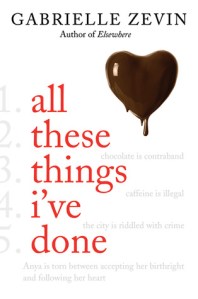
All These Things I’ve Done by Gabrielle Zevin

Drawn to the premise and the glowing reviews of Zevin’s earlier work, Elsewhere, I entered a giveaway for a galley copy of All These Things I’ve Done from Macmillan. I won, and phew, if I hadn’t, I would have had to get my hands on the book by some other means, because just look at the description for the story:
 
The Premise: “In 2083, chocolate and coffee are illegal, paper is hard to find, water is carefully rationed, and New York City is rife with crime and poverty. And yet, for Anya Balanchine, the sixteen-year-old daughter of the city’s most notorious (and dead) crime boss, life is fairly routine. It consists of going to school, taking care of her siblings and her dying grandmother, trying to avoid falling in love with the new assistant D.A.’s son, and avoiding her loser ex-boyfriend. That is until her ex is accidentally poisoned by the chocolate her family manufactures and the police think she’s to blame. Suddenly, Anya finds herself thrust unwillingly into the spotlight–at school, in the news, and most importantly, within her mafia family.”
 
My Thoughts: There was something about combination of a futuristic setting, chocolate, the mafia, and a poisoning, that just had me ready to pounce on this book. I had that “I think I will definitely like this one” feeling. And I think for the most part I was right.
 
The thing I really loved about this story was Anya herself. This girl has a lot of responsibilities. Her mother died in a mob hit meant for her father, her father was shot a few years later. Her older brother Leo was left with brain injuries in the assassination that killed their mother. Her younger sister, Natty is only twelve. Her ailing grandmother is legal guardian, but is bedridden. Then we have the city of New York, which has basically turned into a pit. Commodities are rationed (or illegal), poverty is rampant, and electricity is not always constant.  Anya maintains the household with funds her father left behind. She enrolled herself and her sister in a top private school, ensures her grandmother has a nurse, and watches out for everyone. At every moment, Anya is working to keep her family safe and out of trouble. All that she has for help are her own memories of her father’s words (“Be intentional [..] Lapses won’t go unnoticed by your friends and especially not by your enemies”, “Daddy used to say you could assume a person was loyal until the day she betrayed you. Then you should never trust her again”, and other such pearls), which he imparted to her throughout her childhood. These tenets from a mafiya boss are now Anya’s tenets, and she uses them with her formidable street smarts.
 
The mob politics, the bad economic climate, the prohibition-era type undertones, and the general ambiance of this story make me think this is the 1920’s transplanted into a dystopian future. There are things that feel old fashioned, like Anya and her friends lack of cell phones, the internet, or game consoles, and wearing hand me-down-clothes from other eras. Even though the date was supposed to be 2083, there didn’t seem to be any new technology that I’ve never heard of. In fact, the world seems much like ours is now, except it’s regressed by a few decades.  Even the names (“Gable”, “Win”, “Fats”) seem old fashioned. I wonder if this started out as an alternate history which turned into something else. The dystopia part focuses on too many laws and an overworked police force.  The illegality of chocolate and caffeine amongst other things is what is put into question. I am not sure if they’re used to question the illegality of drugs, but I didn’t think they felt quite equivalent, even with the plot of the poisoned chocolate which seemed to represent quality problems from non-regulation. I felt that the message part of the dystopia could have been more clear here.
 
Anyway, the drama in this story stems from Anya’s taste in boys (the only thing she seems to have trouble with), combined her sordid family history. First there is Gable, a real sleezeball with a unlikable character, despite his pretty face. Then there is Win, who is trouble just because he’s the son of the new assistant District Attorney. It’s not long before one boy gets Anya in trouble with the law, and the other brings her to the attention of his powerful father.  In the meantime, some sort of power play is going on within her extended family’s chocolate business. All Anya wants to do is stay out of it and keep her immediate family safe, but despite her best efforts, just for being the daughter of the last head of the Balanchine empire, she finds herself in the midst of other people’s ambitious plans.  Anya’s own plans to stay out of the limelight are not happening.
 
I really loved the machinations going on and reading Anya’s point of view about it. She may be a natural leader, but she’s still sixteen and worried for her family. It was inspiring to see her take the reins and navigate tricky situations with her clear eyed practicality. I enjoyed the direction the story went with this and I hope to see more of the same in the sequel. At the same time, I liked how the story included Anya’s relationships with her family – her Nana, her brother, her sister and her best friend Scarlet. I believed in Anya’s protectiveness and love for each of them.
 
The only issue I had with the relationships in this book was with the romance, and it was a niggle more than anything else.  Even though I was thankful that Anya was practical enough to try to avoid being romantically involved with Win at the beginning (no Instalove), he seems too nice and naive to be Anya’s type.  There were a couple of times he called her on something, but otherwise his personality still felt very flat. On the other hand while I didn’t feel like there was enough to sell me on the romance, there wasn’t enough to turn me off it either. It was kind of…just…there. Hopefully this is something that could improve in the sequel.
 
Overall: I really liked this one. The self-sufficient teen heroine and the well-written plot won me over.  There were minor niggles with wanting more with the dystopia and the romance, but I think these will be developed more in the sequel or sequels, and these were less important to me than Anya and her predicament were. I would say read this for the mafia (or should I say “mafiya”) undercurrents and Anya’s struggle with her birthright and her need to protect her family.
 
Buy: Amazon | Powell’s | The Book Depository
 
Other reviews:
Sophistikatied reviews – positive
The Compulsive Reader – positive
Presenting Lenore – positive
 
Book Trailer:

Raw Blue by Kirsty Eager

Raw Blue
Kirsty Eager


I’m participating in both book tours that Holly is hosting to promote Raw Blue by Kirsty Eager and Six Impossible Things by Fiona Wood. I must have signed up early because I got to read and review Six Impossible Things last week, and this week I got my hands on Raw Blue! Thank you again to Holly for hosting it and for passing around her personal copy of the book.
 
The Premise: Carly is a nineteen year old college dropout who works as a cook so she can work nights and evenings and spend her days out on the waves. She has no ambitions other than to keep covering the necessities so she can surf as much as possible.  There’s a dark reason for Carly’s step back from her family and friends, her move close to the ocean to surf, and why she generally wants to be left alone, but despite Carly’s painful awareness of her own inability to be “normal” around others, there are people inching their way into her life. It is up to Carly whether she will find a way to move on from her past, or if it will pull her back from real relationships forever.
 
My Thoughts: Carly’s life seems so simple: surf, work, sleep, wake up, and do it all again. The book starts off with a typical day for her, plopping the reader next to her on the ocean. As she matter-of-factly describes her runs on the waves, I let the talk of coastal conditions, territorial disputes, and surf culture wash over me as if it was a foreign language. Surfing is followed by a shift at work as a cook, and later time at home with Carly’s neighbor, Hannah. This should be an easy read, and it is, but at the same time, there’s something slowly and quietly weighing the story down, and that is Carly herself. It’s quickly evident that she is just surviving day-to-day, throwing herself into surfing and avoiding people.
 
Since the story is told from her point of view, her feelings of awkwardness and of being “uptight” are clear and powerful.  I really empathized with her, and It’s not long before I understood the reason behind Carly’s skittishness. It really hit me when I did.  I read a few reviews of Raw Blue that didn’t really say what had happened to Carly, and I usually try to avoid stories that deal with rape, so I wanted to warn others if this is something that they just can’t handle. Had I known, I may have never read Raw Blue, but now that I have finished it, I will tell you this: I think I would have missed out.
 
Even though Raw Blue  took a little more out of me than most books, giving me a sense of impotent protectiveness for Carly, there was always something, whether it was surfing or the people around Carly, that kept me from getting completely wrung out. The story seems so unassuming, the pace: subdued and straightforward. At first the window into Carly’s life is mundane with surfing as the highlight, but then somehow, those ordinary details that aggregate into Carly’s life ARE the story. Oh-so-subtly, between her hours on the water, her time in the kitchen and her small, seemingly minor nothing-conversations with her neighbor Hannah, openfaced teen Danny, and of course Ryan, Carly has made connections to other people. It’s these small human connections that save Carly and elevate the story.
 
I really liked that the three people that Carly connects to the most were people who looked at quiet Carly and wanted to know her anyway. They all let her be herself but they also nudged her a little more into the world by their example. Danny, who just decides who he likes with his own synesthesia barometer, Hannah, separated from her husband but enjoying men, and then there’s Ryan, who looks at Carly and thinks she’s a good thing. It’s Ryan who has the biggest impact. When Carly first meets him, he seems so inscrutable, but when they get closer, he has amazing sense of when to push and when not to. He’d almost be too perfect if not for the unsureness that he lets slip every so often. I loved their slow, halting steps toward one another. I was on tenterhooks I tell you.
 
And that ending. It wasn’t what I imagined, but made me feel really good all the same. It was just right.
 
Overall: Not an easy read, but still a very rewarding one. It’s a quiet story about personal pain but it’s also a story about living. Something about it just crept up on me and made a lasting impression of the good kind.  And I like that.
 
Buy: Fishpondworld | Other
 
Other reviews (not a negative one in the bunch!):
The Book Harbinger – positive
Angieville – positive
Steph Su Reads – 4.5 out of 5
Chachic’s Book Nook – positive
Inkcrush – “5 stars all the way”

Six Impossible Things by Fiona Wood

There are a lot of YA by Australian authors getting plenty of buzz in book blogging circles lately, and I’ve been eager to read them. Luckily, Holly at The Book Harbinger is hosting a book tour for Six Impossible Things and Raw Blue – two Aussie books that aren’t available in the U.S yet, but are getting rave reviews. I signed up pronto, and got the first slot for Six Impossible Things. 🙂 Thank you Holly for hosting this book tour and letting us read your personal copy of these books. That is what I call generous.

The Premise: I love the one already on the back blurb: “Fourteen year old nerd-boy Dan Ceriell is not quite coping with a reversal of family fortune, moving house, new school hell, a mother with a failing wedding cake business, a just-out gay dad, and an impossible crush on the girl next door. His life is a mess, but for now he’s narrowed it down to just six impossible things… ”

My Thoughts: Poor Dan.Things do not begin well for him in this story.  Just a few months ago, Dan lived with both his parents in a spacious house in a well-to-do neighborhood and went to a prestigious private school. They had the appearance of a happy, perfect family, but problems were surfacing.  Dan’s parents had been fighting more and more, until finally, his father drops “the bombshell – the family business was in the hands of receivers, he had been declared bankrupt, he was gay, and he was moving out.”

Now, it’s just Dan and his mom in a stinky, freezing house left to them by an eccentric great aunt. All their possessions (owned by the business it turns out) have been taken away, and Dan has to go to public school. In the break before Year Nine of school starts, Dan is pretty miserable. He dreads being the new kid and hopes he can reinvent himself into something a little more normal and a little less nerdy than he actually is. And he falls head over heels for the lovely girl next door, Estelle, before he has actually ever officially met her.

When you look at the set up of this story, it has the bones for something quite dismal, but thankfully, it is not. In fact, I fell in love with Dan’s voice, which is of the long suffering teenage boy variety (reminds me of Adrian Mole without actual diary entries). When Dan puts his situation into words, somehow, the humor his take infuses into the story makes things seem less bad and a little more ridiculous. Take his mother’s idea to go into the wedding cake business, for instance. Dan notes, “She’s going to be making wedding cakes. It wouldn’t occur to everyone in the throes of a marriage breakdown, but we do irony in this house in addition to sarcasm.”  He is further appalled whenever he walks into the house during his mom’s consults, and overhears his mother encouraging yet another bride-to-be to consider not getting married at all. When his mother plays Radiohead on repeat and extols the virtues of Thom Yorke, it is DEFCON 1 up in the Ceriell household.

So navigating his new life doesn’t start well, and it continues to have its share of disaster, like being zeroed in on by a bully on the first day of school and getting a job to help his mom, only to find out that he won’t be paid. Luckily, it has its triumphs as well, and these ultimately win out over Dan’s bad situation. Dan goes from trying to keep himself unobtrusive to actually making friends, and there are plenty of unique characters and impossible situations that provide fodder for his observations. Dan himself is revealed in his narrative – his nerdy list making (always 6 items long); his insightful musings; his soft spot for Howard (their dog); and his concern for his mother – all endearing traits.

Then there is of course his crush on Estelle. This begins a little uncomfortably for me, because Dan had yet to meet her and he’d already put her on a high pedestal. His thoughts are sweet but border on obsessive:

“It feels as though I’m thinking about Estelle most of the time. As though someone has changed my default setting to ‘Estelle’ without my permission, or she’s become my brain’s screen saver. Desire has merged with a (completely alien) noble feeling of wanting to be able to offer Estelle my absolutely best self.  The power of this is undercut by not really knowing what my best self is. But it’s got to be more than the current sum of parts.
All this churning and I haven’t even met her. What’s she going to think about me? Uncool me? Trying-to-hide-the-nerd me?”

I think that part of Dan’s crush is the lonely place he’s in after his dad left, but thankfully as things get better for him, Estelle becomes more human.  Dan gets to know her as a person and they form a proper friendship. It’s because of this, not his first crush on her that I ended up rooting for Dan to get the girl he likes so much. The relationship was a nice subplot to  to Dan getting his bearings after life was upended.

This ends up being a pretty heartwarming story, with some bits where I felt that Dan got lucky with the help he and his mother got from people around them, but I feel like Dan earned his happiness after what he went through. Dan is very funny, but the story isn’t just funny. It has sweetness makes it hit that surprising place where you are in between laughter and a bit of tears. Laughter wins out.

Overall: I loved this one. I picked it up and could not stop reading because of Dan’s voice. I think I’m just a sucker for a narrator that has both a sense of humor and plenty of vulnerability. That perfect mix is hard to find, and while Six Impossible Things is something that’s aimed at the YA and younger audience and has a simple premise, it also has a complexity to it that makes it feel more substantial than it’s 240-ish pages, and more universally appealing. Pick it up if you are looking for a feel good read with comedic appeal.

Buy: FishpondWorld (free shipping!)

Other Reviews:
The Book Harbinger – positive
Chachic’s Book Nook Review – positve
Inkcrush Review – 5 stars

Daughter of Smoke and Bone by Laini Taylor

There has been much love in the book blogosphere for Laini Taylor’s Lips Touch,Three Times and I’ve been chomping at the bit to read her writing. Because of this, I made sure I grabbed a copy of Daughter of Smoke and Bonewhen I saw it at BEA this summer. It was one of my Must Haves based on reputation alone. This is a review of an ARC copy.
 
The Premise: Karou seems like your typical art student. She’s a pretty girl with bright blue hair and a vivid imagination. Every day she shows the other students at the Art Lyceum of Bohemia her sketches of extraordinary characters – Brimstone with his ram’s horns and strange shop where he sells wishes for teeth, Issa, a snake goddess who mans the door, and others with similar part-human, part-animal shapes. To the other students it looks like Karou has a colorful inner world, full of fantastical stories, but the truth is that Karou draws from real life. She was raised by the creatures in her sketches, and when she’s not going to class or working on her art in a small studio apartment in Prague, Karou has a secondary life steeped in magic and a job fetching teeth for Brimstone’s shop. Karou doesn’t really know who she is and why she was raised by Brimstone, but she is content, if not a little lonely. Then one day, handprints are found, burned onto doors around the world. At the same time, sightings of angels begin.  Karou’s life is changed forever when she meets one of these winged beings and discovers the truth.
 
Read an excerpt of Daughter of Smoke and Bone here
 
My Thoughts: The first thing to hit me about Daughter of Smoke and Bone was its setting. It is so refreshing to have a story that’s NOT set in the usual places, and Prague is described wonderfully. I’ve never been there, but I want to see its old streets that are “a fantasia scarcely touched by the twenty-first century […] it’s medieval cobbles once trod by golems, mystics, invading armies”. Adding to its character are Karou’s beautiful school, housed in a castle with a macabre history, her acquaintances with street performers that dress up as vampires, and her local hang out, a cafe on church grounds known for its goulash and roman statues. I hugely enjoyed reading about Karou’s charming day to day life as an art student and Prague local. There’s the drama of dealing with her weasel ex-boyfriend, Kaz, the busyness of art classes, and a friendship with the understanding Zuzana, who does not ask questions. Even if Karou wishes she could trust someone with her secrets, her life is pretty full, but her association with a place she calls Elsewhere takes it one step further.
 
One of the first indications that Karou is privy to a magical world beyond our own is her necklace of skuppies – tiny little wishes in physical form; they provide revenge when Karou needs it most. I loved this idea of tokens that may be used once to make a wish come true, and that there are denominations of them, from little scuppies, to shings, to lucknows, gavriels,  and bruxes.  The enigmatic Brimstone, a chimaera with the head of a ram makes them in his shop, but how he does so or why, or even why he needs teeth of all kinds is a mystery, as are a lot of things about Elsewhere.  Karou may have been raised by Brimstone and the other chimaera of his strange shop, but she was kept in the dark about a lot of things. All Karou knows is that she grew up within the shops walls, that she is never allowed in the back room, and that its front door opens to doors all over the world (a possible homage to Howl’s Moving Castle).
 
And then the angels show up. I shouldn’t have been surprised, (the back blurb of my ARC talks about “winged strangers who have crept through a slit in the sky”), but I was. The details to go by from the cover and the summary were sparse enough that I didn’t really have expectations, so it was a surprise when the seraphim Akiva, a inhumanly gorgeous creature who is tormented by his past, discovers Karou.  I’m not usually a fan of angels in fiction, particularly in YA. I don’t know why I have this prejudice against them, except maybe I start thinking I’m going to see a romance with the angel falling for a teen, and that is usually hard for me to swallow. I expect angels to have more important things to do. Thankfully, Akiva and the other angels of Daughter of Smoke and Bone are not angels we know. They are something very different, but the story cleverly makes what they are, and the demons that they fight against, just familiar enough to look like they are the genesis for what humans believe. I can’t tell you much more, but they are certainly not divine.
 
The strengths of this story are in its worldbuilding and the writing style. The writing is a unique mix of beautiful imagery and youthfulness. Maybe it’s the fresh dialogue between Karou and others that makes me think of this sense of the modern and young in the writing. There’s also something really romantic about it too. Unfortunately, the high level of romanticism in the story was a stumbling block for me in connecting to the actual romance. Karou’s love story felt rushed and melodramatic, and her youth and yearning for love did not help me feel better about it. On the other hand, there is a second romance that isn’t as rushed that I was able to connect to a lot better. This restored my faith, but I’m not sure it completely fixed the problems I had with the first romance.
 
Overall: This is a very well written, fantastical story about war and hope, and love and redemption, set in a beautiful European city and in a place that is Elsewhere. It centers around a teenage girl and her unique place in the world, and a seraphim who may or may not be her enemy. It is very romantic, but at times, the sheer romanticism of this story kept me from fully loving it. In the end I liked it, but not being able to initially connect to the romance kept me from really loving this one as much as I wanted to.
 
Daughter of Smoke and Bone comes out September 27th in the U.S.
 
Buy: Amazon | Powell’s | The Book Depository
 
Other reviews:
Tempting Persephone – positive
Book Harbinger – positive
Fantasy Book Cafe – positive
 
Book trailer (two parter!):

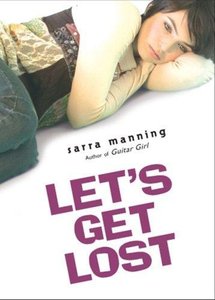
Let’s Get Lost by Sarra Manning

Let's Get Lost
Sarra Manning

I loved Sarra Manning’s adult offerings quite a bit, but I had not (until now) tried her young adult books, which I’ve also heard good things about. I bought many of her backlist in a glom-fest a couple months ago and grabbed Let’s Get Lost for a plane ride from NY to AZ.

The Premise: Isabel is a troubled kid. She’s the Queen of the Mean Girls at her all-girl school, and there seems to be no particular reason for her reign of terror. No one can reach her, even after her mother’s recent death. Girls expecting a softer Isabel at school at the start of her last year are disappointed by an Isabel that is just as cold as ever. That is how it looks on the outside. Internally, Isabel feels stuck. She decided to be mean in high school because she was bullied and insignificant in middle school, but now she can’t afford to relax her facade. Her crew aren’t really her friends and are constantly waiting for a slip. That’s when a chance encounter with college-aged Smith comes in. He doesn’t have expectations of what Isabel is like, and when she’s with him, she can be herself. That is, except for the fact that Smith doesn’t know Isabel is still just 17 and still in high school.

Read an excerpt of Let’s Get Lost here

My Thoughts: Of the three Manning books I’ve read so far (Unsticky, and You Don’t Have to Say You Love Me are the other two), Isabel is the most difficult character to like as a reader. The girl is no angel. We see Isabel at school, keeping her cohorts and other students in line with well placed verbal bombs, guaranteed to make the recipient squirm, and at home she bulldozes and back talks her frustrated father. Whenever she can, Isabel is out at clubs, stealing drinks off tables to get drunk, and pretends to be older than she actually is. Flanking her are three girls who she doesn’t like, who don’t like her, and who are just sticking around for the power and protection of their alpha girl group.  I think that if you can’t forgive Isabel for her many mistakes and nastiness, this story will be a difficult one to enjoy, but with Isabel as the narrator, at least we get an explanation for her actions, and we know that she doesn’t particularly like herself or what she’s doing. For me, it was a case of understanding why she acted the way she did, but not condoning it.

Smith on the other hand, is a much more sociable character. An easy-going guy with lots of friends, he accepts people as they are, including Isabel. The pull of this story for me was seeing the effect that being with Smith had on Isabel. For Isabel, being with him is like being on vacation as a normal teenager, not a girl constantly on guard. That side of her made me hope that somehow she could find a way out of her rut as Let’s Get Lost progressed. It was clear that Smith was a catalyst on Isabel’s life, but I wasn’t sure if he’d be a source of strength, or a point of weakness. On one hand Smith is a relief from the constant scrutiny Isabel deals with from school and her dad, but on the other, I wondered at the consequences of her lies, both to Smith and to everyone else about Smith.  I wanted Isabel escape the hole she’d dug for herself.  Throughout her narrative, you can feel Isabel’s underlying sadness. It’s like she has a dreamworld where Smith belongs that she’d also like to be, but she doesn’t believe she can attain it.

“My whole life had split into two: Smith and not Smith. I liked the Smith parts of it so much better. Already I was calculating how much of the weekend we had left and greedily clutching every hour to me as if it was precious. Was this what it was meant to feel like when you were really into someone? Was this what it felt like if you were in love?
As soon as I thought it, I knew that it was true. I kinda loved him. Or, like, I was in love with him. Either state of being was just too freaky to contemplate. The dripping toothbrush stilled in midair as I tried to pull myself together. I was a heartless, ungrateful wench of a girl who promised everyone who came into contact with me a one-way ticket to pain and hurt. I didn’t know how to love and I didn’t deserve to be loved back.”

If you’re wondering where Isabel’s parents are in this picture, her mom died pretty recently, and her father, (coincidentally a professor at the university Smith attends), is still devastated by the loss. Unresolved issues about her mother’s death hang in the air between them, and Isabel’s father ping-pongs between not being quite there, and being positively draconian. I really liked the complexity and imperfections of their relationship, and I liked that they share a prickly outside and high intelligence, which only leads to their butting-heads even more. This was refreshingly true-to-life. Also refreshing: that this was a Young Adult story that deals with the consequences of someone’s actions in a realistic way. There is no convenient lack of parents or neat resolution that absolves the teenaged protagonist of their sins. Isabel has to bear the reactions of others for what she’s done. And her mother’s death is an event that has it’s own consequences which Isabel has to deal with too.

Overall:  This was another good one but you have to work a little bit for it. The narrator does some unlikeable things, and that along with the high wall she’s built around herself makes her difficult to empathize with at the beginning, but as the book went on, it became easier to understand Isabel and what is beneath her mean girl veneer. It is well worth it to be patient and see where Isabel’s path leads, but if you can’t bring yourself to forgive her her misdeeds, this book will be more difficult  to enjoy. I found an unhappy girl who wants a different life under there, and the story doesn’t let her off easy – her actions have consequences that she must face. If you want a great story that deals with redemption, loss, first love, and teenage rebellion, Let’s Get Lost has it all. After reading it I have this sense of having returned from being in someone else’s headspace with a little bit more insight than I had before.

Buy: Amazon | Powell’s | The Book Depository

Other reviews:
About Happy Books – positive

Relic Master: The Dark City by Catherine Fisher

Relic Master: The Dark City
Catherine Fisher
I was offered a copy of this book from the publisher at the same time they pitched a giveaway for the whole series on my blog. I’d never read Catherine Fisher before, but I had heard murmurings about Incarceron, and I remember a glowing review from the Book Smugglers. Intrigued by the premise and this praise for the author, I said yes. Although this book is out now, my review is of an ARC copy.
 
The Premise: Raffi is a teenager who lives on Anara, a world with seven moons. A long time ago, it is said, the Makers came from the sky, and made the seas, the salt and soil, the trees and the animals. They left a long time ago, but they left ancient relics with sublime powers behind on Anara. The Keepers are those who safeguard the relics, but twenty years ago, their Order was destroyed. Now those of them left are in hiding, while those in power, The Watch, continue to root them out. Raffi is an apprentice Keeper, learning magic under the tutelage of his gruff mentor, Galen. They have been careful for a long time, but recently Galen has been reckless and unhappy. Raffi is concerned when a man shows up at their secret hideout, asking for their help. Things don’t seem right, but Galen accepts the job anyway. This kicks off a journey that takes them far from home in search of a powerful relic that could save the world.  If they get to it before anyone else does.
 
My Thoughts: This is the type of story that just begins and lets the world building occur organically. People spoke of Keepers and Watchers and Makers without qualifying what they were, and I gleaned their meaning from the words themselves and the context. Often clues about the world come as quotes from religious texts and scholars of Anara that serve as placeholders between chapters. In order to review the book I had to at least explain what the Keepers and Watchers were, but I did leave a lot out so that people can figure out things on their own. Part of the charm of the story is the puzzle that is Anara, although this technique also has its drawbacks (I’ll come back to that later).
 
The Dark City is told in the third person but the focus is mostly on the teenager Raffi, occasionally switching focus to a Watcher that is following the two of them across Anara. My ARC was 372 pages, but I easily read the story in a few hours. What made this such a fast read was that the language is very simple and readable. The writing and the story’s focus primarily on adventure puts the story on a middle grade to young adult level. I think I could easily recommend this to my ten year old nephew and be fine, but an older teen (not to mention me), could also read this without feeling bored.
 
I think the simplicity of the language brings to mind the writing of Megan Whalen Turner, particularly in comparison to her book, The Thief, which also a “journeying in search of a special item” story. In terms of characters, The Dark City doesn’t have the same complexity though. It may be because the story has been broken up into four installments, but in The Dark City, we only begin to go beyond the surface of the main characters. By far the most complex is Galen, Raffi’s tutor, who is very obviously scarred by something that happened to him. Raffi is his worrying, cautious apprentice who we get the story from, but he’s a simpler to understand character. The Watcher is the third member of their group, and their character is one that gives us a glimpse of the other side and what the Watchers believe. There is an interesting dynamic once the Watcher shows up because of the web of lies and suspicion that results, but it never becomes truly diabolical.
 
I think that the story is more plot centric than it was character centric. And the plot surrounds the mystery of Anara. Throughout the story I wondered why the Watchers originally attacked the Order and the original Anaran rulers, and who the original Makers were. The Order of the Keepers could do magic, and Raffi does show magical ability throughout the story, but the relics that he and Galen safeguard seem awfully familiar. I am certain the relics were technological in nature, but Raffi and Galen treated them as powerful sources of magic. I was very curious about that – are these relics really advanced technology or magic? If it’s not magic, how is the magic that the Keepers can do (not to mention the magic that the race of Cat people that also live on Anara can do) explained? Can they be both? This is where the drawback in the storytelling comes in. I think that it is the intent to hold back information from the reader and to give small pieces of the puzzle as the series goes on, but it can be frustrating. I am used to having my world building established within the first book of a series, but in this series, it is the draw for continuing. A great device for reluctant readers (I also noticed that each chapter ended in a mini-cliffhanger, another technique for keeping a reader reading), but it can feel a little manipulative.
 
Overall: This is an entertaining adventure story that should appeal to young readers. I love stories that straddle both magic and technology in their world building so that really appealed to me, but I did feel a little frustrated that some information is held back about Anara. This is a technique works for getting reluctant readers into a story, and this is a book whose audience is younger than I am (I’d put this in a high MG to YA range), but I didn’t expect it to work on me too. I feel compelled to keep reading the series just to figure out what’s going on.
 
Buy: Amazon | Powell’s | The Book Depository
 
Other reviews:
Charlotte’s Library – positive

Love Story by Jennifer Echols

Love Story
Jennifer Echols
This is a review of an ARC copy I got in a contemporary romance spending spree (won from the author at a charity auction).
 
The Premise: Erin grew up in a wealthy environment. She was raised by her grandmother who wanted Erin to major in business so she could take over the family’s racehorse farm one day. When Erin decides instead to follow her dream of being a writer, she’s summarily cut off. Hunter Allen, the son of the stable hand is given Erin’s inheritance and her tuition, while Erin has to work her way through school. Knowing that Hunter will be going to the same New York university is on Erin’s mind, and so for her first assignment in her honors creative writing class she writes a romance between a horse farm heiress and a stable boy. She’s mortified when Hunter joins her class at the last minute and reads her story.  Then he writes his own story, “responding” to hers.  Thus begins a game where the two begin to communicate to one another through their class assignments.
 
My Thoughts: I loved the premise of the story. It seemed like this was a “boy and girl act like they hate each other but they really like each other” story. What I ended up getting in Love Story was much more complicated than that. I like complexity and depth in my stories, but something here didn’t quite work and I’m having trouble saying what it was. I’m writing this review as I’m sorting through what that missed connection was.
 
First of all, I am not sure if it was my expectations getting in the way, but I found Erin and Hunter’s interactions a little strange from the get go. When Erin’s story is presented to the creative writing class Erin expects Hunter to make fun of her, but instead she can tell that Hunter is angry and hiding it from the class. His reason for this anger? That either she’s making fun of him, an idea he quickly dismisses since she wouldn’t know he was going to be in her class, or that she must have liked him in middle and high school, but still let the kids there call him her “stable boy”.  It wasn’t easy to follow the jump from secret crush to ‘if you liked me you have should have stopped other kids from making fun of me’ (I’m paraphrasing here) and then actually being angry about this, but I held on. Similarly, Erin’s response to that is that if Hunter can come up with only two explanations for her story, then he is oversimplifying her and this is to make things easier for him to steal her entire life. Another wild jump that I found difficult to follow, and again, I accepted it and continued on.
 
So I moved on, but I think these hang-ups that Erin and Hunter had about each other clouded the story quite a bit. On one hand I think that we’re seeing the obstacles between Erin and Hunter and the baggage each has from their past, and this baggage must be overcome for them to be together, but on the other hand, I don’t really know about their past history. When they react to each other, as a reader without the history to draw on and having to infer it based on what’s being said, it’s difficult. I don’t have a clue why Erin didn’t talk to Hunter throughout their school years or why Erin is so convinced that Hunter is stealing her life rather than being angry with her grandmother for giving it to him. So when I read their conversations, there’s several times where I’m not sure if the logic is off or I’m just not following a jump the characters have made because of their past history.
 
I much preferred their relationship when it is not overshadowed by the past. Their tentative relationship that stems from their belonging to the same circle of friends and live in the same dorm is much easier to follow. Everyone else is forming new relationships so when Erin and Hunter aren’t alone, but surrounded by Jørdis, Summer, Manohar, and Brian, things flowed extremely well.  The setting of New York City and dorm life was extremely vivid and believable, and in this setting and restricted to reacting to the present (at least amongst their friends), I liked how things were moving along. Hunter and Erin circle one another within their group of friends, and communicate as if they’re across enemy lines. One of the ways they communicate is through their class assignments and once it becomes known amongst a select few that Hunter and Erin knew each other growing up, their little skirmishes gets an audience that sometimes noses it’s way in.
 
When Hunter and Erin finally seem to hit a truce, I had high hopes. It seemed like these two were finally admitting their feelings for each other to one another and that they were communicating this. Then one last obstacle gets in the way. Suddenly the story that I thought was ending very satisfactorily was going down the tubes. I think that what aggravated me most about this final misunderstanding and how the main couple acted was the believability factor.  I just couldn’t believe how Erin would react the way she did when it jeopardized what she said over and over was her fervent goal. The drama soured the end of the story for me, and it left me with a feeling of disconnect from the relationship. I wish the book continued a little further past the point it stopped so I could move on from the sour taste, but it does not.
 
Overall: I feel like I went on a journey with this book. I started with high expectations, had a bit of a bumpy ride while reading it for various reasons, started to love the ending, then did not love the ending. I wanted to love this story and there are many things I liked about it including excellent sense of place (both in New York City and on the horse farm), and an extremely readable writing style, but in the end there were too many things that left me with my feathers ruffled.
 
Buy: Amazon | Powell’s | The Book Depository
 
Other reviews:
christina_reads – rocky start, ended up enjoying it
chachic’s book nook – didn’t fall in love with it
the reading date – 3.5 out of 5 stars
La Femme Readers – 4 out of 5 flowers

Shut Out by Kody Keplinger

Shut Out
Kody Keplinger
The DUFF is one of my favorite reads of this year; I loved the real and unvarnished voice of the main character, a teen distracting herself from her problems by having a physical relationship. When I found out that Kody Keplinger had another book in the works, based on Aristophanes’ play, Lysistrata, I mentally put it on my list as a book to look for in the fall.  But I didn’t have to wait that long – Shut Out was one of the offerings at BEA. Yep, I was so there. This is an early review of an ARC copy. This book doesn’t come out till September but I am planning a giveaway of my extra copy in a day or two!
 
The Premise: (taken from the back blurb) “Most high school sports teams have rivalries with other schools. At Hamilton High, it’s a civil war: the football team versus the soccer team. And for her part, Lissa is sick of it. Her quarterback boyfriend, Randy, is always ditching her for go pick a fight with the soccer team or to prank their locker room. And on three separate occasions Randy’s car has been egged while he and Lissa were inside, making out. She is done competing with a bunch of sweaty boys for her own boyfriend’s attention.
Lissa decides to end the rivalry once and for all: She and the other players’ girlfriends go on a hookup strike. The boys won’t get any action from them until the football and soccer teams make peace. What they don’t count on is a new sort of rivalry: an impossible girls-against-boys showdown that hinges on who will cave to their libidos first. And Lissa never sees her own sexual tension with the leader of the boys, Cash Sterling, coming.”
 
My Thoughts: What I liked about The DUFF was that its main character felt like a real teenager, and I was glad to see that the same is true about Shut Out. Lissa Daniels is a normal girl with a fairly typical life. She lives with her father, a counselor at an elementary school, and with her older bother, Logan . She’s a good student, has a steady boyfriend who fits in with her family, and she works at the local library as a part time job. Fairly normal stuff, except for losing her mother a few years ago in the same car crash that left her father in a wheelchair.
 
Then there’s dealing with her boyfriend’s obsession with the feud between the football and soccer teams at her high school. From Lissa’s point of view (a view shared by many), the feud is pointless; the teams belong to the same school, and hardly any of the boys can remember why they are fighting.  When Lissa tells her boyfriend Randy to stop before someone gets hurt, Randy doesn’t take her seriously. He is oblivious that Lissa’s problem with the feud has to do with how it affects their relationship, and Lissa finds it difficult to articulate her feelings. As it is, he brushes off her repeated requests to stop. That’s when Lissa gets fed up and organizes the hookup strike with girlfriends of players on both sides of the fighting.
 
This is where things begin to get interesting. The boys are in an uproar, and relationships weaken, particularly Lissa and Randy’s. The boys begin to band together against the girls. Suddenly it’s a war of the sexes.
 
Amongst the fallout, the strike opens up a dialog, particularly amongst the girls. It becomes an opportunity for the girls to get closer and to talk to each other about sex.  I loved that the girlfriends – all very different from one another, had a chance to air out individual experiences and hear from the rest of the group. Things like what the “normal” level of intimacy is, using sex to manipulate people, and what the line is with what they’re doing. What I particularly liked was that the realization that there is no such thing as normal. I found that the message that everyone goes through feeling inadequate just because they don’t think they conform to an idealized normal, is a similar message that was in The DUFF. The DUFF just focused on the appearance side of the message, and Shut Out focuses on experience. This is a positive message, and I think it’s great that Shut Out speaks frankly about sex and teens, but  the “lessons” about sex also lent the story a very obvious moralistic slant, and there are a lot of these lessons. Lissa talks through sexual rights and wrongs with other characters on several occasions.
 
I’m far from being a teen so these messages do little for me now, but I think I’d have liked to read a book like this when I was in my early teens. The only small issue I really had was about one of Lissa’s friends who has a cavalier sexual lifestyle. I didn’t think much of it until she explains it as a need to have some control in her life after her dad moving out (but doesn’t want anyone to psychoanalyze her). Maybe the message was not to judge people for their private decisions, but it didn’t The DUFF illustrate what a bad idea it is to deal with your problems this way? The contradiction bugged me.
 
Anyway, on to the romance in this story, which was big subplot. While Lissa and Randy’s relationship falters, her relationship with Cash Sterling becomes stronger. Not only does Cash now work at the library with Lissa, but it’s revealed that they have a little bit of a back story. Things being as they are, there are a lot more opportunities for these two to be thrown together, and of course sparks fly. It’s a bit of a love triangle, but not really. I think the story makes things very clear cut so Lissa can’t be accused of cheating. Without going into it, it becomes very obvious who the right person for her is, while at the same time not making anyone a cardboard villain without any redeeming features. I understood the qualities that drew Lissa to the guy she doesn’t end up with.
 
Lissa’s role as the leader also gives the story an opportunity to touch on sex as a weapon. Lissa begins to get very caught up in the “war” and goes a little overboard in her “attack”, so there’s a scene that covers teasing and when the term is used unfairly and when the term really applies. Excellent scene, although the response of the guy involved felt a little unreal for a teen-aged guy, it was great to see how mixed up and emotionally invested the whole thing is making Lissa. I really liked how Lissa’s progression from going too far to figuring out the right thing to do went, although I did feel like the final smoothing over of misunderstandings between Lissa and her chosen guy was missing something, which was an apology from Lissa for how she acted.  I didn’t see that and it left me with a nagging feeling when I got to the end.
 
Overall: Like The DUFF, Shut Out is a very real, very readable young adult story that doesn’t shy away from the topic of sex and teens. While I think that this is a book that has a lot of great messages, it’s more obvious than The DUFF as a Topic Book. I sometimes I felt like it tries to cover too much in what it tackles: I’d have preferred that it stuck to one or two important points and left the rest for some other story. But even with its agenda, Shut Out is still an engaging story. Lissa was an easy-to-relate-to narrator, the story was well-written, and the romance was a sweet one. I didn’t love this one like I loved The DUFF, but I liked it.
 
Shut Out comes out in September.
 
Buy: Amazon | Powell’s | The Book Depository
 
Other reviews:
It’s a little early yet.