Enclave by Ann Aguirre

Enclave
Ann Aguirre

Ann Aguirre is one of my favorite authors, particularly for her Sirantha Jax series, which is a science fiction romance. I’ve been eagerly awaiting Enclave since I first heard that Aguirre would be trying her hand at YA dystopia. This is the first installment of the Razorland series.

The Premise: In the enclave, children have numbers, not names, unless they live till their fifteenth birthday. Then they’re given a naming ceremony and a place as a Breeder, Builder, or Hunter in the society. Deuce (formerly Girl15), has just been named and given a spot amongst the Hunters – an honor she’s been training for as long as she can remember. Now she can leave the enclave, and bring her people food, and she can protect them from the Freaks – creatures that live in the tunnels that would like nothing more than to feast on human flesh. All her life, Deuce has only known a world that is underground, where the oldest is in his early 20s, and where people don’t live for more than that. It’s a world with very little, but it’s the only world Deuce has ever known. Deuce is partnered with Fade, the only Hunter who wasn’t born in their enclave. Fade has never really fit into the enclave, but he’s the best fighter they have, and Deuce is eager to prove herself worthy of being assigned to him. But being a Hunter brings a different perspective to all that Deuce knows. During their patrols Deuce and Fade encounter Freaks with more organization and intelligence than the norm. When their warnings about this eerie Freak behavior are ignored or suppressed, Deuce begins to question the leadership of the enclave.

Read an excerpt of Enclave here

My Thoughts: Enclave is basically three parts. At first the focus is narrow. The story revolves around Deuce’s small sphere and all that is familiar to her. When Deuce begins to think beyond the small borders of the enclave, the spotlight expands. She discovers where her partner, Fade originally came from. The last part expands the world even further beyond that.

For the size of this book, a lot happens. I liked that the story manages to blend in action, a gritty world, and a budding friendship into the story, and I think this is what made the beginning of Enclave particularly strong for me. When Deuce’s narrative begins, we’re introduced to the daily life of a semi-primitive tribal culture. It has three basic roles (Hunter, Breeder, Builder), a leadership structure based on age (over twenty makes you an elder, as this is a very small group), and a painful initiation ritual into “adulthood” (cuts made on the arms that are seared closed by hot metal).  Deuce knows only the limited scope of this enclave, which is in the Underground. Only after she becomes a Hunter and assigned a partner can she see what’s outside her home. It’s not clear what the year is or what has happened to make the world it is in Enclave, but there are enough hints to say that it is our world that has been hit by some apocalyptic event that has reduced the world to rubble and society into small tribes like the enclave, and created monsters like the Freaks.

Because Deuce is a Hunter, that brings plenty of action and the story goes at a fast clip. Deuce is eager to prove her mettle, but she is also learning about Fade and about her the Underground. The action adds drama to the story, but the plot moves along because of Deuce’s path of discovery. Fade isn’t very talkative but as time goes on Deuce begins to trust him, and she knows he doesn’t like the current leadership. Their relationship evolves through time and trials, but Fade keeps a lot close to his chest. What he does tell her, Deuce has trouble believing, but she begins to question. She debates the need for rules and leadership, against inhumane punishments to keep the enclave in line. A leadership that keeps tight control is particularly dangerous when there is important information being suppressed.

But before anything really happens in the enclave, the story changes gears. Fade and Deuce move on together, away from what Deuce is familiar. Deuce continues to learn about her world, and along the way other teen characters are introduced. The shift is a little abrupt for me and left some dangling threads. I think as a series it’s more interesting for Deuce and Fade to travel outside the enclave, but the way this story was presented, it felt like some set up was abandoned. As a result, the second half of the book felt like a restart. Again a new setting and new characters are introduced to us, but thankfully Fade and Deuce stay constant. On the other hand, with new characters introduced late in the story, I didn’t feel like there was much time to get to know them.

There’s a hint of a love triangle with Fade, Deuce, and one of the new characters as well, but it is an odd choice. One of the things I like about Aguirre’s writing is the darkness she brings into her stories. Sometimes this is in the form of dark heroes – people who have done unlikeable things in their pasts but who I still root for. In Enclave the darkness is primarily in the world building, but it’s also in Fade’s past and Deuce’s choices for self-preservation. However, in the potential love triangle, I found the third person VERY unlikeable and a better choice as a villain than a romantic interest. Depending on what happens with this character, it could either be a show stopper or a deal breaker in a later book. I have my fingers crossed.

Overall: My reaction is that I was entertained. Aguirre’s writing keeps me interested in what’s going on and there’s enough darkness in this story to add depth, but the concepts themselves feel familiar. The underground setting after a post-apocalyptic event, the humanoid creatures craving human flesh, and society broken down and ignorant of the past are familiar tropes. But this series has a lot of potential. I think the slowly evolving relationship between Deuce and Fade and their fighting partnership is what has me hooked. I also suspect that now that the world has been established, the characters will have more room to grow. I would actually want to read the second book, and there’s are a lot of other YA dystopian series I’ve started where I couldn’t say the same.

Buy: Amazon | Powell’s | The Book Depository

Other reviews:
Steph Su Reads – didn’t like this one
Babbling about Books and More – B-
Scooper Speaks – very positive
See Michelle Read – positive
Fantastic Book Review – 4.5 out of 5

Forget You by Jennifer Echols

Forget You
Jennifer Echols

This is one of the books in that slew of Jennifer Echols books I bought, which I managed to read on the plane ride to Denmark last month.

The Premise: Zoey is going through a tough time. Her parents have split up because of her father’s infidelity (he got the twenty-four year-old HR manager of his water park pregnant), and her mom cannot cope with it. When her mother has a nervous breakdown, Zoey’s life is completely upended. Now she has to live with her father and she’s terrified that her friends will find out about her mom.

Then Zoey has a car accident. All she has is a vague recollection of Doug Fox, pulling her out of the wreck, but not much else. Now her football player boyfriend Brandon is acting weird and Doug Fox, the one person in her class who hates her, is acting like something happened between them. Zoey knows she was supposed to go parking with Brandon that night, but she can’t remember a thing.  With little she can control, Zoey pretends that everything is okay while secretly trying to piece together exactly what happened the night of her crash.

Excerpt of Chapter 1 of Forget You

My Thoughts: This is a book where it’s pretty clear from the get go that while Zoey is a good kid, the strain of dealing with her parent’s fighting and her mother’s depression is something she’s having a very hard time dealing with. The story opens up with a prelude: Zoey driving home after finding out at her father’s water park that he got an employee pregnant. Since Zoey helped get most of her swim team get jobs there, they all know too. Unable to talk to anyone about what’s going on, she does something rash, but this time there are no dire consequences. But her rashness here proves to be the beginning of a pattern for Zoey – one in which her her hidden turmoil makes itself known in self-destructive ways.

Fast forward to the present and Zoey gets hit with the blow of her depressed mother’s hospitalization. Zoey has to move in with her furious dad, who wants her to keep her mouth shut about what is going on. The only people outside their family who know are Officer Fox and his younger brother, Doug. Zoey is appalled about this, since Doug’s given Zoey nothing but a hard time ever since his stint in juvie. His dislike doesn’t improve after she got everyone in the swim team a job at the water park except for him.  Rather that confiding in any of her friends, and studiously avoiding Doug, Zoey starts a relationship with uncomplicated jock Brandon. But within a week she’s in an accident, wondering why Brandon is acting strange and guilty, and why Doug is suddenly soft-eyed around her. Zoey can’t remember the night of her accident and she’s afraid to admit she can’t, so she pretends, again, that everything is fine, while secretly scrambling to figure it out.

I really liked Doug’s character in Forget You, because he’s essentially this guy who really tries to looks out for Zoey and has her back even when she doesn’t want it. You have to give the boy points for being pretty much the only person, including her missing-in-action parents and her clueless friends, who seems to spend any time worrying about Zoey. As together as Zoey usually is, no one really knows she needs help except Doug. Now, Zoey doesn’t exactly welcome his interest, mostly because she can’t really remember what happened the night of her accident and doesn’t know why Doug suddenly cares. I’ve read reviews where readers don’t like how Zoey treats Doug, but I found her reactions to him believable. Yes, she hurts him, but with all that she’s dealing with, and with her past history with him, she has reasons to be mistrustful and generally unhappy. She also thinks that she is with Brandon. I liked how their relationship progressed throughout the book despite it being rather rocky.

I feel like Forget You has the same engrossing writing that is in Going Too Far, and there’s a similar intense relationship, but while I thought it was very good, it didn’t blow me away the way Going Too Far did. It’s not that I didn’t like Doug and Zoey as much as I liked John and Meg. I did. I think the problem that kept the book from giving me the same reading high was that the story hinged on believing that Zoey would keep the fact that she can’t remember the night of her accident a secret. I had a problem with holding my disbelief at bay when it seemed like life would have been so much easier for her if she admitted she couldn’t remember, and basically the whole premise falls apart without this. That’s the only fly in the ointment for me. Otherwise I felt that Doug and Zoey were complex, layered individuals, and I liked them as a couple. I particularly liked Doug’s Being There For Zoey persona. Although he did sometimes feel unreal, his crappy relationship with his father, and his missteps with Zoey stopped him from being perfect.

Side note: I also liked that Doug was half-Japanese, although his green eyes gave me serious pause.

Overall: Very good. This book portrays the intense connection of young love and the strain of being a teen going through troubled times very well. The writing is engaging and it’s easy to compulsively flip the pages until you are finished. However, it does have it’s flaws. My biggest one was suspension of disbelief at the idea of a girl hiding the fact that she can’t remember the night leading up to her car crash, which kind of makes the whole premise, and everything after that, unravel. Readers may also have issues with Zoey’s treatment of Doug and her methods of escaping her situation. Your mileage may vary.

Buy: Amazon | Powell’s | The Book Depository

Other reviews:
The Compulsive Reader – positive
Chachic’s Book Nook – positive
Giraffe Days – positive
Pirate Penguin’s Reads (mini review w/ Going Too Far) – 4 stars (out of 5)
La Femme Readers – 5 flowers (out of 5)
Steph Su Reads – 2.5 out of 5
Book Fare Delights – 3 out of 5
Ramblings of a Teenage Bookworm – 5 (out of 5)
Angieville – “great setup that fell flat”
See Michelle Read – positive
Pop Culture Junkie – 4.5 out of 5
Gossamer Obsessions – B
Lurv a La Mode – 4 scoops (out of 5)
Ticket to Anywhere – positive

A Conspiracy of Kings by Megan Whalen Turner

A Conspiracy of Kings
Megan Whalen Turner

I’ve been reading one of these a week since I finished The Thief. This one I finished in one day during our cruise. I’m going to try to review this one without spoilers, but if you haven’t read this series before, here are my reviews for the first three books:

Book 1 – The Thief https://i0.wp.com/i58.photobucket.com/albums/g254/jayamei2/livejournal_com.gifhttps://i0.wp.com/i58.photobucket.com/albums/g254/jayamei2/wordpress.jpg
Book 2 – The Queen of Attolia https://i0.wp.com/i58.photobucket.com/albums/g254/jayamei2/livejournal_com.gifhttps://i0.wp.com/i58.photobucket.com/albums/g254/jayamei2/wordpress.jpg
Book 3 – The King of Attolia https://i0.wp.com/i58.photobucket.com/albums/g254/jayamei2/livejournal_com.gifhttps://i0.wp.com/i58.photobucket.com/albums/g254/jayamei2/wordpress.jpg

This is a review of an ARC copy another blogger passed along, but I need to get the finished copy since I hear that there’s new (and possibly awesome) scenes in the finished copy that aren’t in the ARC.

The Premise: This time the focus shifts away from Eugenides and towards his friend Sophos (who was introduced in The Thief). Sophos is the heir of Sounis, but he’s not very keen on becoming king. He’d be happy if he uncle marries and produces another heir. In the meantime, he would rather spend his time with his books and poetry than on learning how to govern. Then one day his uncle’s barons change the game by attacking his family’s villa. Betrayed by those he trusted, Sophos finds himself getting exactly what he wanted: to be absolutely nobody.

Browse Inside The Conspiracy of Kings

My Thoughts: Megan Whalen Turner goes back to the first person point of view again with A Conspiracy of Kings, and yeah, I kind of missed this. I like a good first person POV, and while Sophos’ voice isn’t as sarcastic as Gen’s, he has his moments. He’s a very affable person. Sophos is that guy that almost everyone likes because he’s such a sweet soul. He even befriends Gen all the way back in The Thief, and Gen notes then that Sophos “was much too nice to be a duke”. Unfortunately for Sophos, he is a duke, and not just a duke; he is the heir of Sounis. While he’d love to bury himself in poetry and books, his father and uncle want him to toughen up. They send Sophos to the island of Letnos, far from the influence of Sophos’ favorite mentor, the magus, but Sophos just isn’t interested in war and how to wage it. He chafes under the revolving door of tutors and wants to be allowed to follow his own interests. He wishes that his uncle would marry and quickly produce another heir.

His wish is not granted. Instead, Sophos and his family are attacked at the villa and Sophos is spirited off. Now he’s nameless, helpless, and no one can find him, all while his country is weakened and vulnerable to it’s enemies. Sophos realizes with bitterness the cost of not being Heir to Sounis, but he has the choice to reverse his fortune. Sophos can fade into obscurity and be free from the responsibilities he said he never wanted, or stride towards the destiny he once shied from.

This is essentially a story about Sophos growing up and making a conscious decision about who he wants to be. Before this book, I’d always sympathized with Sophos as an heir to a warmongering king (and there is at least one other character in this series who doesn’t love being royalty), but here for the first time I saw the argument that his detractors had been trying to make. To avoid his responsibilities and education as heir is the act of a boy who cannot see beyond his own personal problems, not that of a man who has to lead a nation. I think that Sophos’ likability in The Thief obscured this flaw a little, but I love how it becomes center-stage in A Conspiracy of Kings, and how the story handles Sophos’ character development.

Sophos is the main character in A Conspiracy of Kings, and much of his story is of his own journey but we do see reappearances from characters from earlier books, and yes, that does include Gen. From Sophos’ perspective the brief glimpses of Gen show yet again a different facet of his character. I have mixed feelings about that, but I couldn’t really fault his behavior, since his character seems to be constantly evolving. I think that while you probably could read this series out of order, there is an evolution that is better when it’s followed in the correct sequence. The character growth is a large part of that, but I also think that the understanding of the overarching plot arc and the world building is worlds better when you read this series in order.

I’m looking over this review and wondering if I’m leaving out one essential point, which is that I really liked A Conspiracy of Kings! I like good guys like Sophos, and rooting for him was easy. I was turning these pages like crazy person to see if he would be alright. Megan Whalen Turner throws in a couple of twists and turns along the way, including a whopper which will likely impact as-of-yet untitled Book 5, but I was left feeling quite pleased with how things turned out.

Overall: Another good one (at this point, was there a doubt?), with the same great storytelling, character development, and surprise twists as the earlier books. I enjoyed the return to a first person point of view, even if Gen wasn’t the main character. Sophos is a nice guy that I could root for and I still got my Gen fix. Each installment adds a little more to the whole series, and while A Conspiracy of Kings ended satisfactorily, it has me very curious about what we’ll see in Book 5.

(Yes, I know the next book may not be out for a couple/few years, but I’m willing to wait).

Buy: Amazon | Powell’s | The Book Depository

Other reviews:
The Book Smugglers – 9 (Damn near perfection)
See Michelle Read – positive
Fantasy Literature – 5 stars (out of 5)
Chachic’s Book Nook – positive
The Book Bluff – positive
fully_immersed – 4 out of 5
Stella Matutina – 4 (out of 5)

book trailer:

The King of Attolia by Megan Whalen Turner

The King of Attolia
Megan Whalen Turner
Well I’m just going through this whole series for some reason. *cough*.
 
Book 1: The Thief https://i0.wp.com/i58.photobucket.com/albums/g254/jayamei2/livejournal_com.gifhttps://i0.wp.com/i58.photobucket.com/albums/g254/jayamei2/wordpress.jpg
Book 2: The Queen of Attolia https://i0.wp.com/i58.photobucket.com/albums/g254/jayamei2/livejournal_com.gifhttps://i0.wp.com/i58.photobucket.com/albums/g254/jayamei2/wordpress.jpg
 
**** This review does spoil earlier books so if you haven’t read The Thief and The Queen of Attolia, here’s your chance to leave. I’m going to be circumspect in the premise and first paragraph, then I’m diving in. 🙂 ****
 
The Premise: Costis is a captain in the Attolian palace guard and he has very little respect for the new king of his country. Like most Attolians, he’s certain that his queen is not a willing wife to the new king, a weak and silly man, who is nothing like how a king should be. So when the king makes a disparaging remark about the Attolian guards, Costis sees red and hits his king in the face. This begins his own personal nightmare as he’s forced to redeem himself by becoming the king’s new whipping boy. It also gives Costis an up-close view of the new king of Attolia and the longer he serves him, the more he discovers.
 
My Thoughts: Heheh, things get good in this installment. Once again the story is in the third person, but the focus is now on a new-to-us character – Costis, a member of the Attolian palace guard and what his perspective is on his king and queen shortly after their wedding and the treaty between their two countries. Costis is a very straightforward kind of guy. He’s honest about how he feels and he prefers things to be simple and out in the open. Which makes him not only the complete opposite of his king, but an easy target.
 
I really hope that the people who haven’t read the first two books are gone now so that I can stop dancing around who is now king. If not, you did this to yourself.
 
Alright, so by the third book, I think readers have gotten to the point where they have certain expectations of Eugenides. Namely: you don’t underestimate Eugenides. He’s just good at thinking several steps ahead and at pretending to be more vulnerable and powerless than he actually is. While this is something that I love about his character, he can’t approach his current situation the way he is indefinitely. The problem here is that he is king, and as Costis tells him after hitting him, it is “because you didn’t look like a king”. I think that part of Eugenides reluctance to take up the reins of power and to really show his true strength is that he wants to be married to Attolia, but becoming king to be married to her wasn’t something he thought about. Now he’s far from his home and family in unfriendly territory.
 
This book is about Eugenides moving forward towards accepting his position. He already has it in him to be kingly, but these are the first days of his rule in a country that has its share of unrest. Its Barons test the Queen when they can, and no one likes the new King. It’s in Eugenides’ nature to poke fun at people even when they don’t know that they’re made fun of. He dances with the wrong girls, he falls asleep at important meetings, he looks bored and foolish.
 
The fun of this book was sitting back and seeing him through the eyes of a new character and in a new role and setting. It’s fun to watch the subtle progression in Costis’ feelings as the book goes along, because he becomes privy to things other Attolians do not see. For instance the relationship between the king and the queen, and Eugenides’ weak moments. There’s a certain amount of darkness there, much more than previous books.
 
I think this may be my favorite of the series, but I don’t think it was perfect. There were parts that felt over explained, and this is a series that explains though showing – so for instance the relationship between Eugenides and Attolia was sometimes theatrical. I also felt like part of this book had Eugenides exerting his powers to direct Attolia towards a different rule – one that has less fear and mistrust, and they way this was shown was problematic. I felt like some parts were heavy handed if you got what was going on, but on the other hand, if you didn’t understand the point of what Eugenides was doing, it may just look confusing.
 
Overall: I pretty much loved The King of Attolia. There were minor details that I felt could have been better, but otherwise I had a ton of fun reading it. I think it appealed to the thinker-aheader in me to see if Eugenides could surprise me.  I love books that do that.
 
Buy: Amazon | Powell’s | The Book Depository
 
Fantasy Cafe – 8/10
Emily and Her Little Pink Notes – 5/5
Angieville – positive
Stella Matutina – 4.5 stars
Book Harbinger – positive
fully-immersed – positive
All About Books – positive
jmc-bks – positive

The Queen of Attolia by Megan Whalen Turner

The Queen of Attolia
Megan Whalen Turner
This book may be one of the oldest books on Mt. TBR in the Janicu Household (if not the oldest), but before you admonish me for this, I stopped reading it because it was a sequel. And I didn’t buy The Thiefuntil 5 years later. This is what happens when you are easily distracted.

I think you should read the The Thief before Queen of Attolia because this book’s world and characters don’t make as much sense without the first book. There’s also one thing that the second book would probably spoil for you in The Thief.  I’m going to try to avoid spoilers in my review, but for those who haven’t read The Thief, here is my review of it: https://i0.wp.com/i58.photobucket.com/albums/g254/jayamei2/livejournal_com.gifhttps://i0.wp.com/i58.photobucket.com/albums/g254/jayamei2/wordpress.jpg

The Premise: The story begins with Eugenides in Attolia again, using his skills as a thief to spy on the Queen of Attolia.  Attolia seems to be getting friendly with the ambassador of the Medes Empire, a nation held in check from invading the three countries of Attolia, Eddis and Sounis by treaties with greater nations, but never-the-less, they are a threat. Unfortunately for Gen, he can’t help leaving messages for the Queen to let her know that he was there, which infuriates her and makes her very determined to catch him. This time  – she does. It is not long before Eugenides and his homeland are paying for this mistake.

Excerpt from Queen of Attolia

My Thoughts: I had mixed feelings about stepping back from Eugenides in this installment of the series. He’s no longer the narrator, and I miss getting a shot of his wit from his own mouth. On the other hand, with the point of view being in third person, I can see what other characters are up to, especially the Queen of Attolia, and it makes sense to change the point of view when the story is not so much about Eugenides, as it is about the political turmoil ignited by his capture by the Attolians. And don’t get me wrong – Eugenides still feels like the main character. It is just that this time the focus is not always on him.

Luckily, the switch to third person wasn’t a hardship. As long as I had a dose of Eugenides I am happy. And I think part of me was also pretty forewarned. It turns out that I read far more of The Queen of Attolia than I thought I did before I realized it was the second book in a series. I thought I didn’t get past the first chapter, but when I was reading Queen, everything was familiar for the first 175 pages. There were elements of this story that ended up not surprising me, but which I think would be surprising to others – particularly what happens at the start of this book.

It all begins with a shocker, and a good chunk of the first half of this story is characters adjusting to what happened. Things are hard for a little while for certain characters, but there are bigger things going on. Attolia, Eddis and Sounis are embroiled in war, with the Medes Empire looking on with decided interest in the outcome. With such mechanisms going on, there’s quite a bit of plot that deals with the skirmishes between armies. The strategums employed by Eddis and Attolia are particularly fascinating, and I was rooting for one country in particular, but I have to admit that war games aren’t my favorite thing in fiction. Thankfully, while the story does cover the fighting, there’s plenty of focus on individuals to stop me from becoming bored.

Of course the individual I found myself caring most about was Eugenides, and again, he does not disappoint. I loved his role in this story, and how he manages to steal Peace, a man, and a Queen. There also a nice dash of romance in this one, although one character involved in it kept things closer to the vest than I’d fully like, it is a very, very good beginning, and I can’t wait to read the next book.

Overall: A great second installment. The focus is widened beyond Eugenides so that the changes to Sounis, Eddis and Attolia are displayed, but he still stays a central character. He may not be the same carefree boy he was in The Thief, but once you’ve fallen under the spell of Eugenides’ mix of wit and vulnerability, you’re in his corner forever, eager to see what mess he’ll put himself into next, and how he will get out of it. This book is a bit more serious than the last one, but I love where the story went and the romance we glimpse. Here is where I say I can’t wait to read the next one, but I’m already reading it.

Buy: Amazon | Powell’s | The Book Depository

Other reviews:
Angieville – positive
The Book Harbinger – positive
Fantasy Cafe – 9/10
Emily and Her Little Pink Notes – 5/5
Presenting Lenore – positive
Monkey Bear Reviews (spoilery) – B+
jmc_books – B+
stella matutina – 4 stars (out of 5)
It’s All About Books – positive
Dear Author – B+
calico_reaction (spoilery) – “Worth the read” with caution

The Thief by Megan Whalen Turner

The Thief
Megan Whalen Turner

This is one of those series that is beloved by many which I just haven’t read. Actually. Strike that. I heard about it and tried to read it something like 8 years ago, but I didn’t know it was a series or what order the books were in. I tried to read The Queen of Attolia, and felt like it wasn’t making much sense. I don’t recall getting past the first chapter. (This is why publishers should put series information on book covers). Anyway, I figured out much later that the first book is really The Thief, and got myself a copy through a giveaway from  Dreams and Speculation.  I’ve been nudged to read it from a veritable mob of book bloggers: Ana from The Book Smugglers, Chachic, Angie, and Kristen – and that’s just the people who piped in on twitter last month when I said I still had it on the TBR.
 
Being the self-preserving girl that I am and realizing that BEA is coming up, I decided I better read it.
 
Alright you guys. I liked it.
 
The Premise: I don’t think I can do better than the back blurb: “‘I can steal anything.’ After After Gen’s bragging lands him in the king’s prison, the chances of escape look slim. Then the king’s scholar, the magus, needs the thief’s skill for a seemingly impossible task-to steal a hidden treasure from another land. To the magus, Gen is just a tool. But Gen is a trickster and a survivor with a plan of his own.
 
Browse inside The Thief
 
My Thoughts: Despite the build up for this book, I wasn’t worried that the book wouldn’t live up to it’s promise. Based on the number of people recommending this whose tastes are similar to my own, it was a fair bet I’d like it too,  so it’s unsurprising by how easily I was drawn into the story of a young man languishing in a prison because of his big mouth. I think that the Gen-love in the blogosphere made me expect a clever and quick witted character, which I think led me to have certain expectations of him, but I really liked how subtly this was conveyed. Gen is the narrator of The Thief, and his voice is rather young for someone in prison (somewhere in his late teens I want to say), and he’s a bit of an underdog with his small size and lack of choices, but his attitude about it all made me smile. When he’s taken out of prison to meet with the magus (the king’s most learned advisor), Gen sits on the nicest chair in the room, despite being filthy and a little terrified. I loved both his chutzpah and the showing, not telling, of Gen’s character through these little interactions with Gen’s captors.
 
Gen learns that the magus wants him to steal something. What or where it is, the magus does not say, but it’s not like Gen can turn down the job. This begins a journey out of the kingdom of Sounis into its neighboring countries for a special treasure. The magus, and his two students, Ambiades and Sophos, a soldier, Pol, accompany Gen, their tool in this special mission of thievery. Along the way the political climate, history, religion and trade of the area are described, both in the story and through some storytelling within the story. I wasn’t sure at first what to make of the world – on one hand Gen and the others travel by horse, stay at inns and eat bread an cheese – the typical fantasy world that’s pseudo-medieval, but there are also guns and watches. This is combined with a religion that seems loosely based on a Greek pantheon, but not quite, as well as Greek names. It’s sort of a unique hodgepodge, but it’s very carefully constructed and feels real.
 
You know, I think this book covers my list of basic reader-wants in a story. I liked Gen’s character. I found the world building intriguing. I enjoyed its tight plot which slowly drew me in with it’s treasure stealing and the implications on the kingdoms of Sounis, Eddis and Attolia. There’s a simple storytelling style which ties it all together, and the cherry on the top is that if you attention to the story, you are rewarded. The combination of all these things are what I want in my stories, and I could tell from the very moment I started reading The Thief that it belonged in the same category as those books I fell in love with when I was a teen – books by Diana Wynne Jones, Robin McKinley, and Margaret Mahy.  This book has that same indefinable quality. Maybe it’s a sense that the writer assumes the reader will meet her expectations so she doesn’t need to lower them, and maybe that makes this book and those by the authors I mentioned just not just good young adult books, but just plain good.
 
Overall: Yep, I liked this one. It’s got a light, straightforward style with sly undercurrent that I liked. I felt quite satisfied when the book was over. If you still haven’t read this series and you are a fan of those character-driven fantasy books by Robin McKinley and writers of that ilk, I think you should try this. I’ve been promised that The Queen of Attolia will really light my fire for this series, and this makes me want to read it very soon.
 
Buy: Amazon | Powell’s | The Book Depository
 
Other reviews (whoo, there are a lot):
Angieville – positive
jmc-bks – positive
My favourite books – positive
Chachic’s Book Nook – (review for the series) – positive
Good Books and Good Wine – positive
Emily’s Little Pink Notes – 4.5 out of 5
Monkey Bear Reviews – A
Bogormen – 3.5 out of 5
Presenting Lenore – positive
Stella Matutina – 3 out of 5 (found the opening slow)
The Book Smugglers – (review for the series) – positive
Fantasy Book Cafe – 7.5 out of 10
calico_reaction – Worth the Cash (link has spoilers)


The Espressologist by Kristina Springer

The
Kristina Springer

Bookcloseouts is the cause of many impulse buys – the prices on their discount books make it very easy for me to try out a new-to-me author whose book I don’t see in my library catalog. During one of my periodic checks for Jane Austen modern-day retellings (shh, it is my weakness, don’t judge), I came across a mention of the Emma-like heroine of The Espressologist. Before you get excited – this is not a retelling of Emma, but the comparison was made because the heroine of this book, Jane, is a young matchmaker who does a great job matching others, but not herself.
 
The Premise: Jane Turner is a barista at Wired Joe’s, who spends her time on an idle hobby – taking notes about how a person’s favorite coffee drink matches their personality. She’s a senior in high-school with a final semester of fluffy subjects to take and a couple of college credit classes in community college, but with all that and a job, she enjoys figuring people out based on their drinks. It doesn’t take long before she realizes that her personality test can be used to hook up her friends based on their drink orders. She even matches her best friend Em, with Cam, the cute boy in her English class. When her manager, Derek gets wind of Jane’s Espressology, it becomes a marketing device for their coffee shop. But why is Jane feeling unsettled?
 
Read an excerpt of The Espressologist via google books
 
My Thoughts: At 184 easy pages, this is another short read (I’d been in the mood for short reads this last week). I had no trouble reading this book in one sitting. I would call this a light, untroubled story. It was sweet and passes the time. I wouldn’t necessarily call it shallow, but the story is light on complications. Jane is the narrator and she describes her day to day goings on, where her job and the observations are the highlight of her days. We meet Jane’s regulars, her best friend Em, her co-workers, and even a nemesis in the form of a high school mean girl who discovers where Jane works.
 
The behind-the-scenes look at a local coffee shop was appealing – just the description of the drinks made me want one, and it seems like the author did her research in that area. And this setting is a good one because the most interesting part of this story has to be the concept of matching personalities with drinks. There are several examples, and some of them are quite funny, including the one the book starts off with, the “Large, Non-fat, Four-shot, Caffe Latte”, which Jane calls the “Cocky sex-deprived butthead guy drink.” I had fun reading about the customers that went with each drink and Jane’s attempts at matchmaking, which she turns out to be very good at. Other than that though, there is relatively low conflict in Jane’s life. She may have to deal with snarky comments from her high school nemesis and she has trouble finding a guy for herself, but these aren’t life changers. When something does happen that knocks Jane for a loop, it’s settled quickly. I found the coffee and matchmaking concept memorable, but not really the rest of the story. I was hoping the romance in this one would be a bigger part of the story, but it ends up feeling underdeveloped.
 
Overall: I liked the concept of coffee and matchmaking, and that part of the story enlivened the plot, but outside of that concept, The Espressologist isn’t very meaty.  I still found it a fun little book, but a passing diversion more than anything else.
 
Buy: Amazon | Powell’s | The Book Depository
 
Other reviews:
The Hiding Spot – C+
Amaterasu Reads – Shining. 4 (out of 5)

Outside In by Maria V. Snyder

Outside In
Maria V. Snyder

I really enjoyed Outside In when it came out last year so I’ve been looking forward to the second book for a while. I snapped this one up on Netgalley.

*** The premise of this book has spoilers for the ending of Outside In, so if you don’t want to be spoiled, go check out the review for the first book: https://i0.wp.com/i58.photobucket.com/albums/g254/jayamei2/livejournal_com.gifhttps://i0.wp.com/i58.photobucket.com/albums/g254/jayamei2/wordpress.jpg ****


Have they gone yet? OK.

The Premise: Trella and her band of Sheep have managed to overthrow the dictatorship of the Pop Cops and the Insiders now know they are in a giant spaceship and that Outside is really Outer Space. The good news for everyone is that their ship has many more levels than they previously thought – plenty of room to expand, but the whole ship suffers from growing pains as a result of the recent changes and revelations. A committee has been created to lead the ship, but it can’t seem to agree on anything, scrubs and uppers still treat each other with the same disdain, and Trella wants nothing more than to explore and let others take care of the current mess.

Read Chapter 1 of Outside In here

My Thoughts: The story begins again with Trella trying to get back into her old habits – which are to do her own thing and let others fend for themselves. Although Trella notes that the committee is having difficulties and that there is a general sense of dissatisfaction on the ship, all she wants to do is let someone else take care of the problems for once. She doesn’t feel comfortable making decisions responsible for the people of the ship, but when saboteurs appear, Trella doesn’t hesitate to jump in and help. That Trella is willing to risk her life for people on the ship, but not willing to lead them, frustrates Riley. This frustration is compounded by Trella’s usual reluctance to let him know what is going on.

I thought that the first half of this book was promising, albeit without the same sort of pull that the first book had on me. I felt like there was a little awkwardness in its execution – a lot of dialogue and a plot that feels oddly episodic (a string of events following each other with cliffhanger-ish endings to each that segue into the next event). I had mixed feelings about Riley’s character in this book as well – his reaction to being unhappy with Trella didn’t sit well with me, but I was willing to see where their relationship went.  I still felt that the story had some interesting ideas that I was willing to follow where the plot led. I liked that things were not easy for the Insiders – after what happened in Inside In, things aren’t all solved. Instead there’s chaos as people try to figure out what to do next and what their roles are. Although the story wasn’t as strong as the first book’s, the science fiction concepts are interesting enough as an introduction to the genre, and comparing it to a similar book with people in a spaceship (Across the Universe), I felt like I liked this book better. There are a lot more secondary characters which influence the running of the ship and the conflicting personalities made me hope for some compelling drama. The mystery of who was behind the explosions and why also captured my imagination. I wondered what it would take to fix these problems and to get the people of the ship to band together.

Then the concept of Outsiders is introduced. (This is not a spoiler, it’s mentioned in the back blurb).

At first I was still relatively optimistic about this. It seemed to be just the igniter for Trella’s determination to save her ship and for the Insiders to band together. But then the plot sort of dissolved into a bunch of vignettes in which Trella moves forward only to find another setback. One disaster followed another but they happened so quickly, without pause between each that there was no room for Trella to do any self-analysis or any contemplation before she’s moving on into the next fray.  The constant action felt forced, and it made events blur into one another in a meaningless jumble. By the time the end came, I found myself disappointed in the direction of the story.

To be honest, in the midst of reading this book, I read a review of it over at the Book Smugglers where Thea pointed out “once the outsiders become known, they change the trajectory of the story, shifting the focus from internal strife to banding together against an external threat – which feels like a writerly cop-out”. I don’t think I am one to be influenced by others opinions but I did read this before the Outsiders began to really influence the plot – take that as you may. I still don’t dislike this book as much as Thea ended up disliking it, but I did end up agreeing with her on the above point.

What compounds my disappointment beyond feeling like using the Outsiders was an easy way out is that with this addition to the story we have the first book all over again. All you have to do is replace the Outsiders with the Pop Cops and the Trava family. Trella begins with her usual exploration, she ignores others, she is pulled into current events, she and others unite against a common enemy.  I don’t see anyone else remarking on this, so I am definitely in the minority in seeing this pattern. At any rate, I wish I didn’t see it, because I’d prefer if Outside In was more distinct from its predecessor. When I compare this book to the first one, it makes me wonder if the series was planned beyond book 1. There doesn’t seem to be a long-running story ARC, just a sort of repetition of the same concepts.

Overall: I have mixed feelings.  This is still a fine story for newcomers to the science fiction genre. If you loved Beth Revis’ Across the Universe, I’d recommend this – I like it as much if not better. It has plenty of urgency and action as well as a twisty plot. However, Outside In suffered from an awkwardness that I didn’t find in the first book, and the direction of the story was disappointing. I wanted things to be less pat, and more complicated. I wanted harder lessons. I’m not sure how others would weigh the mix of likes and dislikes I had, but they sort of balanced each other out and put this book under “it was OK” in my mind. So I recommend the first book but feel that your mileage may vary on the second.

Buy: Amazon | Powell’s | The Book Depository

Other reviews:
All Things Urban Fantasy – 4 bats (out of 5)
Galleysmith – mixed review (I had similar feelings to hers)
Squeaky Books – 5/5
Presenting Lenore – 4 zombie chickens (out of 5)
Yummy Men and Kick Ass Chicks – 3.5 (out of 5)
Good Books and Good Wine – positive
Tez Says – positive
Larissa’s Bookish Life – 4 Loveys (out of 5)
Reading with Tequila – 5 shots (out of 5)
The Book Smugglers – 4 (Really Bad)
Genrereviews – 3.5 pints of blood (out of 5)
Calico_reaction – Like, not love

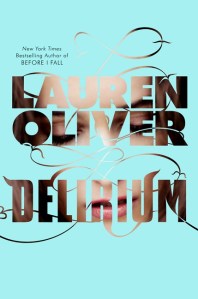
Delirium by Lauren Oliver

Delirium
Lauren Oliver

This is a review based on an ARC copy I received from the publisher.

The Premise: In a unspecified future, the United States government has identified love as a disease and has administered a cure for over forty-three years. Lena is terrified of getting amor deliria nervosa and can’t wait till her eighteenth birthday when she can get the procedure and be safe. She doesn’t want to become like her mother, who was so affected by love that she left Lena and her sister behind, to be cared for by their Aunt Carol and Uncle William. That is, until Lena meets Alex and begins to question whether it’s a good thing to lose the ability to feel excess emotion.

Read an excerpt of Chapter 1 of Delirium here

My Thoughts: The set up for this story is that sixty-five years before it begins, the United States identifies love as a disease that encompasses “stress, heart disease, anxiety, depression, hypertension, insomnia, [and] bipolar disorder”. This disease, so they say, begins with symptoms like difficulty breathing and preoccupation, slides into euphoria and despair, and then spirals into paralysis and death. The country is so rigidly run by this idea that the Safety, Health, and Happiness Handbook (aka Shhh), is a new Bible, and cities are enclosed for their protection behind high electrified fences. Patrols and raids are regularly carried out. All citizens are required to be cured at eighteen, and are ever villigent should their friends or neighbors show signs of the disease. Of course Lena believes in all of this because she’s grown up in this society. The author does a good job conveying Lena’s frightfulness, particularly in the beginning of the book. Lena is the narrator, and she often uses words like “anxiety”, “blur”, “dizzy”, “suddenly dazzled” and “flashing” when she describes a situation that isn’t her norm, so much so that I began to feel like I needed a Dramamine reading about her experiences.

As a reader, however, I know that the whole basis for this society: “love is a disease”, is a lie, and that Lena’s fears are unnecessary. In order for me to accept this dystopian scenario, I needed more than the descriptions of Portland gripped by bureaucracy and fear. I needed to understand how something generally accepted as good could be seen as something bad. This book didn’t deliver that. All I had was Lena’s point of view, and she was clearly misinformed. There are infinitesimal snatches of information (a religion founded by scientists, the blitz), which has something to do with how things became the way they are, but it’s not clear how it fits with Lena’s present. It may be that book two will delve into the past, but I have no guarantee of it. As it is, I felt like I was missing the foundation to accept the premise that love came to be classified as a deadly disease. How was the population convinced? But by who and for what reason? How did this dystopia come to be? I don’t know, and I think that weakens any message about society that Delirium may be trying to convey.

To continue reading, I decided to trust that explanations would be forthcoming, and just focus on Lena’s story. The writing is very good. There are plenty of lovely passages just describing Lena’s day to day teenage life and how it’s been affected by amor deliria nervosa. It’s clear that it has touched every aspect of Lena’s life from her all-girl schooling to her careful choice of words in public. It hangs over every relationship. Conversations with her best friend, Hana involve dealing with phone tapping and checking for eavesdroppers. The biggest impact on her life however, is the procedure, when she will finally be cured, which means she will be Paired off with a boy selected by the government. On that day, Lena and all other teens will forget any feelings they had for friends or family. Until then, Lena experiences all the highs and lows of being a teenager, which includes a closeness with the charismatic Hana and a regimented home life with her aunt and uncle and their other wards, Jenny and Gracie.

Then there is of course, the relationship she begins with nineteen year old Alex.  He’s a boy who seems very different from everyone she knows. In the process of falling for Alex, Lena discovers what love is and how twisted her society has become because it has suppressed it. The romance here was very clandestine and intensely described, but while I could appreciate Lena’s and Alex’s feelings on a logical level, and I wanted them to beat the odds, there was something that held me back in believing the romance viscerally. I think that my problem was that their initial attraction felt off.  Lena seemed like a scared rabbit to me, but as someone “awake” to Alex. That he has been interested in her from afar didn’t fly, so I stayed unmoved about their initial connection. After this there was a scene when Alex and Lena are first alone together which I found compelling, followed by a montage of summer days spent together. All nice, but it was only at the end of the story that Alex really stepped up as a hero and convinced me of his feelings. Although Delirium ends on a bittersweet note, it was the perfect good-bye.

Overall: It’s very well written and it has an interesting premise, but overall I’d mark Delirium as “very good”, not “excellent”. I think that love as a disease was not believable enough for me – I ended up wondering what the REAL reason for a society built on this lie was, and feeling frustrated that I couldn’t see one. I hope that the idea is expanded more in the next book, so that we can see the history behind Lena’s world. Otherwise, I really liked how this story progressed, how Lena grew and changed, the careful way Portland under a totalitarian regime was constructed, and the bittersweet ending that leaves no illusions about what it means to love.

Buy: Amazon | Powell’s | The Book Depository

Other reviews (there are A LOT!):
The Book Smugglers – DNF
The Hiding Spot – positive
Debbie’s World of Books – positive
Imperial Beach Teen Blog – positive
One Librarian Reviews – comparison of Delirium with Scott Westerfeld’s Uglies – 5 stars
The Compulsive Reader – positive
All Things Urban Fantasy – 5 bats (out of 5)
Book Reviews by Jess / The Cozy Reader – Perfect Score
Princess Bookie – 5/5
S. Krishna’s Books – positive
Karin’s Book Nook – positive
Book Sake – positive
Reading with Tequila – 2 out of 5
Ink and Paper – positive
Presenting Lenore – 5 out of 5
Need_tea – C grade

Song inspired by the book. Written & performed by a fan:

Videos of Lauren Oliver discussing Delirium on Amazon.com: One & Two

The DUFF (Designated Ugly Fat Friend) by Kody Keplinger

While I saw a lot of positive reviews for this book, I wasn’t in love with the premise — a girl begins a sexual relationship with a guy she pretty much hates? Hmm. What made me decide that I would give this book a try was this review from Debbie’s World of Books. I’m glad I did.

The Premise: Bianca Piper is a cynical high school girl who spends her time with her two best friends, Casey and Jessica. One night at the local teen hangout, Wesley Rush, the resident “man-slut”, who Bianca cannot stand, begins a conversation with her. His purpose? To get to Bianca’s friends via their weakest link — the Duff, aka the Designated Ugly Fat Friend. Thoroughly disgusted by Wesley’s hurtful label and slimeball plans, Bianca throws her Cherry Coke in his face, gives him what for, and storms off. That probably would’ve been the end of that, except that soon after, Bianca discovers that her often absent mom wants a divorce. So Bianca seeks escape in a physical relationship with Wesley. What was meant to be a distraction has complications that Bianca never intended.

My Thoughts: It blows my mind that this author is 18 years old. Eighteen! The writing doesn’t suffer for it. I think that instead, her age is a strength — the teenage voice in The Duff was more honest and believable than many of the YA books I’ve read lately. Bianca, the narrator, is full of snark and bluster, particularly around her friends (and Wesley who she never holds back from), but she feels like a real teenager. Sure, not all teens are as free with their expletives or as sexually experienced as Bianca, but I could relate to his girl and where she was in her life.

OK. Sneaking around to have sex with the boy you hate is not the healthiest way to deal with your problems. In fact, it is the opposite of healthy. But I could believe Bianca’s need to be distracted from her personal problems (what is reading if not a distraction?), and Wesley is an easy distraction. Bianca manages to ignore what’s going on for a little while,  but it all catches up with her. There’s a clear message that there are consequences for what she does: the distancing from her friends that she’s hiding things from, the emotional entanglements, and the possibility of pregnancy or disease (touched lightly, but it’s there). And Bianca isn’t not the only one who learns that you can’t run away forever.

On the other hand, Bianca is really lucky how things ultimately worked out. Wesley easily could have been the bastard she calls him, and the emotional repercussions of their numerous sexual encounters while messy, could have been much more messy. I liked Wesley by the end of this book, but a small (practical) part of me stayed resistant. I think this is where life experience colors the story, but I’m willing to see him as a character with flaws and I could let my disbelief go enough to enjoy the ending, particularly because I wanted these two to work things out. The chemistry between Bianca and Wesley was quite perfect, and I did love their semi-disfunctional, trading-insults relationship.

The secondary characters in this book all had what felt like realistic relationships with Bianca. Her relationship with her parents showed an awareness of their flaws but they do care about their daughter. Her father’s relapse may have been on the dramatic side, but Bianca’s reaction to it was believable. I also loved Bianca’s friendships with Casey and Jessica. The three girls have differing personalities but they each fit a role within their group.  There’s a lot of love and loyalty amongst the three, and when Bianca realizes that she’s the Duff of the group, it doesn’t make her search for new, less attractive friends to make herself look better. And realistically, there is worry and hurt feelings when Bianca distances herself from them because of her problems.

The idea that you are not your label is probably the Big Message of this book, but I think it’s an important message, and one that really affects self-esteem. The fact that everyone feels like the Duff, and that one should look beyond a label is something I wish more girls would believe. I liked that Bianca’s choices lead her to these truths.  

Overall: While I don’t agree with how the main character initially dealt with her problems, I liked the lessons she ultimately learned, and there was something refreshing in reading a book that embraced sexuality and expletives. I’d recommend this one if you feel like you can look past the idea of a teen’s using sex as an emotional outlet, because this story has a snarky teen voice that I loved because it felt real and honest.

Buy: Amazon | Powell’s | The Book Depository

Other reviews:
Debbie’s World of Books – positive
Karin’s Book Nook – 5 out of 5
Steph Su Reads – 4.5 out of 5
Book Fare Delights – 4 out of 5
Sophistikated Reviews – 4 out of 5
Pop Culture Junkie – 4.5 out of 5
The Story Siren – 5 out of 5
The Hiding Spot – A+
Book Crazy – 5 mushrooms (must read)