The Further Adventures of Sherlock Holmes: Seance for a Vampire by Fred Saberhagen

This book was provided to me by the publisher, Titan Books, for review.

The Premise: In this series by different authors (originally published in the ’90s and being repackaged and republished today), Sherlock Holmes interacts with very unusual characters like the supernatural or alien. Some characters are recognizable from other famous works like aliens from the War of the Worlds, and in this case the vampire Dracula (who is a cousin).

In Seance for a Vampire, Holmes and Watson are asked to sit in on a seance for their client Ambrose Altamont. Altamont believes that a couple of charlatans are using the recent drowning death or their eldest daughter Louisa to swindle money out of his too easily duped wife. This turns out not to be a simple case however, because Louisa Altamont does show up at the seance – but as a vampire, and she begs her family to find some long lost treasure before her soul can rest. In the ensuing chaos, Sherlock Holmes is kidnapped. Watson turns to the only person who could help in these bizarre circumstances – Holmes’ distant cousin, Prince Dracula.

My Thoughts: This is sort of a mash-up, because we have Sherlock Holmes, and we have vampires and Dracula, but it’s not quite what I consider a mash-up, where worlds from an original story is used with additional monsters added to it. This is an original work but using characters from famous works. I’m not really a fan of mash-ups but I do like mysteries and I do like vampires, so I thought it would be interesting to see what this one would be like.

This book read like a pretty straightforward mystery – the prologue gives us most of the background into the crime who is behind it all and why. I won’t go into details here to keep it spoiler free, but this is all in the prologue, which means the reader knows what is going on at all times, and the only mystery is where the treasure really is hidden. Otherwise, we just follow Watson and Dracula, who are the narrators of the story, as they track down Louisa Altamont and the man who turned her into a vampire.

I think the writing is supposed to reflect the same tone as the original Sherlock Holmes novels, and there is a formality to the story because of that. It’s a clear, easy read, but also rather dry. The voice of Dracula is a little bit more elegant than that of Watson, but sometimes I did not really notice when the narrators had been switched until either one would drop a clue as to who was talking. Dracula would also sometimes describe his actions in the third person as if his alias, Mr. Prince, was another character, which was very odd. I think that the author must have done a lot of research into the time period that this book was set (the early 1900s), and it is reflected in the language and the terms used. I  liked the mention of the newest technology of the time – the motorcars and how driving in them at 30 miles an hour was a novelty, but at times the details felt like overkill, like when Dracula reads pages of headings of a daily newspaper, and this had nothing to do with the case.

One thing that bothered me in this book was the way a lot of the female characters were portrayed. Firstly, they were all very minor, and victims (of murder, kidnapping, rape, fraud) or opportunists (a vampiress, a fake psychic). Then there is what happens to them. I suppose the thing that really bothered me was when Louisa shows up in her fiance’s bedroom and the next morning after their night together, he is repelled and attracted to her (not knowing at yet beginning to suspect that she’s not Louisa anymore), and thinks of her as “last night’s whore”. He sleeps with her again the next night. It’s a case where one line in a book can really jar you. Later we find that Watson, Holmes, and Dracula are all sure that Louisa was raped by a vampire (I’m not sure what evidence they used, but apparently her night with her fiance was it), which disturbed me further because her actions did not reflect this. I think that a lot of the characters got very distraught and upset over Louisa’s death and return as a “ghost” but the deep trauma that Louisa herself must have gone through in turning into a vampire seemed glossed over and that one line with her fiance thinking of her as a whore felt REALLY inappropriate.

After reading this, I discovered a lot of references to a previous adventure with Sherlock Holmes and Dracula. You don’t have to read that book (The Holmes-Dracula File) to understand what’s going on in this one, but it would probably help.

Overall: It was OK. It was a light, easy read. The pull of the book was having both Dracula and Sherlock Holmes in it, but the story was so straightforward and lacked a really juicy mystery, that I felt like Holmes or Dracula could have been substituted with any detective and vampire team and there wouldn’t have been a difference, and the switch in narrators was sometimes confusing. I also had a problem with the portrayal of the victim Louisa in this story.

Buy: Amazon | Powell’s | The Book Depository

Other reviews:
The Great Geek Manual – C (70 / 100)

Suite Scarlett by Maureen Johnson

Suite Scarlett
Maureen Johnson

This is a review for the audiobook of Suite Scarlett provided by Brilliance Audio in the goodie bags at the Book Blogger Convention
The Premise: The Martin family has owned and run the Hopewell, a small, struggling boutique hotel in the Upper East Side since the late 1920s.  The Spencer siblings Scarlett (15), Lola (18), Spencer (19), and Marlene (11), all have their roles in keeping the hotel running, and on her 15th Birthday, Scarlett inherits the Empire Suite and it’s eccentric guest, Amy Amberson.  Mrs. Amberson is a C-list starlet with a penchant for mischievousness and drama, and soon Scarlett’s summer is made very busy by Mrs. Amberson’s schemes. In the meantime, Scarlett’s brother, a struggling actor, has been given a deadline by their parents to find a job or go to culinary school, and he needs Scarlett’s help. Top this all off with a prospective romance and complex sibling dynamics, and you have Scarlett Martin’s crazy summer vacation.

My Thoughts: Things just seem to happen around Scarlett. She doesn’t go looking for trouble, but because of the impetuous plans of people around her (or just pure luck), Scarlett keeps finding herself involved in quirky capers. First there’s Mrs. Amberson. A woman with perhaps too much time on her hands, Mrs Amberson loves a project,  and just sweeps Scarlett into her vortex, ignoring any protests that Scarlett makes. Then there is Spencer. Spencer is Scarlett’s older brother, but he often relies on Scarlett’s ideas to creativity solve problems.  His current one is trying to avoid going to culinary school so he can fulfill his dream of being an actor. Spencer is a very good physical actor with excellent comedic timing, but he just can’t get a job except for a non-paying gig in a parking garage in a student production of Hamlet. Somehow he and Scarlett have to spin this to the Martin parents.  Between these two, Scarlett is very busy, and the charming story is propelled along.

While the story at it’s surface is about Scarlett’s job at the hotel and trying to help her brother fulfill his dream of being an actor instead of being forced into culinary school, it really feels like the book is about the Martin siblings. It’s obvious from the very beginning that Scarlett and her brother Spencer are very close – they hang out together and have a comfortable banter that you only get with prolonged exposure. Lola and Marlene are paired off in a similar way, but have a different dynamic – Lola is the one who has the most patience in the face of Marlene’s brattiness and takes Marlene to all Marlene’s functions. The dynamic between Lola and Spencer, and Marlene, Spencer, and Scarlett, is less clear cut. There’s the usual teasing, bartering, sharing and arguing among siblings, but there’s some history and underlying issues that sometimes surface. That they are all growing up together and things are not always simple and expected between them was something I really liked. I thought it was an accurate portrayal of siblinghood.

The best example of this sibling dynamics is Spencer’s reaction to his sister’s love interests. Spencer never seems to approve of Lola’s boyfriend – a very rich kid who has a chauffeured car, a yacht, and needs Lola to help him with everything. Then when Spencer introduces Eric, a fellow actor in the young college troupe, and he and Scarlett show signs of interest in one another, Spencer reacts oddly. The fallout between siblings because of the romances and the messiness of the romances themselves was well written and they felt real to me. Too often young adult stories simplify the process of liking someone and then being with them. In this book, romantic relationships are as complex and occasionally baffling as real life. As a older (ahem, I mean not a teen myself) reader I admit being concerned about the age difference between Scarlett and Eric (I think he’s 18 or 19 and she’s just turned 15 – when you’re a teen those years count), but I liked the way that their relationship was handled.

Now a couple of comments about the audiobook. I thought that the voice actor did an excellent job with the reading, but I preferred her voice when reading the dialog of female characters over males. There’s a very obvious difference between characters voices and I particularly liked the voice she used as Mrs. Amberson (it has a clear, decisive quality) and Lola (which was quieter and sounded nurturing), but the teen boys – Eric and Spencer sounded strange. Eric is supposed to have a North Carolina accent and I’m still not sure that what I heard was quite it. Spencer sounded very goofy, and I think I would have imagined his voice to be less exuberant and to have a softer wit.

This series continues with Scarlett Fever.

Overall: A charming young adult novel. It maintains an easy balance between quirkiness and moments of depth – particularly in the sibling dynamics and romantic relationships. Listening to this audiobook was the most pleasant 2 weeks I’ve ever had commuting.

Buy: Amazon | Powell’s | The Book Depository (PB)
Buy the Audiobook

Other reviews:
The Book Smugglers – 7 (Very Good)
Angieville – positive review
Tempting Persephone – positive review

The Rise of Renegade X by Chelsea M. Campbell

The Rise of Renegade X
Chelsea M. Campbell

This is a book that I picked up at BEA and got signed by the author 🙂 I love this cover!!

The Premise: In this young adult novel, the focus is on Damien Locke, a supervillian-in-training – or so he thought, until his 16th birthday when he discovers that he’s really half-superhero and his dad is one of the most moralistic Do Gooders out there. Disgusted and betrayed, Damien can’t believe that things can get worse – but they do. His father insists that Damien stay with him for six weeks so that Damien can learn about life among the Good Guys. His mom, a supervillian, agrees to the arrangement so that Damien can know the enemy and to get him out of the house while she works on her latest diabolical plan. There’s no way he would become a superhero, right? Except that Damien slowly begins to acclimatize to life with superheroes and when he finds out about a plan that could put his father and his step-family in danger, he’s strangely torn.  Damien’s always wanted to be a villian, but he also wants to protect his friends and family.

Read Chapter 1 of The Rise of Renegade X

My Thoughts: The story is told in the first person viewpoint of Damien and the setting is a fictional city – Golden City, where tourists flock hoping to run into a superhero or a supervillain. It is ultimately about the choices that people make in order to become who they are. In Damien’s case, his choices determine whether he will become a superhero or a supervillain. He has the genes for both, and the “X” that appeared on his thumb as a result can turn into an “H” (for hero) or a “V” (for villain) based on what he does.

This book made me laugh. Damien has a quick wit which he actively uses in surprising ways. He’s never got the lower hand for long, and when he’s annoyed at someone, he uses his smarts to get them. It was pretty funny how he kept needling his parents about their embarrassing hook-up at inopportune moments, or how he dealt with school bullies. I found myself looking forward to reading this book when I had to put it down because of the humor, especially in the first part of the book – Damien’s disbelief and how he handled the change in his life tickled me. Once he was more settled, the shenanigans Damien gets himself into with his sidekick (more about her later), were funny as well but didn’t entertain me as much as the first part of the book.

The humor is irreverent and not exactly a kid’s humor. Damien is less innocent than I was at sixteen (which I suppose isn’t hard). He’s comfortable with sexual situations and there’s a sort of love triangle in this book between Damien and two very different girls. The first is his ex-girlfriend, Kat, who is a supervillain who has the power to shapeshift. They broke up on his last birthday when he found her with another guy, but she seems sorry for that and they both have feelings for each other (they’ve gotten closer over the past year), although Damien can’t bring himself to forgive her. The second girl is Sarah – a strange girl in Damien’s new school who is a master inventor and wants to be his superhero sidekick.  One girl assumes he is a supervillain, one assumes he’s a superhero, and Damien plays the part each expects because he doesn’t want either to know about his half-hero, half-villain status.

These complex relationships with Damien and these girls, along with the relationship he develops with his father’s family (not an easy path), adds depth to the story that I wasn’t expecting but really liked. The sibling rivalry and fights that Damien has with his half-sibling closest to his age (Amelia, who is 15), was particularly endearing. They dislike each other at first sight but work their way through their differences. I thought the “teenage boy versus his younger sister” dynamics were cute and very much like how siblings work.  I also liked Damien’s commentary on how people have preconceptions of villians and heroes and how that influences how people respond to him.

Overall: An enjoyable read that blends humor, comic book tropes, and a teenage boy’s coming of age to produce a story with subtle depths. I liked it.

Buy: Amazon | Powell’s | The Book Depository

Other reviews:
The Book Smugglers – 7 (leaning towards an 8) – [I agreed with Ana’s review]
Steph Su Reads – 4 out of 5 (“The gem of this novel is Damien’s voice. A perfect balance of snark, sincerity, and your typical adolescent male stupidity”)
SciFi Chick – “pure fun from beginning to end.”

Book Trailer:


Goddess for Hire by Sonia Singh

Goddess for Hire
Sonia Singh

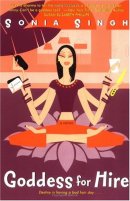
I picked this up in the last BookCloseouts sale (psst – they’re having another one – a summer fiction sale) because I don’t often see chick lit with Indo American characters. It also looked like had a little bit of a supernatural aspect to it (a heroine who is a reincarnated goddess), so I was sold.  It languished in my TBR until I needed a change in genre after all the fantasy I’ve been reading lately.

The Premise:
Maya Mehra just had her 30th Birthday. Her big extended Indian family (all doctors except Maya), want her to settle down and get married, but Maya is in no hurry. She’s a California girl, living with her parents in Newport Beach, and while she’d like to find a man, she doesn’t believe in arranged marriage or a man who would marry her for the green card. Unfortunately for her, Aunt Dimple has been matchmaking and sets Maya up with a man from India (Tahir). Maya dutifully goes to the airport to pick him up (and tell him she’s not interested), and is surprised to find Tahir gorgeous and also not interested in her. And then in a bizarre twist, Maya is told that she’s the incarnation of Kali, a Hindu goddess who is the Dark Mother, the Goddess of Destruction – “the bringer of death so that life my resurrect”, and she’s supposed to save the world.

Read an excerpt of Goddess for Hire (from google books)

My Thoughts: This is very much a breezy chick lit novel which reads very fast. It took me a few hours to read – each chapter is very short, often 2 or 3 pages, and the font is not small. I was in the mood for something mindless and this satisfied that craving.   The problem with this breezy chick lit California thing is that that Maya can come off as extremely superficial. She’s thirty years old, but she has no problem spending her days shopping with her parents money in her big yellow H2 Hummer (and she drops brand names like nobody’s business). And although she makes some off the cuff comments about the difficulty in being Indian and a minority, and brings up childhood bullying because of being Indian, she also says some things about her own ethnicity that feel uncomfortably bratty.  I decided to push past my initial qualms in the first few pages, and although I think that Maya acts more like a twenty year old than a thirty year old, she grew on me. I enjoyed her chemistry with Tahir (they trade insults and sarcasm back and forth), and finding her direction in life enables her to grow.  Although I get the impression Maya considers herself a modern girl and therefore does not like many traditional Indian things on principle, she’s set up with a hero who sees things differently (he likes women in saris, Kathak dances, and his parents blessing), so I think he will be a positive influence her.

I enjoyed reading this book mostly for all the Indian cultural references. Indian terms pepper the story but are explained in English (sometimes it felt unnecessarily explained but I suppose not everyone knows what Dharma or Roghan Josh are).  There was an element of nostalgia for me because I grew up close to India and I can relate to her big noisy family when my Asian half has something similar. I think that this made me enjoy the book a little bit more – a vague Southeast Asian homesickness which I know not everyone shares, but maybe people will enjoy it’s different cultural viewpoint.

The reincarnated goddess storyline was pure fluff. Maya feels malevolent energy and runs towards it to ward off  some evil – usually in the form of someone about to commit a crime, and then bungles her way through preventing a disaster.  Her interactions with a swami named Ram who teaches her how to use her powers are hilarious though.  I really liked Ram, and he has the best lines in the book (although I also like the interactions Maya and Tahir have). The Kali story overall just felt silly, but this book isn’t trying to be serious. It dovetailed very nicely with Maya’s problems with her family (they want her to get serious – get a husband, get a job), and with her romance with Tahir (Maya keeps disappearing because of it, often right after Tahir says something particularly rude, which delighted me).

Overall: Chick lit with an Indo American flavor. This was a very breezy, very quick read with a cute I-Act-Like-I-Don’t-Like-You-But-Really-I-Do romance and a heroine who is superficial and spoiled, but she grew on me.  I don’t think I’d recommend this to everyone but overall I’d say I enjoyed it because I was in the mood for something light and mindless and that’s what this was.

Buy: Amazon | Powell’s | The Book Depository

Other reviews:
I couldn’t find any – please let me know if you have reviewed it and I’ll link to it.

Naamah’s Curse by Jacqueline Carey

Naamah's Curse
Jacqueline Carey

I was sent an ARC of this book to review from Hachette Books.

******

THIS REVIEW CONTAINS SPOILERS FOR THE FIRST BOOK, Naamah’s Kiss

(My review: https://i0.wp.com/i58.photobucket.com/albums/g254/jayamei2/livejournal_com.gifhttps://i0.wp.com/i58.photobucket.com/albums/g254/jayamei2/wordpress.jpghttps://i0.wp.com/i58.photobucket.com/albums/g254/jayamei2/vox.png)

******

The Premise: This is the continuing story of Moirin mac Fainche, and her adventures away from home. Moirin is of the Maghuin Dhonn (a clan in Alba that honors a Great Bear) but also a descendant of Alais de la Courcel (from Terre de Ange, across the sea) and so to find herself, she sets into the world, at first to find her father, then to help the Ch’in. At the end of book 1, Naamah’s Kiss, Moirin is in the land of the Ch’in, but her lover Bao has left because he’s still coming to grips with his second life and with the diadh-anam that he and Moirin now share as a result. Moirin lets him go, but after some time has past, she can’t wait for him anymore. She sets off after him, following the second half of the spark they share. This leads her out of Ch’in to Tartar territory, and then to Bao. Of course, things are never simple, and because of Bao’s rash decisions which anger the Great Khan Naram, Moirin and Bao are forced apart once more.

My Thoughts: As with the first book, Carey’s writing has a simplicity that allows you to read without really feeling bogged down. At 567 pages, I was a little daunted by the length of Naamah’s Curse, and it certainly isn’t a book I could read in one sitting, but it wasn’t one that I felt I had to slog through. Like in Naamah’s Kiss, Moirin, covers many miles, through an amazing world that is of course familiar, since it’s a fantastic version of our own. The encounters with the Ch’in, Tartars and the Bhodistani made me want to see many of the places and people that Moirin describes. I particularly liked the families that took Moirin in. The cheerfulness of being surrounded by a large family who took their host duties seriously was comforting to read.

I would divide this book into three major parts: Moirin’s search for Bao through Ch’in and in the Tartar lands, her time separated from Bao in Vralia, and looking for him again in the mountainous Bhodistan.

Moirin is of mixed heritage and because of this heritage, she is a follower of more than one god, the Maghuin Dhonn from her mother’s clan in Alba, and Naamah, who she is connected to through her D’Angeline blood on her father’s side. Both of these deities favor her but also push her to do their will which they convey through visions and Moirin’s diadh-anam, which flares up inside her to steer her towards her Destiny. This is an unusual combination but it means that Moirin is very open to other people’s beliefs. I noticed this spirituality in Naamah’s Kiss, and Moirin stays true to character in Naamah’s Curse, but she discovers that she’s still an innocent when it comes to what other people believe. In Ch’in she sees  that people have different ideas of modesty than she may, but I don’t think she really knows how far some people would go when they think their beliefs are correct and hers are wrong.

When Moirin meets the Vralian Patriarch of Riva, Moirin sees how man may interpret the word of their gods for their own ends, and it’s a lesson bitterly learned. The Patriarch (a “Father” of the Church of the Yeshua), blames Moirin’s Alban ancestor for a schism in the current church, and declares Terre d’Ange a “bastion of depravity”. Moirin is a way for him to further his ambitions and he forces her to convert to his faith. His character with his shiver-inducing “creamy smile” and his absolute views made me wonder where the author was going because the book seemed to be condemning just Christianity as a religion of close-mindedness.  Just when I thought that this was going to be anti-Yeshuite/anti-Christian book, the story is saved by characters that are followers of Yeshua but who take a gentler, broader, view. Moirin also imagines a gentle god – Yeshua who forgives, not an harsh god who promotes suffering, but she can’t bring herself to fully convert and lose her connection to her own gods. I thought this part of the book was the strongest. It brings up a lot of interesting ideas about religion and I think it stirred up the most emotion in me, reading this section and worrying over Moirin. The lessons about men and the words of gods are also used later on in the story when Moirin sees a similar case where men have interpreted god’s words in a way that benefits them.

It’s a little telling that enjoyed the sections where Moirin was alone and traveling the most, rather than when she is with Bao, which was in the first and last thirds of the book. If I take them at face value, they have cute moments together and they’re well matched in terms of both being impulsive, sharing a diadh-anam, and liking one another. However, if I think about it beyond that – and I mean by looking at their actions, it feels like Moirin is with Bao by default, and this book does not make me warm to him. She had other lovers, but they were either in previously established relationships that they didn’t want to leave, or they were friends sharing a bed out of curiosity rather than romance. The latter group often also seemed like a stretch – like inserting sex just to reinforce Moirin’s role as a child of Naamah rather than to show the reader something more profound. Anyway, back to Bao. He truly acted like an idiot in this book, and it seemed contrary to his matter-of-factness and streetsmarts in the first book. The only explanation I can think of is that there needed to be a reason for why Moirin was traveling from Ch’in to Tartar lands and beyond, so following Bao, and having him run away and be an idiot was the reason. Sadly, it undermined my belief in their relationship.

As with Naamah’s Kiss, Naamah’s Curse ends in a satisfying place with just enough of  a hint of more adventures to come to continue the series.

Overall: This was a strong second book, which continues it’s epic tale of a wild Beauty traveling the world and changing it as she does. Naamah’s Curse has particularly engrossing elements on religion, which I think will make it linger long in my mind. The only issue I had was with the primary relationship, and I hope to find it more convincing in the third book, Naamah’s Blessing.

Buy: Amazon | Powell’s | The Book Depository

Other reviews:
Fantasy Book Critic – “Overall Naamah’s Curse (Strong A) is an excellent follow-up to the brilliant Naamah’s Kiss
The Book Smugglers – 8 Excellent, again, leaning towards a 9 (one of her favorite reads of 2010)
Fantasy Literature –  “a “ripping good yarn” and kept me enthralled for days”

Eyes Like Stars by Lisa Mantchev

Is this not a lovely cover? It made me want to read it. Who is this blue-haired girl, standing at a stage entrance, with fairies circling around her? I wanted to know her story. I’ve been eying this book for a while, saw a couple of good reviews, and I finally bought a copy a few months ago.

The Premise:
Beatrice (Bertie) Shakespeare Smith is a young woman who grew up in a the Théâtre Illuminata. It is an enchanted theater: within it’s walls live every character from from every play ever written, and magically they are bound there, putting on their plays. Bertie sleeps on stage in a makeshift bed, her best friends are fairies (Peaseblossom, Mustardseed, Cobweb and Moth), and her family are the players and Managers of different departments. The problem is that Bertie is getting older, and she gets into a lot of trouble. After the latest debacle (involving a cannon), the irate Theater Manager decides that Bertie must Leave At Once. Bertie is desperate to stay and manages to convince the Manager that if she can prove herself useful, she won’t be thrown out into the street. Bertie’s friends the fairies and pirate Nate are helping, but elemental spirit Ariel wants her to escape and take him with her. In the meantime, the mystery of Bertie’s origins color the pot.

Read an excerpt of Eyes Like Stars here

My Thoughts: You know what this book reminds me of? One of those Disney cartoon movies. Bertie is a plucky orphan heroine, her fairies are the cute sidekicks (and comic relief), and Ariel and Nate are the handsome love interests.  To tell you who the villains are would give too much away, but they are worthy of Ursula and Frollo. This is not necessarily a bad thing. It means the book is entertaining and colorful, and there’s a lot of creativity, but it’s lighthearted fare made for a certain audience and not everyone may be in the mood for that. I have to be in a certain frame of mind for this kind of story I think, and so it took me a little while to read it all. It’s a fast read, but I read it in two spurts – the first half a month ago, and the second half this weekend.

One large facet of the humor in this book is knowledge of theater and of Shakespeare’s plays. I’m no theater geek but I know enough to pick up on some of the humor, although I suspect I may be missing some. When I get it, it’s amusing, so I think that a Theater/English buff will probably have fun with this book. One example that I loved is this (to set it up, Bertie’s fairy friends have smeared raspberry jelly all over the theater’s refreshment table):

“…pointed at MacBeth, who was holding up a cruller and muttering, “Is this a doughnut I see before me?”
Then he noticed the raspberry jam on everything and started to shriek. With a glare at the fairies, the Stage Manager bundled him off into the wings. ”

The love triangle in this book is one between Bertie,  Nate, a pirate who always looks out for her best interests (the good guy), and Ariel, a dark elemental spirit (the bad boy). Bertie is aware of both men physically, and she has a past with both of them (Ariel is more of a childhood favorite than a current one, while Nate is one of her best friends), but it seemed like Bertie treated the relationships with them as afterthoughts. It felt like she liked them for what they represented rather than for their own personal merits, but maybe this is because because the characters are sketched quickly and then didn’t grow past the first impression I had of them. There was more relationship development between Bertie and female supporting characters – Peaseblossom, Ophelia, and the Wardrobe Mistress, than there was between Bertie and her suitors.

The two things that dovetail to create the majority of the story in Eyes Like Stars are the Bertie’s adventures in trying to stay at the Théâtre, and the mystery of how she got there in the first place. The missteps that Bertie makes in trying to stay never seem to end, and much of the story is Bertie trying to keep on top of the latest disaster. At the same time that Bertie’s past comes to the surface. It’s mixed up in how the magic of the Théâtre works, which Bertie’s leaving brings up. The questions of Bertie’s past along with the magic of the Théâtre are world building elements that set up the start of a series. We don’t really get all the answers we want which leaves plenty of room for the next book, Perchance to Dream.

Overall: It’s a cute story, and good if you just want something entertaining (I think a theater and English background would help to enjoy the humor in the story), and not really dark (there are some low moments, but I felt detached from them). I found this above average for it’s original setting and premise, but the story itself didn’t truly grip me. You also may need some patience at the beginning when you’re thrown into life in the magical Théâtre Illuminata without knowing its rules.

Buy: Amazon | Powells | The Book Depository

Other reviews:
Dreams and Speculation – 9 out of 10
Angieville – mixed review (I share her sentiments – again)
Karissa’s Reading Review – 4 out of 5 stars
The Hiding Spot – 10 out of 10
Fantasy Book Critic – one of their top books for 2009
On the Nightstand – loved it
Fantastic Book Review – 5 out of 5
The Book Smugglers – 8 out of 10
Presenting Lenore – “it’s not enough to propel me into a standing ovation, but it does earn a round of appreciative applause nonetheless”
Steph Su Reads – 4.5 out of 5
Giraffe Days – “With a playful tone, it’s fun to read, but I did sometimes get confused about what was happening”
Calico_reaction – Must have (positive review)

The trailer for Perchance to Dream:

The Hundred Thousand Kingdoms by N. K. Jemisin

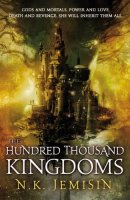
I’ve been seeing lots of good reviews for this book but the cover wasn’t particularly pulling me in. It was reading an excerpt that sold me (and why I bought the book), but now that I’ve read it I have changed my mind about the cover – it’s not just a random fantasy castle. The column it sits upon means something, as does the dark figure with hair whipping around it’s face. I think I like the cover more after reading the book!

The Premise: Yeine Darr’s mother has recently died, and soon after the death Yeine was called to the palace in Sky, seat of the powerful Arameri family. Yeine expects to be killed off is surprised when her grandfather, who disowned her mother years ago, formally announces that she is now one of his heirs. The problem is that he already has two heirs – Yeine’s cousins Relad and Scimina. To be Arameri is to be utterly ruthless, and Yeine does not fit into this world although as a Darr she’s a leader in her own right. Yeine is being thrown into the mix without much knowledge of the family and the palace of Sky, including it’s four resident gods, who have been chained in human form by Itempas, the Skyfather.

Read chapter 1, chapter 2, and chapter 3 of The Hundred Thousand Kingdoms

My Thoughts: This book started off very strong for me. I loved the world building and the beautiful palace of Sky which towers over the city of Sky on top of a giant, impossible column – a palace created by gods. When Yeine meets her relatives they don’t think much of her and her “barbaric” upbringing as a Darr. It doesn’t help that she is really half Darr and half-Amn, since her mother abdicated when she met Yeine’s father. (A minus for Yeine’s family, a big plus for me – I love a heroine of mixed race). It seems like a big clash of cultures where Yeine’s world is equivalent to a matriarchal, Amazonian, tribal society who are used to plain speaking, while the Arameri are a metropolitan, Euro-centric society who value treachery and maneuvering. The power is definitely in the hands of the Arameri, who have magic, religion, and four captive gods to rule the world, and who are ahead of the game of succession against Yeine.

The basic story of the universe begins with one god, Nahadoth, who represents chaos, darkness, and change. He is joined by his brother Itempas, who is his opposite – the god of order and light, and their sister Enefa was the gray in between, and bringer of Life to the universe. They also have children. If you have ever read Greek or Roman mythology you should have and idea regarding the things that gods do which seem dysfunctional and childish to mere mortals. This is the case here – their morality is different from Yeine’s and our own and sometimes their relationships are surprising.

The gods were fascinating characters. Yeine’s first encounter with them starts off with a bang when her cousin Scimina sics the most powerful of the gods, Nahadoth, on her like a horrifying hunting dog. The desperate race through the castle is riveting. Anyway, Yeine meets the gods and throughout the book she learns the real events that led to their slavery, rather than the story she was brought up to believe. The gods want to be free from the chains put upon them by Itempas and they have plans that involve Yeine.

Yeine finds herself manipulated from multiple directions. From the gods, and from her family, who have their own power struggles that she is not completely privy to. In the meantime, Yeine has her own agenda. She didn’t come to Sky because she was summoned. She wants to find out what really happened in her mother’s recent death. Her first suspects are of course her Arameri relatives, and so she asks questions about her mother and learns the family dynamics. Not all the answers are easy. Yeine’s mother, who she remembers as loving and open, was someone else in the palace of Sky. Somehow this is related to the current fight for succession.

I thought the multiple machinations were very clever in sucking me into the story. I wanted to know who was doing what, what had happened in the past and what was going to happen. This story is told from the first person POV, but throughout the book Yeine’s recalling what has happened to her and sometimes her memory is faulty. Once in a while, she backs up and restarts, and she has conversations with herself about what was happening or what will happen next. Not to say that the book was confusing – it was the opposite. The prose is clear and simple – it has a sort of young adult feel because of this. The hints of what would happen next were the most effective in keeping me reading to see if my guess was right.  Usually I was still wrong. There were a couple of plot twists I did not expect.

Like Yeine, I was drawn to the gods and in particular Nahadoth, although Sieh, his son, the god of mischief who usually takes the form of a child, was compelling as well. Sieh seems almost human in his need for comfort, but Nahadoth was temperamental and hard to read, like you’d expect from the god of chaos. The idea that a slip of the tongue from an Arameri in commanding him and he will happily kill them added to his fearful power. Any one of the gods is capable of horror beyond imagining. That’s why when the relationship between Yeine and the gods changes, it began to feel nonsensical.  After the narrative stresses how immense their power is, how time moves differently for them, how alien their minds are compared to a mortals, the idea that Yeine would mean much to them in the short time this book spans was difficult to believe. I allow that the gods shared the feeling of being trapped with Yeine, and she has another quality that draws them to her, but I struggled with anything beyond that. I can’t really go into detail without giving spoilers, but there was one part of the relationship where I thought the scene that I had trouble buying could have been removed completely and the story wouldn’t have really changed, so I don’t understand why it’s there at all.

Overall: This was a keeper. The writing let me slide smoothly into a story of treacherous families (both human and divine) living in a beautiful palace called Sky. Yeine’s impact on these families (and their impact on her), knocked my socks off, but I did have reservations regarding the extent of Yeine’s relationship with the gods, and because I struggled with that, the book was just shy of being on my uber-selective Blew Me Away pile (but it came very close). If I think about the reservation, I feel like saying “Don’t mind me. Read this book”. Basically – I’d recommend The Hundred Thousand Kingdoms because I don’t think everyone will have the reservation I did, and frankly, I loved rest of it.

I’m looking forward to the next book, The Broken Kingdoms (expecially after reading the excerpt at the end of The Hundred Thousand Kingdoms). The cover (which may still be a work in progress, I don’t know for sure), looks excellent.

Buy: Amazon | Powells | The Book Depository

Other reviews:

Review at tor.com by Kate Nepveu – loves it “almost without reservation”
My Favourite Books – positive review
My World…in words and pages – positive review
Fantasy Cafe – 9/10
Fantasy Literature – “a very solid debut”
Fantasy Literature – “Almost perfect debut”
The Book Smugglers – 9 (Damn Near Perfection)
Fantasy Book Critic – “almost-perfect debut”
Starmetal Oak – A+
bookblather – positive review

The City & The City by China Miéville

The City & The City
China Mieville

This was written up for a guest blog on Dreams and Speculation (formally known as Book Love Affair), so it’s cross-posted there. I know I’ve mentioned this blog before so go forth and check it out if you haven’t already. It’s one of my favorite speculative fiction blogs.

I’ve never read China Miéville before, despite hearing how good Perdido Street Station and Un Dun Lin were. This was one of those authors I would try “one day”. When I heard Miéville won the Arthur C. Clarke award for the third time for The City & The City, I thought, “Hmm, yeah, I really should try out his books when I get the TBR under control”. This might have been in a couple of years or never at the rate I’m going, but when Dreams and Speculation contacted me for a guest review and offered The City & The City to read, it jumped to the top of my priority list.

The Premise:
When the body of a young woman is found dumped naked under a mattress, Inspector Tyador Borlú of the Extreme Crime Squad is on the case. He lives in Besźel, a city that shares the same space as another city, Ul Qoma. At first the case looks like many before it, but as Tyador learns more about the young woman who was murdered, it becomes apparent that this is more than it first seems.  Conspiracies swirl around the investigation and Tyador has to cross the border into Ul Qoma to solve it.

My Thoughts: When I finished this book, closed it’s cover, and put it down, one word came out of my mouth. That word was: “Weird”.

The biggest mind bender for me was the setting.  Besźel and Ul Qoma are cities that overlap each other in the same spot.  Before I started reading, I assumed there was some sort of inter-dimensional magic involved and perhaps Besźel was on one plane and Ul Qoma was on another, but when I read the book I realized maybe that wasn’t it. People in Ul Qoma could see and hear (and smell) the people in Besźel and vice versa, so while they are separate, they are together. If you were in Besźel, you quickly unsee or unhear Ul Qoma, and if you are in Ul Qoma you unsee or unhear Besźel. This made perfect sense to the people in these two cities, who were trained from a young age to recognize the colors, clothes, and walk of their neighbors and to willfully ignore their existence. To enforce this rule, if someone were to actually interact in some way with the other country – perhaps mistake a Besź for an Ul Qoman, Breach steps in. Breach is the bogeyman which coalesces upon a person who has breached. Everyone fears it.

To me though, this was a foreign concept. While Inspector Borlú’s perception of the other country when he was in his own sounded like he was looking at it through some misty barrier, I began to wonder about the true nature of the separation between the two cities. Méiville sets the cities in our world, in what sounds like Eastern Europe. Do the rules of physics apply, or is this a fantasy? Is Breach magical or does it seem that way to everyone raised to revere it? Is it just in the minds of the people in the two cities? And how about the breaches which happen regularly, but people must expect?  If you unsee or unhear, you must see and hear first, right? There are a lot of these types of questions, and I have my opinion, but I don’t think there is a “correct” answer.

From there I wondered what genre The City & The City fell into. It was definitely detective noir, but was it also fantasy? Is it science fiction? Is it neither? It depends on how you interpret the setting, I think. Yes, Ul Qomo and Besźel are made up, which means there’s a lot of word building here I associate with speculative fiction, but I don’t know if the cities are separated by magic, or by science, or by societal rules. I had a really hard time deciding. Well, Wikipedia mentions that Miéville describes his work as “weird fiction”.

Wikipedia: “Weird tales often blend the supernatural, mythical, and even scientific”
Me: “Yup, that works. “

The setting is folded neatly into Borlú’s investigation because his murder victim has links to a third city. The one in children’s stories that exists alongside Besźel and Ul Qoma – Orciny. As you can probably guess by now, Miéville plays it cagey there too. Whether Orciny exists is intertwined in the investigation, because the murder victim may have discovered it. I enjoyed Borlú’s moments of brilliance that moved the investigation along when it looked like it was about to stagnate, but the existential dilemmas tangled in the crime solving sort of narrows down who is going to enjoy this book. I think if you’re a reader who enjoys Weird Fiction and this sort of clever setting, you’d be as happy as a clam, but despite the good writing and interesting world, I think while I read this, I wanted a twinge less headspace taken up with pondering the cities, and more pondering the murder.

I have the Random House reader’s circle edition of this book. It comes with a conversation with the author at the end of the book, reading group questions, and an excerpt of Kraken.  The conversation made me feel like I was getting some of the things the author was aiming for in the story so it was nice to read it, although it did reinforce my feeling of being teased.

Overall: A story that combines detective noir with a weird but clever genre-bending setting. I liked it – the prose is perfect and the world building (a very important thing in my enjoying a book) superb, but I think I wanted a little less cleverness, and a little more straight detective noir.  I’m giving this an actual numerical score for D&S’s archives – 7, leaning towards an 8. Can I say 7.5?

Buy: Amazon | Powells | The Book Depository

Other reviews/Link:
Fantasy Book Critic – “Beautiful prose, empty book”
Walker of Worlds asks if this book is really science fiction

Video of an author interview

Touched by an Alien by Gini Koch

Look at the cover! I love it. This cover plus this title = WIN.  I don’t think another title has caught the attention of the people around me as much as this one, but it’s unabashed in advertising what the book is about, which is a tongue-in-cheek action story about men-in-black and alien parasites.

The Premise: Walking back to her car in Pueblo Caliente, Arizona after a long day of jury duty, Katherine Katt witnesses an unbelievable event. She watches as a man who was raging at his wife after a traffic accident, suddenly change into a terrifying monster. People are screaming and running, except Kitty, who immediately springs into action to kill him. Shortly thereafter, she’s surrounded by good-looking Men-in-Black-Armani, who want Kitty to join their organization. It doesn’t take long for Kitty to figure out what’s going on, using her smarts to read between the lines and figure out what this organization really is (and what it has been doing wrong). In the meantime, handsome agent Jeff Martini makes it clear he’s pursuing her, but it’s hate-at-first sight (or is it?) from his cousin Christopher.

Read an excerpt of Touched by an Alien here.

My Thoughts: I think that the cover and the title for this book are perfect. They both convey the outlandish premise, the action, and the romance to be found inside. I’m really pleased that they are an ideal match for the story.  It feels good to have expectations because of a cover, and then for the story to deliver on them.

I think that many people would compare this to the Men In Black movies because of the similarities in the humor, aliens, and action, but I’d call it “Men in Black from the point of view of the woman who saves everybody”.  It’s a refreshingly original story despite the this inevitable comparison however. Kitty’s voice is unique in this genre – very fresh and irreverent without becoming irritatingly so. It has a light urban fantasy feel because of this voice, and I would say that Touched by an Alien is to science fiction as Lisa Shearin’s Raine Benares series (complete with hunky men everywhere).

From the get-go this book doesn’t take itself seriously. The world building shows the reader glimpses of ideas from comic books and movies, pop culture and history, but it’s a chaotic mix which isn’t really hard science.  It’s enjoyable if you just take the idea of alien parasites flying through space, attracted to people with volatile emotions, and the Alpha Centurians who have come to Earth to help defend it at face value.  Think about it too much and you’ll probably find holes. I think for the most part I was able to just read and enjoy what I read.

Kitty is likable in that she’s a heroine who thinks very well on her feet and doesn’t let people tell her she can’t do something. She goes for things without fear which had me cheering for her from the very beginning. When she first took the information from the Men-in-Black and figured out things they weren’t telling her, I was impressed. Her conversations where she explains her brilliant deductions along with the many question and answer sessions she shares with other characters is a way to convey information to the reader. It becomes an integral part of her personality, but when she kept doing this throughout the book, it felt like a technique that wore a bit thin for me, but I didn’t see anyone else comment on this, so perhaps it’s a personal preference. It also made things I found obvious but which Kitty hadn’t realized yet really glaring. At 389 pages, this book is a bit longer than the usual 300 or so, and there’s a lot of information and explanation of the aliens along with the breakneck action as Kitty and her agency fight the manifestations of Superbeings out to destroy them.

Kitty’s smarts didn’t come out of thin air – so when her mom and dad show up in the picture, it’s funny to see them make the same deductions that Kitty does. And then there’s of course the people of the secret agency.  Jeff and Christopher are the two who have the biggest parts of the plot, as the leaders of their particular divisions and in their complicated relationships with each other and with Kitty. I found a lot of the characters at the agency likable – most of them are nice and brave and smart, but since this is mostly a lighthearted story, the good guys are good, and the bad guys are very evil.

The romance in this book is mostly straightforward (there’s a bump along the way), and runs as a secondary story parallel to the main action. There are sex scenes that surprised me (in both timing and execution)!

Overall: This is a story that’s fun and flippant without crossing into campy or annoying. I’d recommend if you enjoy light science fiction, romance, and quick-thinking heroines with a irreverent voice. If you enjoy Lisa Shearin’s Raine Benares series I think you would like this one too, as both books have a heroine with a fresh, first person point of view, in a genre that usually doesn’t have that. I had a good time reading this, and plan to get the next book: Alien Tango (which has another awesome cover!) when it comes out in December.

Buy: Amazon | Powells | The Book Depository

Other reviews:
Katiebabs – B+
Tempting Persephone – loved it

Gini Koch interview @ Tempting Persephone (and Giveaway!! Ends May 28th)
Gini Koch’s website

Running Scared by Shannon K. Butcher

I was sent this book for review from the publisher.  This is a paranormal romance series about a war between Sentinel races who protect our world from the monsters (the Synestryn) who wish to overrun it. Each book focuses on a Theronai (one of the Sentinel races) warrior and his search for a compatible woman with the ability to siphon off his power and keep him from becoming a soulless killing machine.

My reviews of the first two books:
Book 1: Burning Alive https://i0.wp.com/i58.photobucket.com/albums/g254/jayamei2/livejournal_com.gifhttps://i0.wp.com/i58.photobucket.com/albums/g254/jayamei2/wordpress.jpghttps://i0.wp.com/i58.photobucket.com/albums/g254/jayamei2/vox.png
Book 2: Finding the Lost https://i0.wp.com/i58.photobucket.com/albums/g254/jayamei2/livejournal_com.gifhttps://i0.wp.com/i58.photobucket.com/albums/g254/jayamei2/wordpress.jpghttps://i0.wp.com/i58.photobucket.com/albums/g254/jayamei2/vox.png

The Premise:
In this third installment of the Sentinels series, Lexi, who was introduced in the first book, believes the Sentinels are the bad guys and have kidnapped her friend Helen (the heroine of book 1, Burning Alive). She’s devised a plan to get Helen out and destroy the Sentinel stronghold. A new group is introduced called the Defenders of Humanity. They are humans who are fighting the Sentinels and think the Synestryn are their pets.  Meanwhile Zach wants Lexi and has no idea of her real motives.

Read an excerpt of Running Scared

My Thoughts: Lexi was introduced very early on in the first book of this series, Burning Alive, which focused on her friend Helen and on the Theronai warrior, Drake. Lexi was a waitress at the cafe where Drake first found Helen and took her away when the Synestryn attacked it. Lexi grew up knowing about the Sentinels but believes incorrectly that the Sentinels are horrible killers. When Lexi met Drake and his warrior buddy Zach at the restaurant she flees for her life.  Unfortunately Zach thinks that Lexi is the woman who can keep his soul alive, and so he’s been desperately searching for her, which only heightens her fear that he wants to kill her. Finally after months of running, Lexi wants to rescue her friend Helen who she thinks the Sentinels have brainwashed and uses Zach to get to her friend, and to finally destroy the Sentinels.

I was looking forward to reading this romance because Lexi seemed to be more of a tough character than the first heroine, Helen. My first impression was that she knew how to take care of herself and to survive alone. In Running Scared, I think she keeps the distrusting persona around.  She holds on to her walls for much longer than the other two heroines, which I found believable, but there were some places where her actions didn’t feel consistent, particularly in the beginning of the book. I just don’t understand how Lexi can say that she doesn’t trust Zach, and she fears him to the point that she’s quaking, but she also finds it hard to keep her hands off him and thinks of him in a sexual way? Perhaps this is supposed to show that deep down, Lexi feels the connection with Zach and it wars with her hard held beliefs, but it read as shaky logic. I would have believed the attraction more if her fear had at least started to go away. I noticed similar situations in the previous books where I felt that the heroine would do something that seemed to go against what I’d learned about their situations up to that point.

The narration is in the third person point of view, but there were a lot of shifts to other characters (more than in the previous two books in my opinion).  Butcher cleverly interweaves her main story with that of side romances and other story arcs that keep the reader hooked to this series. I think I was ready to read Lexi and Zach’s story right after book 1, but instead Butcher focused on another couple while dropping tantalizing hints about Zach and Lexi’s romance (Zach would appear haggard and desperate in front of the other couples, and the story would focus on Lexi running from him for a few pages before returning to the main story). The author does it again with a couple that was introduced in the second book, Finding the Lost,: Nika (the sister of book 2’s heroine, Andra) and Madoc (a Sentinel who helped find Andra and Nika). I’ve been sucked into their story and I think their romance is next in Living Nightmare. In the meantime, we’re also treated to reappearances of characters from the first two books and their ongoing stories: established Theronai couple Gilda and Angus who are going through a difficult time, the Sanguinar and their plans (they’re fighting their extinction), and the evil machinations of the Synestryn. Because of the cutaways from the main story to other developing story arcs, I would say you do have to read this series in order or you will find yourself a little lost whenever side stories get their focus over the main romance.

Overall: I’d put down this series as one tailored to those who like their heroes to be strapping and heroic with heroines sought after and cherished. There’s an eighties action movie vibe – it’s sheer entertainment.  There’s definitely an addictive quality to these books, and the ongoing subplots are becoming very interesting, but the characterizations can be shaky (YMMV). Running Scared is probably the strongest book in this series so far, although I’m very interested in what happens to the next couple (Madoc & Nika).

Buy: Amazon | Powells | The Book Depository

Other reviews:
The Book Lush – 3.5