The Assassin’s Curse by Cassandra Rose Clarke

The Assassin's Curse
Cassandra Rose Clarke

This was a book that popped on my radar because of a On the Smuggler’s Radar post over at the Book Smugglers. Pirates and assassins and curses (oh my)! Throw in the suggestion of a romance in there and you have me obsessively searching for info online. Finally I checked Netgalley and it was there! I hit that button to request it in a flash. Meaning to read the book after the books I was supposed to read, I downloaded it and.. looked at the first few pages. Yeah, so three hours later at 2am I was done. I couldn’t help it. This was a fun fun book and it was so easy to zoom straight through it.

The Premise: Ananna belongs to a respected family within the Pirates’ Confederation, the Tanarau clan, and she’s spent all her seventeen years living on a boat.  She’s proud of being a rough-and-tumble pirate, but when her family arranges an alliance with the low-ranked but rich Hariri clan by marrying Ananna off to their son, Ananna balks. During the introductions to her husband-to-be, Ananna plays along, but at the first chance she gets, she’s is on a camel and leaving her fiance in the dust. Unfortunately, the Hariri clan employs assassins when they are displeased. Skilled at both combat and blood magic, assassins are almost legend — not real. Or so Ananna thought, until an assassin appears. Desperate and terrified, Ananna makes a split-second decision which shockingly activates a curse and chains her to the very man hired to kill her.

Read an excerpt of the first two chapters of The Assassin’s Curse here

My Thoughts: This book starts off abruptly. It begins right in the middle of Ananna’s meeting with her new fiance. She makes a quick assessment of his prospects as a pirate captain (not stellar), and escapes. At first I had some catching up to do to understand Ananna’s situation, but once she moves from prospective bride to escaped fugitive, I got the gist: Ananna is a pirate princess and being married off is not on her agenda. Fleeing on camel, Ananna takes to the streets like a female Artful Dodger, using the skills learned over a lifetime as a pirate to survive. The story is very dynamic — Ananna is constantly on the move. At first she just wants to get away from her arranged marriage, but when she finds out that an honest-to-goodness assassin is after her, her desperation ramps up.  Assassins, it is said, are not just killers. They are blood magicians. It seems likely that Ananna will die–until a turn of luck puts Ananna in an partnership with the very assassin sent to kill her.

Ananna is a handful, with a lot of rough edges that come through in her narrative (“The sea crashed against the big marble wall, spray misting soft and salty across my face. I licked it away and Mama jabbed me in the side with the butt of her sword.“) Although she is seventeen, not more than five years younger than Naji, the assassin, her unrefined manners and pirate’s vernacular (peppered with ain’t‘s, double negatives and bravado) made her seem younger. It’s suggested that Naji sees her that way too – he is horrified by the whole situation. Assassins are by their very nature solitary. They do not spend their time looking after teenage girls.

There’s a gentle humor in an uncouth pirate girl taking on a magic-wielding ninja-assassin, then the two being shackled to one another. Even in the most dire circumstance, Ananna’s luck always leads to a path of ever-increasing disaster, and the story seems to acknowledge this with sly nudges. It’s not enough that Ananna has the wrath of a pirate clan behind her and she’s stuck in the middle of the desert, no, an assassin joins the chase. When Naji switches sides, things do not get better, instead they seem to get worse. The Hariri clan still wants Ananna dead and Naji has enemies of his own, enemies scarier than the Hariri– who now have Ananna on their radar. As Naji and Ananna continue their adventure, the hits keep on coming.

The setting of The Assassin’s Curse is something out of the usual Desert and High Seas Adventure canons. The magic of this world has familiar elements too – blood, herbs, an invocation, and an affinity, all combine to create a spell, but there is something new and fresh in Ananna’s experience of it. Her voice with it’s street edge, mixed with the meshing of familiar concepts in new ways (pirate and assassin, desert trek and sea adventure, a dash of weird thrown in for good measure) really makes the story. That, and the bickering between reluctant allies Ananna and Naji. I really enjoyed the way their relationship slowly developed through the book and the hope that it could develop into something more.

Ananna’s pirate persona and voice may not appeal to some, but while I did find Ananna  young and hotheaded (with an odd resentment towards attractive people), this just made her realistically flawed to me. Likewise, Naji’s hang-ups with appearances showed his own human weakness. I hope this doesn’t turn into a story that advocates a bias against beauty, but I don’t think it will. I expect to like the next installment just as much as this one, and I plan to read it when it comes out. This was a lot of fun and I’m excited to see more.

Overall: The Assassin’s Curse an entertaining Fantasy YA story: it has swashbuckling adventure, a pirate heroine, and a blood magic-wielding assassin, for crying out loud. If that is something that appeals to you, I say try this one and read it for the brain-candy enjoyment of it. I read it in four hours. I had a good time. I will come back again for a continuation to this ride.

Assassin’s Curse comes out next week (October 2nd US/Canada, October 4th UK).

Buy: Amazon | Powell’s | The Book Depository

Other reviews:
Not yet

Soul Hunt by Margaret Ronald

Soul Hunt
Margaret Ronald

The Evie Scelan series one I’ve been following for a little while now. It’s a urban fantasy set in Boston and it centers on Evie, a bike messenger with a side business: finding lost things with her abilities as a Hound. What keeps me coming back is the true-to-life characters and the Boston setting.

The reading order is:
Book 1: Spiral Hunt (my review: https://i0.wp.com/i58.photobucket.com/albums/g254/jayamei2/livejournal_com.gifhttps://i0.wp.com/i58.photobucket.com/albums/g254/jayamei2/wordpress.jpg)
Book 2: Wild Hunt (my review: https://i0.wp.com/i58.photobucket.com/albums/g254/jayamei2/livejournal_com.gifhttps://i0.wp.com/i58.photobucket.com/albums/g254/jayamei2/wordpress.jpg)
Book 3: Soul Hunt

*****  This review contains spoilers for earlier books in this series ******

The Premise: After Evie’s last tussle with supernatural forces in a battle to protect her beloved Boston, she’s left with the price of her endeavors. Firstly, Evie’s talent just doesn’t work the way it used to: it’s unreliable, starting and stopping unexpectedly. Scents can be hard to find, and Evie feels drained by a simple tracking. Secondly, Evie has something that doesn’t really belong to her — the Horn of the Wild Hunt. She has to return it to its rightful owners, who will not like that she sounded it. While this is going on, strange things are afoot in Boston. A mysterious fire on a yacht and bystanders paralyzed by fear is the first sign in a wave of disquiet in Boston’s Undercurrent.

My Thoughts: I have to admit, it’s been a while since I read the second book in this series. I seem to jump back into the Evie Scelan books every couple of years, so I remembered the ending and some very big plot points of Wild Hunt, but I was fuzzy on some of the details.  I could fudge it, but I really wish I remembered some more of the details or that they were spelled out to me a bit more. This is not the first time in the series where the previous book’s events has had an impact on the plot, so I don’t recommend reading Soul Hunt without a least reading Wild Hunt, and I don’t recommend reading Wild Hunt without reading Spiral Hunt. Basically, you need to read these books in order.

The big plot points from the earlier book are these: Evie has the Horn of the Wild Hunt and needs to return it to it’s rightful owner or owners. Due to her possession of the horn, she brings the the hounds of the hunt with her wherever she goes, and the hounds are quite willing to give her their two cents on her life. Also, ever since she rescued rescued boyfriend Nate, she has noticed that her power has gotten weaker. She isn’t sure why, but she suspects it has to do with an exchange she had with the water spirit who had him. In the meantime, Evie’s relationships continue as before: she and Nate are in a serious relationship and his young sister is someone Evie has taken under he wing. Her friend Sarah is as optimistic as ever and is trying to organize the Undercurrent for future outside threats – a neighborhood watch with an emergency phone tree if you will. And Evie still is on the outs with Rena, a cop who was once a close friend, but got blames Evie for bringing her trouble and “bruja shit”.

While Evie has the remnants of her latest adventures to deal with, another issue springs up. An associate in the Undercurrent asks for her help and that leads Evie to a strange occurrence: a burning yacht. This isn’t that strange, but the behavior of other members of Boston’s magic community is. People tell Evie that they feel fear, but they cannot tell her what is causing it. Then the man whose boat burned down asks Evie to find something for him, something stolen generations ago.

With everything going on in Evie’s life: the Horn, her relationships, Nate’s curse, Nate’s sister’s Sight, the budding Undercurrent organization, her fatigue, issues with her talent, and her work (both as a bike messenger and a finder), the plot of Soul Hunt felt very fragmented. There were too many disasters vying for attention and Evie spends the story flitting from place to the next in order to deal with them all. I wasn’t sure what was the most important: the repercussions of having the Horn, fixing the problem with her talent, or this new mystery that has the Boston Undercurrent with its hair standing on end. When the story ends, one of these three becomes the main focus while the other two, dragged along for most of the book, are resolved very conveniently. There was something very dissatisfying about that after watching Evie trying to juggle it all throughout the book. I wanted something less pat for those two threads.

What I did like is that Evie is now part of a family in this story and she has support that she did not really have before. I think what did work with the tumbled mess of troubles Evie has, was the sense that Evie shouldn’t be trying to fix everything herself and there are people willing to help her. I loved the relationships, but didn’t love that the plot got too scattered while trying to prove this point.

This is the third book in the series and it ends in a satisfying place, but with enough leeway for more books. I don’t know if there will be any more though, as Soul Hunt was published in 2010 and no other books have been announced.

Overall: OK plot-wise, solid everything else. I recommend this one for urban fantasy fans who like a down-to-earth, working girl kind of protagonist who has relationships that are nuanced and true-to-life. This is the type of series where I care more about the characters and their developing relationships than the current disaster to be averted.

Buy: Amazon | Powell’s | The Book Depository

Other reviews:
Calico reaction – 8 (Excellent) ” Frankly, this whole series is a must read for urban fantasy fans who want more female relationships in their stories and, if there MUST be romance, then said romance must be balanced with the story and not become the story”

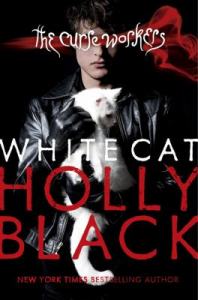
White Cat by Holly Black

White Cat
Holly Black

I’ve been meaning to get to this series. Ever since Tithe, I’ve been a fan of Holly Black, plus this was supposed to be a YA with supernatural elements and a con artist protagonist. What’s not to like, right?

A big thank you to fellow book blogger, Laura of A Jane of All Reads for my copy!

The Premise: (taken from the blurb) “Cassel comes from a family of Curse Workers – people who have the power to change your emotions, your memories, your luck, by the slightest touch of their hands. And since curse work is illegal, they’re all criminals. Many become mobsters and con artists. But not Cassel. He hasn’t got magic, so he’s an outsider, the straight kid in a crooked family. You just have to ignore one small detail – he killed his best friend, Lila, three years ago.

Cassel has carefully built up a facade of normalcy, blending into the crowd. But his facade starts to crumble when he finds himself sleepwalking, propelled into the night by terrifying dreams about a white cat that wants to tell him something. He’s noticing other disturbing things too, including the strange behavior of his two brothers. They are keeping secrets from him. As Cassel begins to suspect he’s part of a huge con game, he must unravel his past and his memories. To find out the truth, Cassel will have to out-con the conmen.”

Read an excerpt of White Cat here

My Thoughts: In Cassel Sharpe’s family, everyone is a curse worker except for him. With one touch they can bestow a “curse”. His mother can manipulate people’s emotions, his grandfather can kill, his oldest brother, Philip, can break bones, and Barron, the middle brother, works luck. Although curse workers are rare and blowback exacts a cost for each working, curse workers are the reason why everyone in the U.S. wears gloves and keeps their skin covered.  Being the only normal in a family of workers is hard for Cassel, but thankfully, he has his family’s other talent to fall back on: swindling people. While his brothers rely on their curse worker skills, Cassel grew up fine tuning his ability to manipulate others by conventional means.

Now Cassel is enrolled in a private boarding school, but when he wakes up on the roof of his dormitory without any idea how he got up there except a dream of a white cat, his stay at Wallingford is put on hold. This is purportedly for the insurance liability, but Cassel suspects it’s because people think he might be curse-worked. Cassel has been careful at the academy so that people would forget his past– that he comes from a family of crooks and conmen, but this one incident reminds everyone. Despite this, when Cassel goes back to his parents’ house all he wants to do is hustle his way back into the school. In between the house cleaning his grandfather has him do, Cassel is on damage control and smoothing his way back in. But while he is figuring that out he notices some telling behavior from his family — especially from his brothers. They’re keeping secrets from him, and Cassel suspects these secrets are more than just hiding things from the non-worker. He suspects they have to do with the night he killed his best friend Lila.

One of the stronger aspects of White Cat was its world building. The idea of workers, a very small percentage of the population with genetically passed abilities, fits seamlessly into the story. Cassel lives in a world where their existence is a given, and he offhandedly mentions what most people in his world already seem to know: that workers exist in the criminal fringes of society, a fragment of a percent of the population, but everyone wears gloves because of them. Gloves have become so de rigueur that Cassel feels uncomfortable if he sees bare hands. A fear of workers is part of day-to-day life: people wear charms to protect themselves from being worked, and there is also an ongoing controversy about legislation requiring everyone be tested for worker ability. What isn’t as well known is how the abilities work, and here Cassel knows more than the average person because of his family.

What was less strong was the character development, unless we’re talking about Cassel. Since White Cat is told from Cassel’s point of view, he is the most well developed character. The sense of isolation — both from his family for being a non-worker and for Lila’s death, and from the other students at his school, is in his every action. He doesn’t seem close to anyone, and only relies on others when he’s forced to (it goes against what he was taught). He’s a great broody teen guy character and I really enjoyed getting in his head and seeing how his upbringing has messed with him. Unfortunately, that isolation made the supporting characters difficult to know: they got little page space compared to Cassel, and what there was was filtered through Cassel’s walls. Cassel is least familiar with his classmates but they are probably the most likable characters. His brothers are distant and untrustworthy, his sister-in-law disconnected, and his mother a manipulative nightmare. His grandfather seems to be the only one in the family with a proper concern for Cassel, but he’s left out of the loop. Even Cassel’s romantic relationships are dysfunctional ones and it’s not clear if Cassel understands either girl he thinks he loves.

As for the plot – I liked the mystery aspect to this story. There’s a sense of urgency to figuring out what’s going on — that until he does, the cards are stacked in everyone else’s favor. I really loved the concept of what was going on when all was revealed, but I figured things out a lot quicker than Cassel does, and I wasn’t as wowed by the twists as a result. It was nicely done, but there were so many clues that I ended up questioning Cassel for not being quicker on the uptake. Also, because so much is made of Cassel being a normal in a family of workers and having to hone his skills as a confidence artist, I had a certain expectation of Cassel as a manipulator. I think I was expecting Cassel’s tricks to be more.. tricky, than they were. Instead they felt really obvious. I don’t know what this says about me, but I seem to be in a decided minority in feeling this way.

Overall: I loved loved loved the concept, world building, and voice. But. Other than Cassel, a lot of the side characters weren’t fleshed out and I wasn’t as surprised by the story as I wanted to be. I liked this one, and feel like it has that Holly Black writing that sucks me in, I just wasn’t in awe (and I really wanted to be). That said, I think a lot of people liked this one more than I did, and I liked it enough and am curious enough to continue this series with the next book, Red Glove.

Buy: Amazon | Powell’s | The Book Depository

Other reviews:
Bunbury in the Stacks – “Cassel is one of those bad boys that you just can’t help but have a thing for…because he’s also kind of a good guy. ”
Chachic’s Book Nook – “While I didn’t find White Cat amazing, I still recommend it to fans of urban fantasy.”
Stella Matutina – “I was somewhat less interested in the plot than in the overall setup.”
Steph Su Reads – “Don’t miss it!”
Jawas Read, Too!“White Cat is an impressive and entertaining read.” (8 out of 10)
Read. Breathe. Relax – “White Cat is a must-read.”
See Michelle Read – “In this exceptionally character-driven novel, Holly Black has crafted a world so unlike any other YA book I’ve come across. White Cat is dark. Gritty. Intense. Just my kind of story.”

Other:
The Curse Workers website

P.S. I was tickled by the image of a mystery girl on the spine of the hardcover. Easily looked over, it’s a hidden detail.

Fate’s Edge by Ilona Andrews

This is a book I bought when it came out but I’ve been saving it for a reading drought (Am I the only one who does this?). I finally indulged last week, secure in the fact that after I read this, Andrews’ newest book, Gunmetal Magic, is available for my Ilona Andrews fix.

This is part of a series of UF/paranormal romances, each book with its own couple set in a world where a magical world overlaps our mundane one:
Book 1: On the Edge (my review: https://i0.wp.com/i58.photobucket.com/albums/g254/jayamei2/livejournal_com.gifhttps://i0.wp.com/i58.photobucket.com/albums/g254/jayamei2/wordpress.jpg)
Book 2: Bayou Moon (my review: https://i0.wp.com/i58.photobucket.com/albums/g254/jayamei2/livejournal_com.gifhttps://i0.wp.com/i58.photobucket.com/albums/g254/jayamei2/wordpress.jpg)

Fate's Edge
Ilona Andrews

The Premise: Audrey Callahan is an Edger trying to go straight. She’s just been hired full time at an investigation agency, she owns a little house in the Edge, and she’s far away from her disappointing con artist family. Audrey is fed up with her parents enabling her brother by using her magical knack with locks to pay the costs of his drug addiction and continually choosing his safety over hers. When he father tracks her down to do a job with big bucks and big risk, this time to pay for a fancy rehab facility, Audrey gives him an ultimatum: either stop bringing Audrey into his schemes, or she helps him steal what he wants and he never contacts her again. As always, her brother’s welfare is chosen over Audrey, but stealing the item isn’t the end of it. She’s soon dealing with the consequences of her bargain when Kaldar Mar shows up. He’s a member of the Adrianglian Mirror, and tracking down the stolen item is his latest assignment. A trickster and thief himself, Kaldar is surprised by how well he works with Audrey. He wouldn’t mind taking things further, but Audrey has had her fill of con artists and rebuffs him at every turn.

My Thoughts: Kaldar was first introduced in the second Edge series book, Bayou Moon, as the fast talking, quick acting cousin of its heroine, Cerise Mar. The family lawyer and matchmaker, Kaldar is a family leader Cerise. He struck me as the type of rakish character that was a shoo-in for his own book, and here we are. Back in Bayou Moon his smarts in the courtroom and his skill with a blade (a Mar family trait), were the traits I remember him for, but in Fate’s Edge, it’s his tricking and thieving that come to the forefront.

At the core of Fate’s Edge is getting back the stolen item, but there are a lot of elements that make it more than your typical quest story. There’s the burgeoning romance between Kaldar and Audrey, trouble in the form of teenaged stowaways George and Jack, elements of horror and action with the Mirror on their tail, and a big keeping scoop of hustling to get the stolen object back.

I am a fan of caper stories, so all the conning and elegant manipulation was fun, and there was plenty of it in Fate’s Edge. It also proved to be a way of showing Audrey and Kaldar’s compatibility – each easily adapting to the other’s lead and balancing out any weaknesses. Brothers George and Jack are included in the cons and they had just as interesting a chemistry (if not more so). If you’ve read the first book in this series (On the Edge), you’ll already know George and Jack as the younger brothers of its heroine, Rose – and a couple of my favorite characters (one is a necromancer, the other a shapeshifter). I was delighted that these two got quite a bit of page time. Their struggles and individual reactions with being seen as ‘Edge rats’ in the Weird were creatively folded into the story. Likewise, there were other cameos from previous characters that didn’t feel gratuitous.  We got a chance to see previous couples past their HEA, but also to get an update on old enemies.

As you can tell, there was a lot in this book that was not about Kaldar and Audrey. On one had I loved the non-romantic additions to the plot, but on the other hand, this left less room for romance. Fate’s Edge was the book in the series where the spotlight wasn’t just on the hero and heroine, and this meant the romantic plot felt shorter than in the other Edge books. There was less space to show a slow build up in interest in each other, and it felt like this book relied more heavily on some Romance short-cuts like the hero’s appreciation for the heroine’s butt to show the growing attraction. For the most part, the courtship really happened in what dialogue the two had (a lot of banter – mostly Kaldar making overtures which Audrey smoothly rebuffed) and in their partnership. This was mostly a straightforward woman-falls-for-the-Bad-Boy-despite-herself romance, and I think if there were more space, I’d have liked Audrey’s issues with con men to be deeper delved into. This is not to say the romance wasn’t sweet, just that it was I don’t think I quite got all the emotional impact I wanted because there were other things in the plot vying for focus.

Overall: Fate’s Edge delivers an entertaining story with devious scams, kick-ass fights, and further development of characters and long running plots, but while I felt like the romance was solid, it felt like it was less of a focus of the plot as it was in the previous Edge books. This was an installment where the plot was far more than a vehicle to propel a romance forward. Thus the romance was not quite of the same caliber as the previous books (at least in my mind), but this was balanced out by the elements that took focus from the romance: the extended cameos from George and Jack (first introduced in On the Edge), the thrill of the con, and peeks into what could come next.

Buy: Amazon | Powell’s | The Book Depository

Other reviews:
Chachic’s Book Nook – positive
The Book Pushers – A
Lurv a la Mode – 3 scoops (out of 5)
Read. Breathe. Relax – “I was disappointed”
Fantasy and SciFi – “Fun, but contrived”
Tynga’s Reviews – “Fate’s Edge just might be my favourite book in the series so far.”

Shadow of Night by Deborah Harkness

This review is of a book sent to me by the publisher, Viking (Penguin).

Shadow of Night is the second book in the All Souls trilogy. This is a series that begins with the discovery of a lost manuscript at Oxford’s Bodleian library, by Diana Bishop, a witch and scholar. Pretty soon, the world of daemons, witches, and vampires is following Diana, and she has to ally with vampire Matthew Clairmont, with whom sparks fly. I reviewed the first book, A Discovery of Witches here: https://i0.wp.com/i58.photobucket.com/albums/g254/jayamei2/livejournal_com.gifhttps://i0.wp.com/i58.photobucket.com/albums/g254/jayamei2/wordpress.jpg , and it proved to be one of my more popular reviews last year. This series has a lot of fans.

**** This review will have spoilers for Book #1, A Discovery of Witches!
If you haven’t read it yet, please click the icons above to read my earlier review(I do recommend you read this series in order) ****

Shadow of Night
Deborah Harkness

The Premise: Picking up right after A Discovery of Witches left off, Shadow of Night begins with Diana and Matthew’s search for two things: the elusive manuscript Ashmole 782 (in particular three missing pages), and a witch who can teach Diana how to use her unpredictable magic. With their enemies closing in on them, their solution is to use Diana’s timewalking ability to go to Elizabethan England, thinking they will find what they need there. But when they arrive, it’s clear that Diana does not fit easily in with the locals, and her strangeness during a time when witches are persecuted does not bode well. Then there are Matthew’s friends, the School of Night, and his family — all of whom are used to a very different Matthew than he is in modern day. Accepting of his new wife and the differences in his behavior is not an easy task for everyone. And this is all before Diana and Matthew have begun to do what they set out to do.

My Thoughts:  Much like A Discovery of Witches, Shadow of Night is a hefty volume, weighing in at 584 pages, but it has a very different feel than the first book.In Discovery, the burgeoning romance between Matthew and Diana is a big part of the story, and then the stories focus widens into a greater conflict between supernatural creatures. In Shadow, the romance and the conflict are still there, but they are impacted by the era the hero and heroine are living in. Time’s effects are felt almost from the first page, when the couple arrive at Matthew’s Old Lodge. The year is 1590 and Diana and Matthew are immediately presented with servants (vampires) and a succession of guests — all who happen to be well-known members of the School of Night. Diana meets Christopher (Kit) Marlowe within moments of their arrival, swiftly followed by George Chapman, Thomas Harriot, Henry Percy, and Walter Raleigh. These men and the time period bring out old chauvinistic habits in Matthew that Diana does not like, but it won’t be the first time in this story that Diana sees a different side of Matthew. As the story continues, his relationships and responsibilities of the Elizabethan era come up time and again. His family, his friends, his position amongst the Congregation and in current politics, all come to bear.

While being in the past is a dream for a History aficionado like Diana, she wasn’t expecting it to be as hard as it is, and she feels sorely out of place. It all starts off badly: as much as she tries, her speech and mannerisms are immediately flagged as unusual, and she has to stay hidden to keep her from raising everyone’s suspicions. There is some consolation in being able to meet a lot of historically famous people, but she’s immediately disliked by Kit Marlowe, who is insanely jealous that she married Matthew, and wants only to cause trouble for the woman who married the love of his life. Diana’s troubles are added to when she realizes that her magic is more difficult for her in the past and she needs a witch help her control her power.

This feels like a well-researched book, written with a lot of regard for history and this time period. There were interesting tidbits and scenes between Diana and the people of the past, but I think there will be mixed responses to the amount of history that infuses the book. When it was relevant to the story and to the setting, I enjoyed it, but I struggled with trying to find the plot in the parts where Shadow of Night overindulged. I do think that someone more interested in the Elizabeth period would enjoy the history lessons, I wanted the narrative to focus on the plot and I was frustrated by the added bulk. I wondered if it was really necessary for Diana to meet so many members of The School of Night, for example. They were a window to Matthew’s character as a vampire with his thumb on the pulse of history, but this could have been done without having to meet them all. I had the same issue with other characters and scenes. I felt that they weighed the story down making it move less fluidly than the last book. Transitions felt abrupt, as if the story was written in snippets and then stuck together. This is in stark contrast to A Discovery of Witches which I thought had a better balance between the action, conspiracy, and romance.

Speaking of the romance, there is something of a change in Matthew and Diana’s relationship in Shadow of Night. There is some focus on relationship bumps caused by Matthew’s personal pain and the particular stresses in being a vampire and witch in love. I enjoyed the way being in 1509 gave Diana a unique viewpoint to who Matthew was, and how this was incorporated into the story. The book is divided into six parts, each each part set in a different location. The section that involved France and Matthew’s home was particularly interesting. But, again, I had trouble following the transitions here. It seemed that in every location there was some new revelation about Matthew’s personality which added angst to the story, but they felt out of the blue. I think this was because usually Matthew and Diana seemed happy and in love until some issue would suddenly appear. Maybe the issue is that the story was from Diana’s point of view and Matthew keeps his emotions well-hidden, but the hints that there was anything wrong were too subtle for me as a reader and it made Matthew seem very inconsistent.

As for the main plot and Diana and Matthew’s goals of finding the three missing pages of Ashmole 782 and of educating Diana on witchcraft, there is some progress here. Shadow of Night answers some questions I had at the end of A Discovery of Witches, and the book flashes forward to the future/present (in short interludes between the six parts of this book), and tell the reader how it has been affected by Matthew and Diana’s trip. I liked having some sort of update on the characters we met in A Discovery of Witches and seeing some new-to-me members of Matthew’s family, so I enjoyed those interludes (I especially liked Marcus and Phoebe). I just wish that there was more to say about the series plot from this book, because overall, I felt like while there were a lot of scenes and situations, there was little forward movement in the overarching plot.

Overall: My reaction is lukewarm. I felt like Shadow of Night was the story equivalent of hitting pause on the series while the hero and heroine go off to strengthen as a married couple and prepare to go back into the fray. There is good reason for going into the past — to find out more about Ashmole 782, and for Diana to get help with her witchcraft, but once they are there, these goals faded into the background and being in the Elizabeth era came to the forefront. There was a lot of churn in this story caused by the timeline and I think a reader’s reaction to it will determine how much they like the book. While I felt some of it was necessary, I was disappointed with how much felt like chaff. I had trouble with the focus and flow of the story, and with how little forward movement there was to the series plot, and because of this, I preferred the first book over this one. I hope I’ll fare better when Diana and Matthew return to present day.

Buy: Amazon | Powell’s | The Book Depository

Other reviews:
S. Krishna’s reviews – “Harkness sets the stage for a brilliant and explosive conclusion to the series”
The Adventures of an Intrepid Reader – 3.5/5 ” I closed the book and wondered what precisely the point of everything that the characters had gone through was.”
Books Without Any Pictures – “If you liked the first book, then by all means continue with the second.  I think that it’s the better of the two”
Devourer of Books – “Shadow of Night picks up exactly where A Discovery of Witches left off and, is perhaps even the better book.”

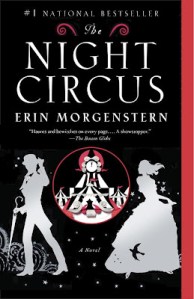
The Night Circus by Erin Morgenstern

Erin Morgenstern was signing the new paperback edition of The Night Circus at BEA, and I picked up one for myself based on the good reviews I’ve seen online.

The Night Circus
Erin Morgenstern

The Premise: (from the back blurb) “The circus arrives without warning. No announcements precede it. It is simply there, when yesterday it was not. Within the black-and-white striped canvas tents is an utterly unique experience full of breathtaking amazements. It is called Le Cirque des Rêves, and it is only open at night.
But behind the scenes, a fierce competition is underway: a duel between two young magicians, Celia and Marco, who have been trained since childhood expressly for this purpose by their mercurial instructors. Unbeknownst to them both, this is a game in which only one can be left standing. Despite the high stakes, Celia and Marco soon tumble headfirst into love, setting off a domino effect of dangerous consequences, and leaving the lives of everyone, from the performers to the patrons, hanging in the balance.”

Read an excerpt of The Night Circus here

My Thoughts: This story is all about the magical atmosphere of the Le Cirque des Rêves (aka The Circus of Dreams), which is a circus unlike any other circus in the world. This is a circus of Wonder, swathed in black and white. One tent holds a garden made entirely of ice, another holds a vast labyrinth of rooms. The carousel animals breathe, and the food always tastes better than one remembers. Guests move from tent to tent, sampling performances and marvels, but one visit is never enough to see everything. Adding to the special atmosphere of the circus is that it appears as if from no where and is only open at night.

Of course, if the Night Circus seems impossible, that’s because it is. Unbeknownst to the regular people who visit the circus and even to the people that work in it, the Circus is actually a dueling ground for two magicians from opposing schools of thought. Their weapons are their students, Celia and Marco. Since childhood, these two were trained by their respective teachers in the art of magic. Celia’s teacher is her father, Hector Bowen, who goes by the stage name “Prospero the Enchanter”. Marco is an orphan chosen by a mysterious man in a grey suit and the initials “A. H.” Each is taught by an indifferent (and sometimes cruel) father figure, and each is told that one day they would use their knowledge against an unknown other. All they know is that they are bound to someone, and when the circus comes, the game begins.

The Night Circus is a different kind of story, mostly because this is one of those books that actually feels setting-driven. It is all about the circus. All the character’s stories revolve around or are pieces of the circus’s history. The battle between the two magicians is the propellant for its birth, but once it starts to grow, that’s when the cast of characters surrounding it grow too, and they are often as surprising as the circus. First there are the creatives that gather at midnight dinner parties at the eccentric Chandresh Christophe LeFevre’s house planning its execution — a retired prima ballerina with exquisite taste, two fashionable sisters with fine-tuned observational skills, a renowned architect/engineer, and Marco and Mr. A. H–. When the circus is opened, Celia becomes part of the endevour as the Circus’s illusionist, and she is joined by the circus folk. Some of these people seem to have a touch of magic as well, including a mysterious contortionist, a fortune teller who reads the future, and twins born on either side of midnight on opening night. Celia and Marco’s relationship grows alongside the circus itself in a complicated game of one-upman-courtship.

The sign proclaims something called the Ice Garden, and Celia smiles at the addendum below which contains an apology for any thermal inconvenience.
Despite the name, she is not prepared for what awaits her inside the tent.
It is exactly what the sign described. But it is so much more than that.
There are no stripes visible on the walls, everything is sparkling and white. She cannot tell how far it stretches, the size of the tent obscured by cascading willows and twisting vines.
The air itself is magical. Crisp and sweet in her lungs s she breathes, sending a shiver down to her toes that is caused by more than the forewarned drop in temperature.
There are no patrons in the tent as she explores, circling alone around trellises covered in pale roses and a softly bubbling, elaborately carved fountain.
And everything, save for occasional lengths of white silk ribbon strung like garlands, is made of ice.
Curious, Celia picks a frosted peony from its branch, the stem breaking easily.
But the layered petals shatter, falling from her fingers to the ground, disappearing in the blades of ivory grass below.
When she looks back at the branch, an identical bloom has already appeared.

The timeline of The Night Circus spans several years. It starts with a wager in 1873, and the bulk of the story spans a few decades after that. The narrative jumps back and forth in time, and dates and locations are provided at the beginning of each chapter. Very cheekily, there are interludes between chapters, without a date, but the point of view is secondary — “you” are in one of the tents of the circus (perhaps the date is now?) experiencing the anticipation, the pool of tears, the house of mirrors and other circus tents yourself. There is also a secondary story, beginning 11 years after the circus opens, about Bailey — a dreamer and one of many that loves with the circus. His story dovetails nicely into the main narrative as the story expands.

So remember how I said this was a setting-driven story? It’s so focused on atmosphere that The Night Circus is like a wonderful, comfortable dream. Like a dream, I was spirited off to a place where amazing things happened, but there was a buffer between me and what was going on. I was having a grand ol’ time marveling over the very visual descriptions of the circus and being charmed by the unique and likable characters, and while I did care when bad things happened, but I wasn’t gutted by them. I do not think that this is a failing of the book — it just felt to me that this book was more an imaginative treat than it was something real that I was supposed to connect to emotionally. That’s OK. Sometimes I want to read something that just takes me away to a beautiful place for a while and be told a pretty story. It was a fairytale basically.

Overall: Very lovely story where the circus is the star. Reading this book was like gorging myself on a buffet of artisan chocolates, marzipan, and Turkish Delights. It was just so lush in description, and it felt like the story had much the goal of a circus: to entertain and amaze. The Night Circus was a fairytale steeped with visual wonder, but like all fairytales, even though there was love, loss, and even impending doom, I felt removed, like I was reading it through the lens of “this couldn’t possibly be real”. It really is a circus of dreams.

Buy: Amazon | Powell’s | The Book Depository

Other reviews:
The Book Smugglers (joint review): 9 (damn near perfection), and 8 (excellent)
Books Take You Places – 5 out of 5
Fantasy & SciFi Lovin’ News & Reviews – 4 out of 5 (“Whether or not one enjoys “The Night Circus” will likely have a lot to do with whether or not the reader prefers a story that enjoys a romantic dreaminess”)
Once Upon a Bookcase – “It’s not just a story, it’s an experience”
The Canary Review – 3 canaries (out of 5) (“It sounds wonderful, and dreamlike, which is the intent, but after a certain point I am jaded enough to have my doubts”)
Sophistikatied Reviews – DNF
The Hiding Spot – “If this magial place was real, I think I’d run away to join the circus.”
Babbling about Books and More – A
The Allure of Books – “I definitely recommend picking up this novel if you’re a fan of fantasy”
For Love and Books – 5 hearts (out of 5)

Extras:
The Night Circus Deleted Chapter
The Night Circus game

Spellcrossed by Barbara Ashford

I have been looking forward to Spellcrossed ever since I learned that there would be a sequel to the first book, Spellcast. In Spellcast, Maggie Graham, a plucky New Yorker is thrown for a loop when she’s laid off and her apartment ceiling collapses on the same day. She heads out to recover and stumbles on a theater in the middle of nowhere and basically has a life-changing summer with and a touch of the otherworldly. My review of that first installment is here: https://i0.wp.com/i58.photobucket.com/albums/g254/jayamei2/livejournal_com.gifhttps://i0.wp.com/i58.photobucket.com/albums/g254/jayamei2/wordpress.jpg

The second book starts up two years after the last one left off (so I recommend you read these in order). Disclosure: I’ve met the author in person and I received this book for review from the publisher at her request.

**** There will be minor spoilers for the first book in this review! If you haven’t read it, either skip down to the ‘Overall’ section or read my review of book 1 ****

Spellcrossed by Barbara Ashford
Barbara Ashford

The Premise:  It’s been two years since Maggie Graham’s first summer at the Crossroads Theatre. A lot has changed in two years. The theater has become nonprofit, and Maggie is its new executive director and artistic director. There are professional actors as well as amateurs in the cast, and the Crossroads even works with groups of children in some of its selections. Maggie is now the owner of the local hotel, the Golden Bough, and has slowly begun to update its look. A lot of things have changed, but one thing stays the same for Maggie — her feelings for the lover who walked away. Rowan was freed of his curse and returned to Faerie two years ago, and even though her it’s time to move on, it’s not that easy.

My Thoughts: Spellcrossed was a surprise. The surprise was it took me a lot longer to read this book than I was expecting to. According to goodreads I started it June 11th and finished it July 4th. Now, I didn’t expect Spellcrossed to be an action-packed adventure — the first installment is more character driven than anything else and I enjoyed that quite a lot, but from the get go I understood the premise: Maggie needing to figure out her life — along the way she falls in love and gets involved in the personal dramas of the Crossroads Theatre cast. The romance was quiet but tinged with mystery, and the struggles of the other actors brought a new layer of meaning to their work at the theater.

In Spellcrossed, the direction of the story felt less clear in its first few pages. It’s almost two years down the road from when Rowan left her and Maggie spends her time working on the Crossroads and the Golden Bough. It’s the beginning of summer and she’s starting rehearsals for a production of Annie. New characters are introduced (child actors and professionals as well as some amateurs), and a typical summer of theater at the Crossroads begins — full of the trials and tribulations of putting on a show. There are plenty of vignettes about things going wrong but I wasn’t sure where the story was headed until 75 pages in. Until then, the story spends quite a lot of time with the minutia of Maggie’s job as director. I am not really a fan of musical theater, and maybe that’s the reason why I questioned what the point was. In the last book it made sense that the reader knew the details of the productions and of the actors’ struggles because this was part of character growth, especially Maggie’s, but here it felt less vital.

Since I liked the first book so much I decided that Spellcrossed was just a quiet book and it was taking it’s time to ramp up, but in hindsight 75 pages is a long time to get the ball rolling, and I wouldn’t be surprised if readers stopped reading before the story really begins because of the lack of direction. The problem is that once there is something to chew on, Spellcrossed is still ramping up. Even after Rowan returns, bringing with him Maggie’s long lost father (highlight for spoilery things that happen in the first one hundred pages of the book), when I wanted to explore what was happening to Maggie, the theater kept taking up her time and the pages of the book. I felt like the theater and the other characters didn’t add much to the pacing or the story and I mentally wanted to cut swaths from this book and skip ahead to the meat: Maggie and the important relationships in her life.

When the book does hit its stride it is exactly what I wanted it to be, but the tragedy is that it takes a good three quarters of the book to get there. Until then I was mentally writing a “this book didn’t meet my expectations” review. When I hit the last one hundred and fifty or two hundred pages? That was when I really was there, getting caught up in what would happen next and empathizing over Maggie’s tough choices. The ending of this book, with it’s mix of sorrow and happiness was what I loved so much about Spellcast and had been hoping to see here. This is where the story delves into the messiness of love and relationships. Again this wasn’t an ending that was rainbows for everyone, but I think it ended the way it should. Just like when I finished the first book, it felt right. In the end I was very glad I kept going.

Overall: As with Spellcast, Spellcrossed is contemporary fantasy, but the contemporary parts ground the fantasy. Magic and the otherworldly are present, but everyday human connections are the real glue of the story. I liked this one, but it may not be for the impatient because it starts slowly and takes its time ramping up before its strong finish.

Buy: Amazon | Powell’s | The Book Depository

Other reviews:
Smexybooks – C

Anyone going to Readercon?

Readercon is an annual “conference on imaginative literature” in Burlingon, MA. This year will be the 23rd Readercon and it will be held from July 12th till the 15th. And I’m definitely going (hotel has been booked and everything). If you are a speculative fiction fan, just check out all the guests who will be at this thing (scroll down and you will see over 170 guests). Yup, authors like Scott Lynch, Kelly Link, Ellen Kushner and Elizabeth Bear. Not to mention the guests of honor: Peter Straub and Caitlín R. Kiernan. The schedule was just posted too!

So. I’ll be driving in to be there Saturday and at least Sunday morning. Anyone else going?

Easy by Tammara Webber

Alright. So Angie reviewed Easy on Tuesday and by that evening I had bought the book, fully intending to hold on to it while I finished off other books I was reading. But then, I read a few pages. By lunch the next day I’d read the whole thing.

Easy
Tammara Webber

The Premise: Jacqueline Wallace is having a horrible sophomore semester in college. After 3 years together, her boyfriend Kennedy dumps her so that he can sleep with other girls. Two weeks after that, his frat brother Buck attacks Jacqueline in a parking lot and tries to rape her. She escapes only because a guy in her economics class was there.  Shaken by the assault, all Jacqueline wants to do is to move on and act like nothing is wrong. She doesn’t tell anyone what happened, but Lucas, the boy who saved her knows, and suddenly she’s noticing him everywhere. To add to everything else, Jacqueline has missed two weeks of Economics because she was avoiding Kennedy and if she doesn’t make up the midterm she missed, she’s going to fail the class.

My Thoughts: Since I didn’t really look at any reviews besides the one before beginning Easy, I was genuinely freaked out by the first few pages. I didn’t know what would happen to Jacqueline, and I had a sinking feeling at the pit of my stomach when she walked to her truck and was suddenly pinned down from behind. I was relieved when a savior appeared, but after this incident I still worried since Jacqueline didn’t report Buck for the attempted rape. I’m putting that out there now for anyone for whom this would be uncomfortable with descriptions of sexual assault. My rule of thumb is not to discuss what happens after the first fifty pages of a book, so I won’t say whether things get darker for Jacqueline, but I will say that the first few pages with the attempted assault is at the threshold of what the reader actually gets to “see”.

As can be expected, Jacqueline wants to put the attack behind her.  She has a lot of other things to deal with on top of her trauma. Besides getting over her breakup with Kennedy, tutoring upright bass, and working towards her music education major, she has to save her GPA by not failing in Economics. This means getting in touch with the class tutor, Landon Maxfield. As Jacqueline’s busy schedule would have it, she can’t make any of the face-to-face session with Landon, so instead they communicate by email, and what starts off as a formal interaction (“Mr. Maxfield”, “Ms. Wallace”), soon becomes a light flirtation (“I already looked forward to his name in my inbox, our back-and-forth banter”). At the same time, Jacqueline is also noticing someone else — Lucas, the guy who saved her from Buck. He sits in the back of her Economics class, sketching instead of taking notes, makes her coffee at Starbucks (he’s the barista), and shows up at the club to ask her to dance. He’s got a mysterious bad boy edge — lip piercing and tattoos, and girls coming up to him after class. At first seeing him makes Jacqueline relive that night, but after she’s noticed him, she’s drawn in, and it looks like the feeling is mutual.

Minutes before the end of class, I turned and reached into my backpack as an excuse to sneak a look at the guy on the back row.  He was staring at me, a black pencil loose between his fingers, tapping the notebook in front of him. He slouched into his seat, one elbow over the back of it, one booted foot casually propped on the support under his desk. As our eyes held, his expression changed subtly from unreadable to the barest of smiles, though guarded. He didn’t look away, even when I glanced into my bag and then back at him.
I snapped forward, my face warming.

If you like romance with that delicious build-up of falling in love, where a couple’s addiction for one another is a force you can feel, this is probably a book you will like.  Jacqueline is decidedly pursued over the course of seven weeks by a guy who says and does all the right things. I mean, this guy is good. Things begin with light touches and long stares and progress until the electricity is fairly crackling, but this guy is also respectful and not aggressive (mysterious too). When Jacqueline’s best friend and roommate Erin advises her to “make him chase you” that’s when things get interesting. And here’s when I get contrary. Yes, I was sucked in, but my own cynicism kept rearing its head. The male romantic lead here was too much of a fantasy for me, by all accounts some sort of dream guy, showing up at just the right time to boost Jacqueline’s confidence. I couldn’t stop myself from feeling disbelieving even as I raced to finish the book. It felt like there was so much going on with him that he unbalanced the story a little.

If Easy was just about the romance, I wouldn’t have liked this book as much as I did. I liked it’s depiction of college. This is not a book where the college setting is just icing — no, this story is permeated by its setting: dorm hallways as hangout areas, lectures with auditorium seating, lugging laundry to the basement, and equal parts study and being with friends. College life is shown with ups (like independence and intense friendships) as well as downs (like rumors and clique culture). The dialogue was particularly good — utterly natural and believable. I always felt like it captured the emotions of the moment.

I also liked Easy for being a story with a positive message. It put the blame of sexual assault where it belongs and had a proactive message to women as well. Those who blame the victim and support the abuser exist here, but are clearly not in the right. I loved the message of sisterhood and of women looking out for one another, and I was really invested in Jacqueline move upwards and forward from what happened. My empathy for Jacqueline made me cheer for all the positive things that came her way. This story wasn’t perfect (see above), but it was a good one.

Overall: An entertaining New Adult contemporary with a pro-female message. I quite happily was swept along by the easy writing style, the banter of the college set, and the electric romance. Even if part of me found Jacqueline’s hero too conveniently perfect to suspend my disbelief (he fell in that uncanny valley between an awesome guy and a god), I liked this one. Definitely worth the $3.99 I spent on it.

Buy: Amazon (kindle) | B&N (nook)

Other reviews:
Dear Author – B+
Clear Eyes, Full Shelves – “I’m usually quite wary of self-published books, but Easy was worth the risk.”
Angieville – “Highly recommended, especially for fans of Jessica Park’s Flat-out Love, Jennifer Echols’ Going Too Far, all things new adult, and just substantial, swoony contemporaries in general.”

Fighting Gravity by Leah Petersen

Fighting Gravity is a science fiction romance that was sent to me for review from the author.

Fighting Gravity
Leah Petersen

The Premise: (blurb from publisher) “When Jacob Dawes is Selected for the Imperial Intellectual Complex as a child, he’s catapulted from the poverty-stricken slums of his birth into a world where his status as an unclass is something no one can forget, or forgive. His growing scientific renown draws the attention of the emperor, a young man Jacob’s own age, and they find themselves drawn to each other in an unlikely, and ill-advised relationship. Jacob may have won the emperor’s heart, but it’s no protection when he’s accused of treason. And fighting his own execution would mean betraying the man he loves.”

Read an excerpt of Fighting Gravity (Chapter 1) here

My Thoughts: Told from the first person POV, this had the feel of a memoir. I couldn’t tell what prompted this introspection, but I saw the story as three parts: Jacob’s early years at the IIC, his relationship with the Emperor, and the fallout from that relationship.

Jacob Dawes starts off as an unclass in Mexico City. His father, an abusive drunk, was Resettled years ago, leaving Jacob (or Jake), his mentally ill mother, and his toddler sister to fend for themselves. When he’s eight-years old, Jake’s intellect gets him selected for the Imperial Intellectual Complex (the IIC), so that he and a handful of genius children can serve the Emperor with their technological and intellectual advancements. It’s an honor to be chosen, but too poor to receive advance notice that this would happen, Jake is taken away from his family by unsympathetic servants of the Empire. At the IIC, his poverty and class keep working against him. He’s immediately singled out by the Director as a likely troublemaker and unworthy of being in the program at all. Shunned by many of the students and instructors, Jake struggles to prove himself, but he’s often the target of punishment and bullying. Eventually, he finds his niche in Physics under a kindly mentor, and after that he becomes a rising star with a series of breakthroughs under his name. By the time he’s fifteen, his advancements bring him to the attention of the young emperor, Rikhart IV, who is exactly Jake’s age. An unlikely relationship begins.

Jake and Peter (the Emperor) are on the exact opposite spectrum of the class ladder. At first Jake is in awe of Peter, but he quickly adjusts and sees Peter as another person – someone he likes. When Peter brings Jake along on a year-long tour of the Empire, the two have a chance to spend time alone. They begin a romantic relationship after an easy companionship (sex here is fade-to-black after some kissing and enthusiastic pushing). There’s not a lot of slow burn in their romance – their falling in love feels inevitable — but after they do, that’s where the drama really begins.

Class division is a big theme in this book. It’s clear from the start that although Fighting Gravity is set in a future where space travel is common, the social structure is traditional and hierarchical. While the Emperor has absolute power (so much so that the word “Emperor” is used in everyday phrases where we’d say “God”), merely being born as an unclass has made Jacob’s life a constant battle against the extreme bias of those around him.  Jake resolves to be beyond reproach, he doesn’t always succeed, and his impulsiveness often overrules his self-preservation. His non-conformist attitude about class (reacting to the individual, not their status) is welcomed by some (such as the Emperor), but makes enemies of others.

I worried for Jake. He’s the underdog in Fighting Gravity, and while he is extraordinarily gifted, he’s also flawed. His biggest weaknesses involve impulsiveness and letting his anger overrule diplomacy. Jake sees how people react to his class, is annoyed, and just reacts instead of protecting himself and to soothing egos. He knows that the aristocrats have “quiet, unpleasant ends that didn’t involve petitioning committees” if they wanted to be rid of him, but he kicks the hornet nest anyway.

“Others may say what they think, but you cannot.”
“Oh no? And why’s that?” She heard the edge of anger in my voice because her eyebrow quirked.
“You know why. Because of what you are.”
The hot rush of anger spread from my head down through my fingers and toes. My fists clenched. “I thought you were different than them, Your Grace, but I guess I was wrong. I don’t get to have an opinion because I’m unclass? I should have known. You’re like the rest of them.”
The crack of her hand against my cheek left my jaw throbbing and my ears ringing.
“Stupid man. Yes, it is because you are unclass, and you know I do not think less of you for it. If I did, would I be trying to protect you?”

This was a character and relationship-centric story. A big pull of Fighting Gravity (once we’re past his time at the IIC), is the drama that unfolds from the volatile combination of Jake and his closeness to the Emperor. With Peter, who treats him as an equal, everything is wonderful, but that’s in private. In public, time and again, Jake just makes himself an easy target for others and makes decisions without telling his powerful lover. He gets threatened and tells no one, and then of course his enemies carry out their threats. I sped through the story in a matter of hours because I wanted to know whether Jake would be alright and if he could be happy with Peter. It was really frustrating though–Jake brought a lot of trouble on himself, but the hatred against him was unjustified too.

I really liked how much Jake’s class played a role in the story, but I also felt like Jake’s problems center on himself. He’s hated for being an unclass, but he’s oblivious to others with similar situations. When he does think of others not as lucky as himself, his attentions are too little or too late. I’m hoping that enlightenment in this area is being saved for later. I’d like to see how both Jake and Peter would approach the class issues in the Empire.

Another niggle I had was over the extremity of some of what Jake goes through. Despite being caught up in what was going on, a romantic gesture and some painful punishment still felt over the top to me. I found myself asking “did they really have to do that?” at certain scenes. I’d have preferred more nuanced consequences for Jake, even if the angst and drama had me flying through the pages. I preferred the subtler moments, like those between Jake and his assigned servant, Jonathan. There was the suggestion all is not as it seems in that area, and I’m curious where it will go in the next book. Well, if there is a next book. Fighting Gravity didn’t end with a cliffhanger, but it did feel like Jake’s story wasn’t over.

Overall:  Fighting Gravity is a science fiction romance styled as a memoir about a poor unclass boy (Jake) whose genius intellect brings him out of the slums and into the path of the Emperor. They fall in love, but there are consequences because of deeply engrained beliefs about class hierarchy. Overall I thought this was a well-written, emotionally gripping type of read that went down easy. It may not have knocked my socks off because I wanted the class issues further developed, but I can see others not having that issue, and at $2.99 for the ebook, it’s worth giving it a go. Recommended for those looking for a coming-of-age type of SFR.

Buy: Amazon (kindle) | Dragon Moon Press (epub/kindle)
(paperback is also available at the above sites and B&N)

Other reviews:
My blogging buddies haven’t read this one yet.