Unknown's avatar

About janicu

I'm a book blogger who reads lots of speculative fiction, young adult and books with romantic elements.

Giveaway: Fairytales from the Brothers Grimm by Philip Pullman

Fairytales from the Brothers Grimm: A New English Version (out since November 12th) is an enjoyable, straight retelling of 50 fairytales. There will be a review from me soon. In the meantime, the publisher has kindly offered a copy for one of the readers of this blog.

Here’s how to enter:

  • Fill out this google form with your name and an email address (please make it one you check often)
  • Enter by Sunday, November 25th.
  • This giveaway is for U.S./Canada only

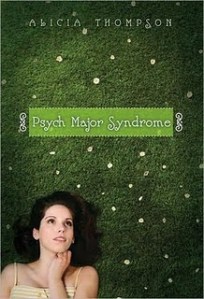
Psych Major Syndrome by Alicia Thompson

A few weeks ago I went to the Greenburgh Library Book Sale and picked up several books, including this one. Isn’t the cover adorable? I think the wistful, fresh-faced look of the cover model is a perfect representation for what’s inside.

Psych Major Syndrome
Alicia Thompson

The Premise: Leigh Nolan is a freshman psychology major at Stiles College – a progressive school where students aren’t graded and are expected to take charge of their own education. In a small school like Stiles, this means quite a few over achievers, “freaking out about their entire academic career” a couple of months into their first year. It’s a trying time, but on top of trying to decide on a topic for her senior thesis, mentoring cynical middle school students, and dealing with other competitive psych majors, Leigh is also questioning her relationship with Andrew, her high school boyfriend and fellow Stiles underclassman. Lately their relationship has lost it’s luster, and Leigh is confused by how much she’s noticing Nathan, Andrew’s roommate who never seems happy to be around her.

My Thoughts: Well this was as cute a story as I was hoping for. I think it has the right amount of the expected love story, but it’s balanced by writing that gives Leigh a faceted and likable character. Her psychology major fits nicely with delving into her psyche.  Leigh is constantly self-evaluating and acknowledges her own quirks, which include (but are not limited to): refusing to buy a parking pass, waiting until the last minute with her assignments, and a fear of being stranded in the desert. To add to the theme, each chapter begins with a psychological term and its definition, which foreshadows what’s to come.

Ask her some psychology related thing, and Leigh can dredge up what she learned in AP Psychology and class. But for all her book smarts, Leigh is a bit naive. She still has NO clue that her relationship with her boyfriend is in trouble. When you forget a date, and so does he, it doesn’t really say you’re feverishly in love. Leigh’s roommate (and best friend) Ami isn’t enthusiastic about Andrew, but Leigh defends him:

“Ami doesn’t have the benefit of all these great memories, so she continues to think that he doesn’t treat me as well as I deserve. Which, in a way, is totally loyal and cool of her– but completely unfounded. Well, mostly. If anything, his main problem is just that he’s too smart.  He has so much going on in his brain at any given moment that it’s no wonder he’s a little absentminded sometimes.”

Leigh rationalizes Andrew’s non-attentiveness and the distancing that has happened between them since school started. To be honest, from Leigh’s workload, I can understand why it’s easy for her to do so. She’s quite busy with college herself.  Her day-to-day life involves going to class, meeting with her academic adviser, long talks with her roommate, and waiting till the last minute to do her work. (As an aside, Psych Major Syndrome captures the college experience really well — when Leigh stays up till 5am writing a 20-page essay, the details of falling asleep and waking up with barely enough time to hand it in, felt eerily familiar). But schoolwork only goes so far as an excuse, and eventually Leigh has to face what’s really going on between herself and Andrew.

In the meantime, all that schoolwork and the social life of college means that Leigh has a pretty full life, and it’s not all about her romantic relationships in this book. The interactions between Leigh and Ami, the other psychology students, her mentee, and Nathan are all natural extensions of her life and nothing ever feels forced about them. Even if I could predict exactly where the story was going to go, Psych Major Syndrome adds enough humor and color to make the predictability pleasant and comforting instead of dull. Also (and here I go back to the romance), Leigh’s happy ending is one of the sweetest ones I’ve read in a while. I ended up really liking the guy she is paired with, even if I thought he was a bit of a fantasy boy. I can overlook how Leigh acted before she figured out what she wanted because of how well this guy suited her – it all ended on just the right note.

Overall: A sweet and fast comfort read. It has a good balance between an expected plot and a unique approach to that plot. Leigh is an endearing narrator, and I enjoyed this reminder of college life.

Buy: Amazon | Powell’s | The Book Depository

Other reviews:
One More Page – ” a very entertaining contemporary YA read, even if there’s really nothing surprising about it”
A Room With Books – “Psych Major Syndrome was an okay read. Leigh was much too blind to everything around her for me really connect.”

Other:

Ghost Planet by Sharon Lynn Fisher

This review is based on an eARC sent to me by the publisher.

Ghost Planet
Sharon Lynn Fisher

The Premise: Elizabeth Cole was starting a new job as a psychologist on the newly discovered world of Ardagh 1, also known as “the ghost planet”. This is a place with a remarkable phenomenon – everyone who goes there starts being followed around by a manifestation of a deceased person they once knew. Why the local aliens have chosen to do this is a great mystery, but to cope, settlers have set up the Ghost Protocol. The protocol is not to acknowledge the ghosts whatsoever.  Interaction has had adverse effects and colonists find that ghosts weaken if ignored for long enough. When Elizabeth lands on the planet she is apprehensive about what will attach herself to her, and when she meets with her supervisor Dr. Grayson Murphy, her first thought is to wonder if he’s human. He is, but Elizabeth is in for a shock – she’s the one that’s the ‘ghost’! Her transport to the planet crashed, killing all aboard. Now Elizabeth is faced with the alarming prospect of knowing she’s ‘real’ but being treated as if she’s not. She has to fight for herself and against the Ghost Protocol, while being tethered to the man responsible for it.

Read an excerpt of Ghost Planet here

My Thoughts: I’m not sure how long Ghost Planet has been on my radar, but I’ve been following the author’s blog since sometime last year. Its premise just got me aflutter: a planet where everyone has ghost following them around? And the heroine is surprised to discover she’s a ghost too? And there’s chemistry with the guy she’s linked with? AND Linnea Sinclair calls it a “fresh and fascinating take on the human-alien problem”? Uh, yeah, needless to say, I had pre-ordered this long before I was contacted about a review.

The tarmac was deserted. Foggy and disoriented, I wondered how long I’d been standing there, listening to the evergreens groan in the wind and dreading my first encounter on this new world. Would it be human or alien?
I breathed in the crisp, impossibly clean air, trying to clear my head. My gaze traveled around the landing pad hemmed in by towering conifers, and came to rest on the transport terminal, oblong and silent under a slate-gray sky.
What now?
I had the unsettling feeling I was the only person on the planet—Ardagh 1, more commonly referred to as “the ghost planet” by people on Earth. Inexplicable things happened here. The planet itself was a study in the impossible.
Finally the terminal doors slid open, and a figure stepped out onto the tarmac. Half a dozen others spilled out behind him, and a transport whined into view, landing about thirty meters away.
The presence of the other passengers eased my sense of isolation. But that first man out of the building—he was headed right for me. My heart beat out a warning, and my mind snapped back to the original question: Human or alien?
“Elizabeth?” He raised his dark eyebrows, and my gaze locked on his startling eyes. Piercing, round, and the lightest shade of blue, like sky behind a veil of cloud—clean cloud, not the brown smudges that passed for clouds back on Earth. Something about him tugged at my memory, but I found this the opposite of reassuring.
“Yes?” I answered, uneasy. If he wasn’t human, I was minutes on the planet and already breaking the rules. It was dangerous to talk to them. There were institutions back on Earth devoted to caring for people who’d done so. I’d met some of those people.

I think my instinct for what I like served me well with this one. I loved the concept that promised some interesting world-building, but because this is also Romance, there’s a burgeoning relationship for me to enjoy too. I like a balance between these two things, and Ghost Planet does a good job of it. I especially liked this early on, when Elizabeth has to adjust to her new reality. What first struck me was that although she was on a new planet, far from Earth, her work as a psychologist was something relatable and not high-tech or military. She was a middle-class woman, without any special combat skills, just her degree. And because this was told from her point of view, having the ‘ghost’ tell the her side of story was a nice spin on the extra-terrestrial encounter trope: no one knows exactly what she is, but then, neither does she. Until she’s told she’s a ghost, Elizabeth doesn’t realize anything is wrong, and her shock and confusion at having her most basic identity questioned is good stuff. The irony is that the human Elizabeth was interested in the ‘ghosts’ from an academic standpoint before traveling to Ardagh 1. Now her experience with the Ghost Protocol is much more personal and her questions about her existence much more pressing.

At first it seems like Elizabeth’s unlucky to be attached to her would-be-supervisor Murphy. He’s the psychologist responsible for helping the settlers cope and he’s told them rejecting their ghosts is the best thing to do. But before he realized what she was, they were enjoying each other’s company. When Elizabeth turns out to be a ghost, it’s a surprise for both of them. So Murphy is kind to her and conflicted about his own protocol. Their relationship mirrors the people on both sides of the equation. On one side, there are the humans, wary of a phenomenon that has no explanation, on the other, there’s the ‘ghosts’, struggling to be acknowledged.

Because any interaction with Elizabeth is verboten, the relationship took some time to develop, and I enjoyed seeing how it happened despite the rules against it. Elizabeth’s persistence and Murphy’s empathy were characteristics that brought them closer, but the connection they forged from quiet proximity had it’s own power. The romance takes a natural path there that I liked, and Elizabeth and Murphy make a compatible couple. The one quibble I had, was that once they hit a turning point in their relationship, something went away. I think that that suddenly the discord came from sources external to the relationship, and these two were very harmonious.  I suppose at that point they had enough to deal with.

Anyway, this is a story with a healthy amount of romance but has a plot that doesn’t just evolve around that. There are some suspenseful, action-adventure aspects to the story and Elizabeth and Murphy have to face several threats to their lives. I can’t really go into these without spoiling the story, but I was impressed by how thoughtfully Ghost Planet explores the the ‘ghost’ concept in its storytelling. It’s a concept that’s also a mystery, and thankfully the author doesn’t leave the reader with a lot of hanging questions. It explores a lot of the questions I had and organically integrated the answers into the plot. For example, I’d wondered about other ‘ghosts’ and what they were like, what Elizabeth could do and not do as a ghost, what would happen if she was strengthened by Murphy rather than weakened, what happened if she tired to separate from him, and so on. I even felt like I got something of a satisfactory explanation for why the ‘ghosts’ were there in the first place, or at least a working theory that made sense to me, by the end of the story.

Overall: I’m excited about other people discovering this author. I thought Ghost Planet was very enjoyable science fiction romance with a heroine who is more regular girl than action hero, and a setting that feels very unique (and not just for not being on a spaceship).  I really liked the thoughtful way in which the ‘ghost’ concept was explored in this story, and I also liked how I was engaged by scenes that weren’t all about action. Fisher made relationship dynamics and the fight for dominance (or just acknowledgement) between personalities just as important as physical fights for control. I’d recommend Ghost Planet for fans of Sara Creasy and Linnea Sinclair.

P.S. As far as I can tell, this is a standalone (!)

Buy: Amazon | Powell’s | The Book Depository

Other reviews:
Not yet

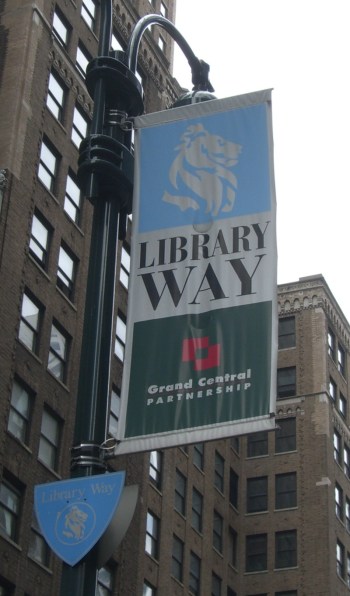
NYC Library Way (picture post)

I had so many pictures of the Library Hotel Weekend that I had to break it up into two posts. This part is about the free celebration of literature on the sidewalk of East 41st Street, called Library Way. I took a lot of pictures, on both sides of the street (FYI some of these repeat, so walking a block should yield most of the quotes to see).

This is what the Library Way is (taken from Grand Central Partnership’s website):

“In 1996, GCP, along with the New York Public Library and New Yorker Magazine, convened a distinguished panel of literary experts and librarians to select the quotations from prominent works of literature.

These quotes have been brought to life by urban sculptural artist Gregg LeFevre in beautiful bronze plaques installed in regular intervals in the sidewalks along 41st Street leading to and from the Humanities and Social Sciences Library. The Library Way bronze plaque initiative was subsequently honored with an “Excellence in Design” award by the New York City Arts Commission in 1998.”

This is a image heavy post (there are 45 images of the plaques on the library way here), so here’s a preview. Click it or see after the jump for a gallery with bigger images!

Continue reading

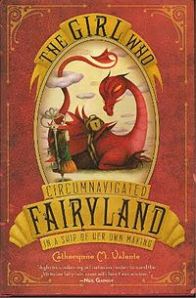
The Girl Who Circumnavigated Fairyland in a Ship of Her Own Making by Catherynne M. Valente

I won an ARC of this book last year but didn’t get around to reading it until: a) I heard so many good things about it from my fellow readers, b) I heard Cat Valente speak at a NYPL event and, most importantly c) it was chosen by my readalong buddies Holly and Chachic.

The Premise: September is a twelve-year old girl, tired of the same thing at home while her father is away at war and her mother works in a factory. Then one day while she stands over the dishes, the Green Wind sweeps in through her window and asks her if she’d like to come away with him to the great sea that borders Fairyland. Of course she says yes, and pretty soon she is stepping through the closet between worlds in a green smoking jacket and meeting witches and a Wyvern. September would like to enjoy Fairyland, but ever since Good Queen Mallow disappeared and the Marquess took over all is not well.

My Thoughts: There are layers to The Girl Who Circumnavigated Fairyland. On the surface, it’s a story of a girl who escapes her humdrum life and has lovely adventures in Fairyland. I think young children would enjoy the descriptions and the lush language (it has the sort of omnipresent narrative with dashes of whimsy and color that would be perfect for being read aloud, one short chapter at a time). On a deeper level, there’s poignancy and gems of insight in September’s adventure that makes this a book that will resonate with mature readers too.

The surface story reminded me of Alice’s Adventures in Wonderland, but more of The Phantom Tollbooth (a book I grew up adoring), in which a bored boy is transported to the Kingdom of Wisdom via magic tollbooth and has to rescue two princesses whose banishment has caused disharmony..  With Queen Mallow’s disappearance and her replacement by the Marquess, and the playful of storytelling and its characters, I saw a lot of parallels, but as I read further on, they fell away. The Girl Who is a lot more complex. The prose is full of lush vocabulary and description. Fairyland manages to be both a wonderful dream, but it also holds reminders of life’s realities.

So September is whisked away to Fairyland. As can be expected, it is a place of magic, with its own strange rules. September is flown there on a flying leopard with the Green Wind and has to put together a puzzle and get through immigrations in order to enter. Once there she meets three witches (one a wairwulf) who tell her that the Marquess has stolen their Spoon, which September offers to retrieve. Along the way, she meets a wyvern, A-Through-L, who is the son of a Library, and whose wings are all chained up on account of the Marquess’s new rules. Not liking this Marquess the more she hears about her, especially when compared to the Good Queen Mallow, September goes to Pandemonium (the capital of Fairyland) to meet her, and picks up another traveling companion – a boy named Saturday that grants wishes. That, in a nutshell, is the start of September’s adventures, but it doesn’t really describe the experience. Maybe this tidbit will help show you:

September let go a long-held breath. She stared into the roiling black-violet soup, thinking furiously. The trouble was, September didn’t know what sort of story she was in. Was it a merry one or a serious one? How ought she to act? If it were merry, she might dash after a Spoon, and it would all be a marvelous adventure, with funny rhymes and somersaults and a grand party with red lanterns at the end. But if it were a serious tale, she might have to do something important, something involving, with snow and arrows and enemies. Of course, we would like to tell her which. But no one may know the shape of the tale in which they move. And, perhaps, we do not truly know which sort of beast it is, either. Stories have a way of changing faces. They are unruly things, undisciplined, given to delinquency and the throwing of erasers. This is why we must close them up into thick, solid books, so they cannot get out and cause trouble.

As you can see, the narration seems well aware of the traditional stories of children who go to have adventures, and September, a reader herself, is aware as well. There’s a consciousness that comes with the creative madness – as if the story is quite cognizant under its merry storytelling of all the other stories in which children are taken to Fairyland, and of all kinds of other things. This made me feel like I had to pay attention to the details so I wouldn’t miss anything. At the same time there was a lot of playfulness that comes out in the words and descriptions, and the setting itself is like another character. I think that feeling of having to pay attention while the story was also so lush in describing the wonder of Fairyland hurt my reading speed initially. I had to slow it down to a crawl so I could digest the story in manageable bites. Things hit their stride when the story, previously innocent and fairly light, took a turn for the more serious.

When I say it became more serious, I think it depends on the reader how things will affect them. It remains, as always, light on the surface. I can see children reading this and seeing a straightforward adventure that they could enjoy, and they may not wonder too much about things like whether September’s flight to Fairyland represents her escaping her own reality (in which her father is fighting in foreign lands and her mother works in a factory leaving September alone by herself), and whether the wyvern has created a father he can more easily accept than one that abandoned his family. When September begins to face the work of the Marquess, I saw a lot of underlying themes packaged in a fairly harmless manner. It’s Good (September) versus Evil (the Marquess), but look closer and there are shades of grey, commentary on childhood, fear, growing up, and death. All of these things aren’t in your face – just gently touched on so that you can contemplate them later at your own leisure, long after the pages are closed and that lovely ending has faded.

Overall: This is a fairytale that works for many ages. If you are looking for depth you will find it, but if you are looking for straightforward adventure, you will find that too. The writing itself is colorful and odd and really rich in substance. It’s the sort of writing you can read aloud, but not meant for fast flipping. I enjoyed the experience once I realized that this was one I had to consume at my own pace.

To see what my readalong buddies thought of this one, take a look at their reviews posted today: Chachic / Holly.

Buy: Amazon | Powell’s | The Book Depository

Other reviews:
A Room with Books – “a book that deserves to be read by anyone”
Calico Reaction (has spoilers) – 8 – Excellent and “an easy book to recommend to anyone who has a soft spot for classic fantasy literature, for stories where fairylands are equally magical and dangerous, for beautiful, imaginative prose and ideas”
The Book Smugglers – top 10 of 2011

Other Links

The Girl Who Ruled Fairyland – For a Little While, short story prequel up on Tor.com

The Library Hotel (picture post)

A couple of years ago I stayed at the Library Hotel in New York City. I waited for a deal on room prices and stayed one weekend while visiting the city. I took a bunch of pictures, and then somehow never posted them! So here they are.

front door

The front desk has a card catalog behind it

Our room number! Sixth floor, room 6 (or: 600.006 Health & Beauty)

The best “please clean my room/do not disturb” sign!

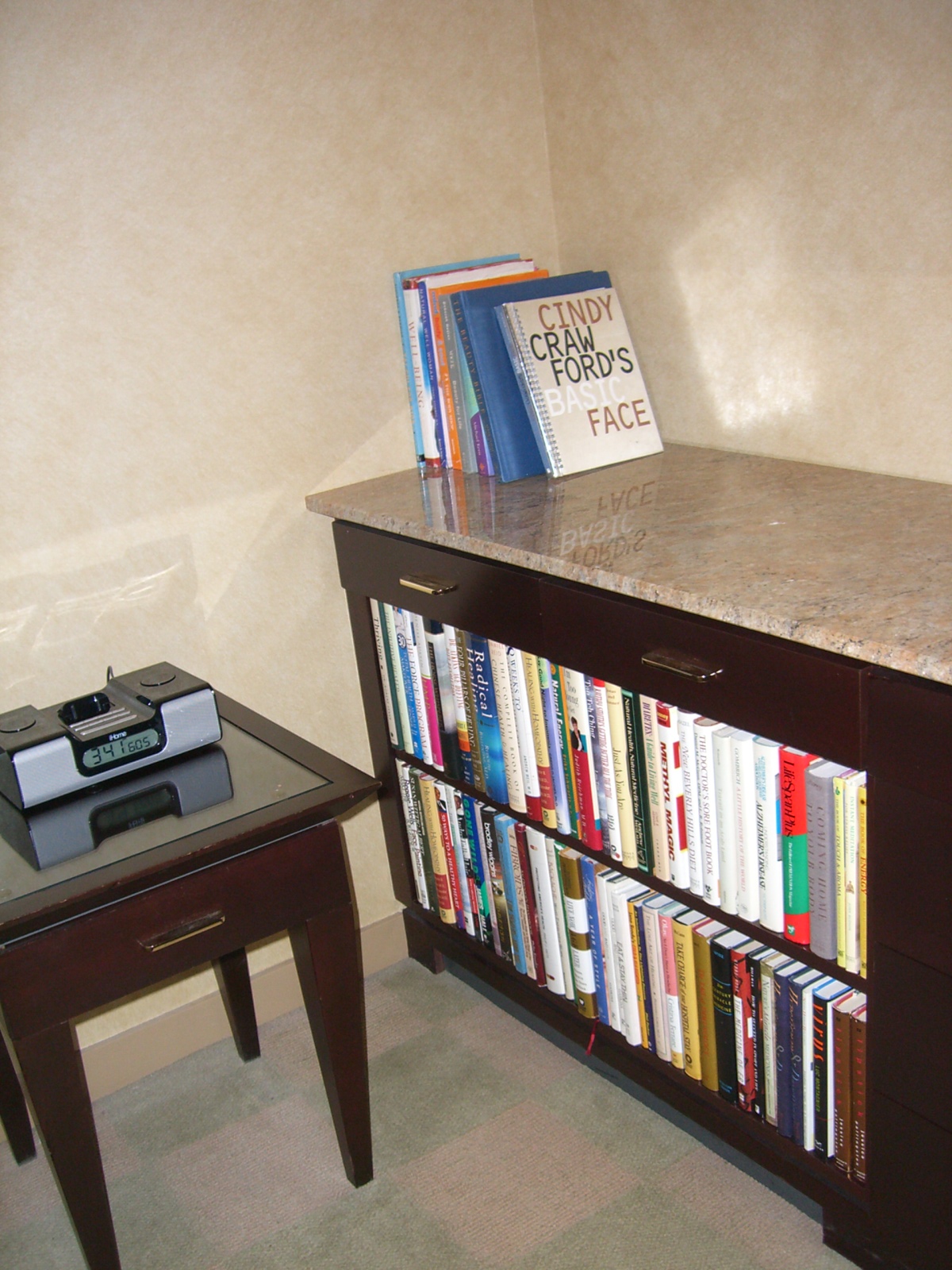
Junior suite – nice big bed with bookshelves on the side – unfortunately they were all non-fiction about health & beauty. I wasn’t excited.

Health & Beauty.. eh.

Suite sitting area

View from the window – Madison Avenue

guest lounge on the 2nd floor. Loved this place – snacks and coffee and tea whenever you want, plus books (fiction this time)

better picture of the bookshelves in the lounge

The hotel is about a block away from Grand Central, and in the other direction, a block away from the NYPL (Stephen A. Schwarzman building) and Bryant park

There’s also a really cool library walk on 41st street and I took a ton of pictures of that. But I think I’ll leave that for a second post.

I would stay here again mainly because it’s a really nice hotel in a VERY good location, but I didn’t think the library theme added much. The concept was a little gimmicky and not a reason to stay there by itself.

Unspoken by Sarah Rees Brennan

As already mentioned on this blog, Unspoken was the pick of last month’s YAcker’s talk. This was something I suggested because I read it and really enjoyed it. It’s got humor, a Gothic storyline, and believable relationships. That’s a cool combination right there. Plus, it has a knock-me-flat ending, and I kind of love those.

This review is based off an eARC I received through NetGalley.

Unspoken
Sarah Rees Brennan

The Premise: Kami Glass is cheerfully odd. She has long conversations in her head with a boy named Jared way beyond the age when having an imaginary friend is deemed acceptable. Also, she’s full of crazy ideas. These are all in Pursuit of the Truth, like exposing the dark underbelly of the cricket club, which often requires that she ‘volunteer’ her best friend Angela in her madcap schemes. Her latest plan involves her quiet hometown, Sorry-in-the-Vale. Nothing really happens there. Nevertheless, she, the intrepid journalist, will discover its secrets. She’s just convinced her school to let her start a newspaper and she is just burning to find a story. The most obvious topic for news is the Lynburns. They are the family that originally founded Sorry-in-the-Vale, and own a big mansion overlooking the town that has stood empty since Kami’s been alive. Now the Lynburn family has returned, and among them are teenage cousins Ash and Jared. Since the Lynburns have returned, strange things are starting to happen around town, and Kami discovers something she may have never wanted to know: the voice in her head is definitely not imaginary and belongs to a very real Lynburn boy.

Read an excerpt of Unspoken here

My Thoughts:  This is actually my first experience reading Sarah Rees Brennan, so I came into this story without knowing what to expect. From the cover and the blurb of Unspoken, I thought I would get a Gothic mystery, but what I didn’t expect was the humor. It infuses the story with a lightheartedness that makes a serious plot into something fun. I loved the banter between characters – banter that was not just funny and highlighted the camaraderie between Kami and the other characters, but that also conveyed everyone’s individuality – like Kami’s gung-ho personality and Angela’s antisocial one:

“There are only two important things for us to discuss right now,” Kami said. “The first is that to be a success, our newspaper requires a photographer.”
“What’s the other thing?”
“He’d be excellent decoration for our headquarters,”Kami said. “You have to admit, he’s very good-looking, and I need a photographer, so can I keep him, please, oh, please?”
Angela sighed. In the cupboard, the sigh was like a gust of wind. “Kami, you know I hate guys being around all the time. They won’t stop staring and bothering me and giving me the sad, sad eyes like a puppy dog until I just want to kick them. Like a puppy dog.”
“So you have some puppy issues,” Kami observed.
The cupboard door swung suddenly open.
The new boy stood framed by the bright light of the office.
“Sorry to interrupt,” he said. “But I can hear everything you’re saying.”
“Ah,” said Kami.

Right off the bat, Kami reads a this kooky girl who just really wants to nose her way into finding things out. Like some sort of amateur sleuth, she bulldozes her way into getting her best friend to join whatever scheme she has currently cooking up and sort of exasperates Angela with her enthusiasm until she relents. Kami does get her way and signs up the new boy to be their paper’s photographer, as she does with many other things. But without this irreverent personality a lot of the story wouldn’t be. Kami is the star character; the glue that binds the story together. Without her, there wouldn’t be a newspaper, and when weird things start happening, there wouldn’t be anyone even paying attention.

With Kami, students who previously didn’t really belong to a group, suddenly do – Kami and Angela are joined by Holly and the two Lynburn boys, and soon everyone is interacting in lovely, complicated ways. Kami and Angela navigate including another girl into their circle and what this means for their current friendship, Ash and Jared prove to be cousins who just met each other for the first time, and Kami is put in the awkward position of getting attention from not just Ash but Jared as well. What I liked was that these were relationships that were nuanced and evolving and that there’s a fair amount of growing pain that comes along with the humor and banter. I liked the healthy female friendships here, and the lesson and that there’s always something to learn about people you think you know. Angela’s prickliness, but her surprising vulnerability under that, won my heart.

But particularly delicious for me was Kami’s relationship with Jared.

Kami did not feel comfortable talking about Jared’s mother, but she knew they didn’t have a good relationship.She also knew it was irrational and illogical and insane to worry about his family troubles. It was insane to care so much in the first place. He was a voice in her head, after all:she tried not to think about it too much because it made her think she really might be crazy.
Jared filled in the silence.  She wants me to stop talking to you.
Kami did not let her dread touch him. And will you stop? she asked, trying to show him nothing but support.
I told her I had to think about it, said Jared wearily.
Kami curled tighter under the covers, feeling cold. Jared said nothing else. There was silence in her head and silence beneath her window, and still she could not sleep

While Kami always feels reassured by the Jared in her mind, they’ve had to build barriers between themselves in order to appear sane. The voices scare their mothers, and Kami has stopped asking Jared about his life or talking about him with others. So when Kami meets Jared in person, he is so rude and unlike her Jared that she doesn’t make the connection until it’s blatantly obvious the two Jareds are one and the same. I liked that there was a dissonance between inner and outer personalities, because so often how people read you can be so different from what is in your head. Unfortunately it’s not just different perceptions that Kami and Jared have to contend with. The mental barriers between them adds the awkwardness of literally being in someone’s head but not really knowing them, and their lifelong link means both have a desperate need for the other. The irony is that being in each other’s head actually makes it more difficult for them to communicate their feelings for one another than less. There’s no telling if their intense feelings are real, and if one were to feel a certain way about the other that isn’t reciprocated, being stuck with them for the rest of your life is a special kind of Hell. This situation combined with teenaged angst is a recipe for relationship drama and catastrophe.

Speaking of drama, Unspoken is very Gothic. Some of the Gothic elements added a certain creepiness to the story, some of it felt tongue-in-cheek, but all of it felt very familiar to the genre. There are dark, spooky nights with strange noises, a mysterious caste, a ruin, the strange Lynburn family, dead animals, and many more. Even the interest in Kami by the two Lynburns and her hesitant response is not unfamiliar when it comes to Gothic romance. The story is very atmospheric, with a certain amount of build up: questions about what secrets Sorry-in-the-Vale holds, and hints of a dark entity in the town, but without any solid confirmation that anything is really going on until the story is well underway. I really enjoyed how these elements were pulled into the story but didn’t make Unspoken feel old-fashioned. The teen protagonists and the snappy dialogue kept everything modern.

Also keeping this story in this century: the fact that Kami was a quarter Japanese (her father is half), and so are her two younger brothers. I’m always happy to see characters with a mixed racial heritage since I am too. I particularly liked that Kami and her brother Tomo looked more like their dad, and her brother Ten looked more like their mom. I think those true-to-real-life details are important.

So about that ending. When I was updating my goodreads status, I think I called the ending a cliffhanger, but I don’t think that is technically true. No one is in dire danger and there’s no shocking revelation, but there is some drama that left me dying to find out what happens next. I expect angst and even more drama, and usually I am not a fan of these, but Unspoken is the exception: I actually LOVED how it ended. I think it opens up a lot of possibilities for where the story can go and I’m excited that we could be on an emotional rollercoaster next. So delicious!

Overall: I am a fan. I didn’t expect to be so won over by this book, but I am. The concept of young adult with Gothic overtones is done in a fresh and satisfying way, the characters are nuanced with fully-fleshed and engaging emotional lives, and the humor takes it to another level. The balance between these things guaranteed that I would thoroughly enjoy Unspoken.

For more thoughts on this book (with a bit more spoilers), check out the YAck Attack of Unspoken on the YAckers blog.

Buy: Amazon | Powell’s | The Book Depository

Other reviews:
The Book Harbinger – “it’s going to be a long wait for Unbound.”
The Mountains of Instead – “While Unspoken is an enjoyable read it is not without flaws.”
Book Nut – “[Brennan] has a way of keeping me engaged, turning pages, until her satisfying-yet-frustratingly-open conclusion.”
Fantasy Literature – 3.5 stars
The Book Smugglers – 7 (Very Good), “The most striking thing […] is its combination of the utterly familiar and the clearly distinct.”
Smexy Books – B, “a huge, enjoyable surprise”
The Adventures of Cecelia Bedelia – “on my ‘Best of 2012’ list.”
Clear Eyes, Full Shelves – “between this novel and Team Human, I’m pretty much hooked on Sarah Rees Brennan’s writing”
Bunbury in the Stacks – “The struggle of a relationship that is both symbiotic and parasitic makes Unspoken shine”

Other:
Sarah Rees Brennan answers 6 questions @ Tor.com


The Spring Before I Met You
The Summer Before I Met You
– two prequel shorts set in the world of The Lynburn Legacy.
Humble ebook bundle, Cobweb Bride Kickstarter, Clockwork Heart Trilogy, and Readathon

OK, so I’ve seen some stuff online that has me excited and I wanted to talk about them ALL so this is a catch-all post to tell you about it.

For the next 13 days you can contribute whatever amount you want and get 6 DRM free ebooks by Cory Doctrow, Kelly Link, Mercedes Lackey, Lauren Beukes, and Paolo Bacigalupi. If you pay more than the average (currently $12.11), you will unlock 2 more books, by John Scalzi and Neil Gaiman. Your contribution will go to charity and these authors, and you can customize how it will be split up. Kinda cool, huh? Check it out at The Humble Bundle.


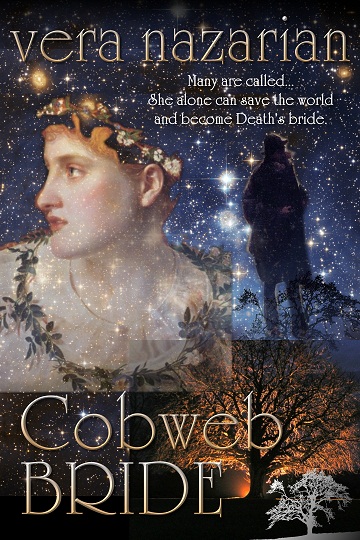
There’s a Kickstarter campaign right now for a book with a premise that sounds interesting. It’s “is a history-flavored fantasy novel with romantic elements of the Persephone myth”, and it has to do with Death stopping his work everywhere, and searching for his bride in an alternate Renaissance world.  This is a kickstarter by the author Vera Nazarian, who has published several books already, and was nominated for a Nebula Award twice. This campaign has 4 days to go and has made about half of its $5000 goal, so if interested, I say get on it sooner rather than later.

ETA: Here’s an excerpt of Cobweb Bride to get an idea of the writing.


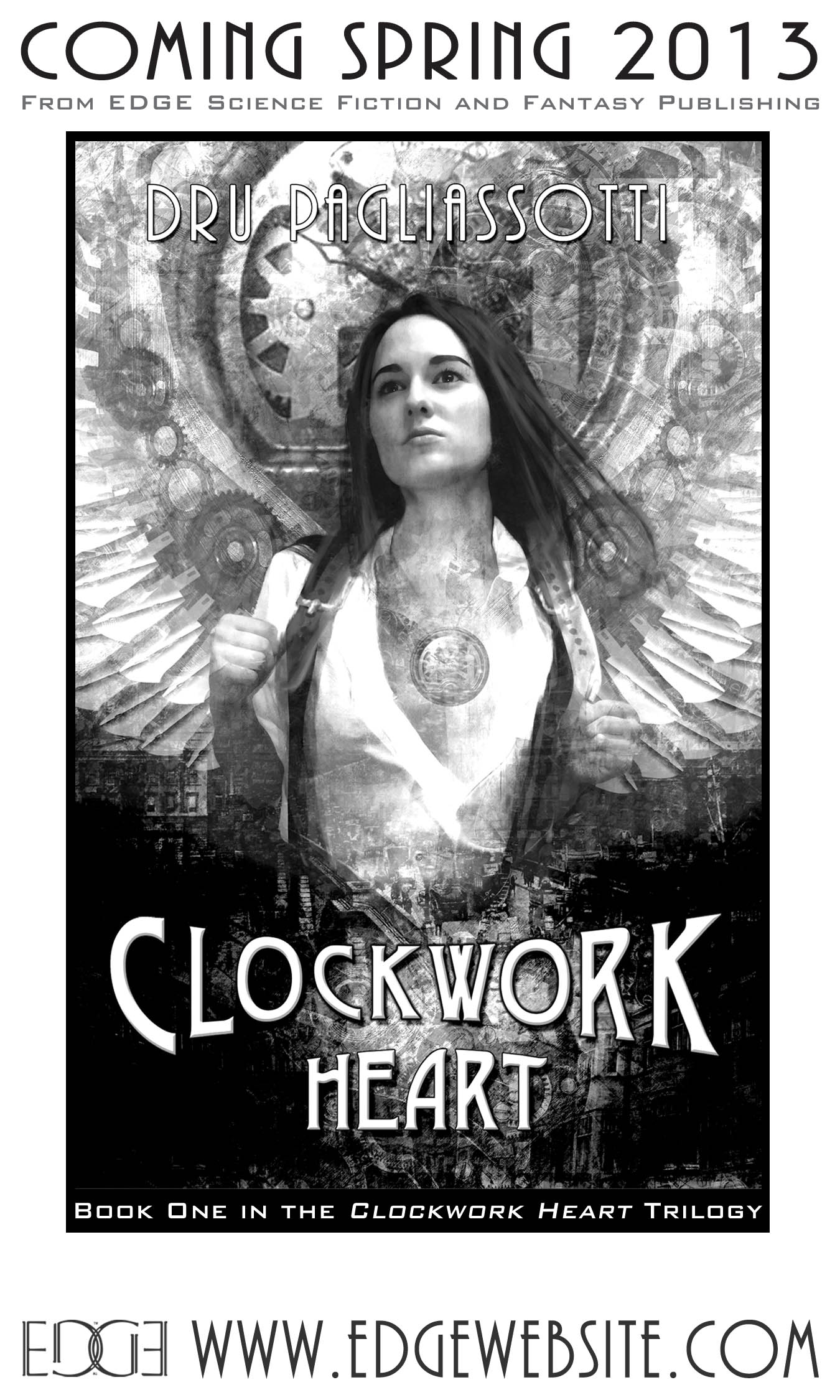
I have Angie to thank for the heads up on this one.  I unreservedly LOVED Clockwork Heart by Dru Pagliassotti and have been checking her blog periodically for news about the sequel (which I knew she had finished and was shopping around). Well, EDGE has picked up the trilogy! According to Pagliasotti’s website, “Clockwork Heart will be republished in March 2013, the second book in September 2013, and the third in March 2014″. I am so happy! I cannot WAIT.


The last news I have is about Dewey’s 24 hour readathon. It’s happening this weekend, October 13th, and I thought I would remind/tell people because I know people often want to do it but don’t realize what day it was until the day of. (Sorry for the 2 day notice.. ). I’m still debating if I will be able to join in on this one, but I recommend it. Lots of fun and an excuse to read all day. Sign up is here.

Crewel by Gennifer Albin

I was drawn to Crewel because of its blurb that promised a non-conformist who was hiding her true abilities despite societal pressure. I was interested to see what would happen to this girl who went against the grain. I requested Crewel through a BEA-related promotion from Macmillan. This review is based off of that eARC copy.

Crewel
Gennifer Albin

The Premise: In the world of Arras, some women are born with the ability to manipulate the fabric of existence. They are called Spinsters, and they keep the world running smoothly. They can weave food into being and thread supplies from one end of Arras to the other.  But Spinsters are rare and under strict control of the Guild. Every sixteen year old girl is tested for ability, and if she qualifies, she’s whisked away by the Guild to a presumably glamorous life. She will never be seen by her family again, except as a glitzy picture on the occasional Bulletin. While most, including Adelice’s sister, Amie, believe being a Spinster is a dream come true, Adelice would much rather stay in Romen. For years under her parents’ guidance, Adelice has practiced her clumsiness. Although she doesn’t fully understand why her parents want to protect her from them, she assumes that the Guild’s tight control on society (where segregation, rationing, and marriage laws are the norm), is reason enough. As Adelice’s family begins celebrating her failure of the Spinster testing, they are unaware that Adelice slipped up and didn’t actually come off as a dud. Adelice hopes to have one last happy moment with them before being taken away. Unfortunately she underestimates her parents’ resistance. When the Guild comes knocking, her mother and father make a last ditch effort, but Adelice’s silence has limited their chances, and ultimately she’s dragged away, leaving behind at least one dead parent.

Read an excerpt of Crewel here (ch 1, on web) or here (ch 1-5 on kindle) or here (ch 1-5 on nook)

My Thoughts: I have to hand it to this author — she knows how to get a story started. Crewel quickly sets the stage: a dystopian world held in the iron grip of the Guild. Every aspect of life is regulated, all because the Guild controls the Spinsters, and as her parents tell her “no matter how good their intentions, with absolute power comes corruption”. It’s a foreboding stage, and it makes sense that Adelice would want to avoid the Guild’s notice. Instead she screws up in testing and reveals her ability, which leads the Guild to violently rip Adelice’s family apart. They use force to yank Adelice from her home, and threats to make her smile and wave at the cameras, while Guild celebrity Cormac Patton smiles at her side. Later she is drugged, imprisoned, and rebound to the Western Compound for Spinster training.  There she sees first hand what absolute power really brings.

The concept of weaving the threads of life and existence is something I hadn’t seen before. Through manipulation of ‘threads’ on a special loom, Spinsters maintain the infrastructure of Arras, create food, transport people, and even bring new life to the world. But other manipulations are less benevolent. Spinsters are also able to change memories, make dissenting citizens disappear (literally), and remove the elderly even if they are not infirm. A dystopia based off of this concept of an ultimate control of existence is a brilliant idea. I found it interesting that women were singled out for particular control, even the female Spinsters. They were made to keep traditional female roles (teacher, secretary), not allowed to travel alone (unlike men). Even appearance (cosmetics) is regulated.  It is easy to see where the Guild uses the “good of Arras” to justify their actions, and how the propaganda machine and careful memory manipulations keeps the general population blissfully ignorant of the Guild’s actions.

The idea behind of this dystopia appealed to me, but the story didn’t quite ‘wow’ me in its execution. Like I said, the story starts out really well. I loved the first chapter – we’re not only introduced to the concept of Spinsters and Adelice’s own precarious situation, but we’re also shown the dynamics of a close-knit family. Because this story is told in the first person from Adelice’s point of view, I felt like her parent’s protectiveness and their need for secrecy comes through very well, as did her sister’s innocent belief in the system. The writing here balanced world building with plot and character development. As the story continued, this balance wasn’t as well maintained.

One of the biggest issues I had was the with character development. Maybe it’s because all the other characters aren’t her family, so there’s less personal connection from her point of view, but after she leaves home, the secondary characters don’t seem to have the same depth as her family did. In my mind they fall into two groups: bad guys and everyone else. The bad guys are the ones in charge with power over life and death, and they use this power in petty ways. They were the most one-note characters representing a totalitarian government. As for everyone else, they were defined by their reaction to those in power. There was not much to distinguish a character personality-wise – not much that I could really connect to. More often then not, I just felt like they were being used to propel the plot by explaining things to Adelice at opportune moments or to serve as examples of the Guild’s evil. The love interests had a little more personality, but still not enough. There’s the ambitious assistant with his own agenda and the quiet brooder with a painful past. Again I had trouble connecting to these relationships  and had trouble caring about a romance with them. There was very little to make me believe in Adelice’s interest, and two options felt gratuitous (that dreaded love triangle, thankfully not so bad here).

Finally, we have Adelice herself. After what happens to her family, she is surprisingly… resilient. Sure, she sheds a tear here and there, but it is minimal. She says she is sad but I had trouble buying it. I didn’t read ‘mourning’ when her behavior and her narration are no different from your typical teen fond of a little snark. I think that my not buying Adelice’s connection to the other characters made them feel even more flat and lackluster.  As for Adelice’s strength as a main character – Adelice is supposedly rebellious but this didn’t make her seem very smart when who she is mouthing off to just killed at least one parent. Her attitude didn’t win points when we find out Adelice is given a pass for what she is. When it comes to doing something about her situation other than realizing who the bad guys are, she spends much of the book finding supporters who already hate the system (they don’t need convincing from her) and doing what she is told without really knowing what is going on. It is when other characters that tell her that her life is in danger that she finally does something proactive rather than reactive.

Writing out my review I think I have figured out what was missing for me in Crewel. It was that I wasn’t feeling the emotional depth that I wanted to. It just didn’t come through the pages. The story relied heavily on exploring the Spinster dystopia concept and it was what propelled it forward. The characters and their motivations were adjusted to fit this instead of vice versa. As a result it felt like the plot bypasses internal development (like Adelice absorbing her situation on an emotional level or really connecting to the other characters), in favor of shining a light on the challenges of living in a dystopia. This story is more plot-driven, less character-driven and emotional.

Overall: It was OK. The mix of fantasy and dystopia in the concept of Spinsters and their abilities made a lasting impression, but the rest didn’t really resonate. I read Crewel a month and a half ago and I had to reread it to write this review because the rest of the plot disappeared from my head like gossamer mind candy. I think many people will enjoy this and be more engaged than I was, depending on how they react to the dystopia driving the story.  Without the character/emotional aspect I felt like I was left with predictable abuses of power as the plot, and so, this story and I? We do not mesh well. I’m not sure I’ll continue this series.

Crewel is out October 16th in the US, October 18th in the UK.

Buy: Amazon | Powell’s | The Book Depository

Other reviews:
Bunbury in the Stacks – “this is one worth checking out”

Other links:

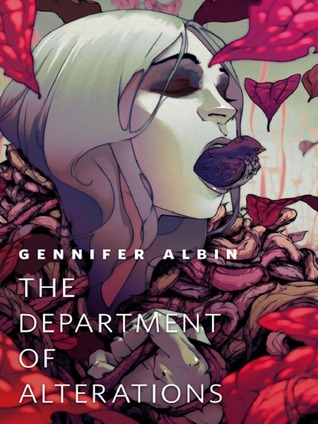
The Department of Alterations (a short story set in the world of Crewel)